Start with the connection on your recording device: a USB headset, a headset with a 3.5 mm plug and a broadcast headset with separate connections all require different equipment. Audio-Technica, RØDE and Logitech describe these connections for their models. Then make test recordings in both languages in your own practice space and listen for clarity, plosives and background noise.
Who is this buying guide for?
Creators who want to listen back to their voice
You’re practising your intro in two languages, making test recordings and want to assess plosives and clarity. An adjustable boom microphone and headphones for listening back to your recording can be useful; judge the result using your own voice. RØDE and Audio-Technica describe these uses for their products.
Creators without an audio interface
You want to record on a computer without a separate mixer or audio interface. The connection and your choice of input and output devices determine whether the headset suits your set-up. Audio-Technica and Logitech describe USB models for connecting to a computer.
Creators in a shared practice space
You practise somewhere where other sounds can be heard and want to consider microphone direction, positioning and what you hear in the recording. Noise-cancelling claims alone don’t tell you how a recording will sound in your space. Audio-Technica also discusses the effect of microphone direction and distance.
What should you look for when choosing?
USB headset
Suitable if: you want to practise directly on a computer without a separate audio interface. According to Audio-Technica, the ATH-M50xSTS-USB has a USB-A connection; Logitech lists USB-A or USB-C for the Zone Wired 2.
Bear in mind: check which USB port is available and set the headset as both the input and output device.
Headset with a 3.5 mm connection
Suitable if: your device has a compatible combined headset socket. According to HyperX, the Cloud III supports 3.5 mm; RØDE specifies that the supplied TRRS cable must be used with the NTH-100M.
Bear in mind: make a test recording to check that the headset microphone is actually being used as the input.
Broadcast headset with separate connections
Suitable if: you already use a compatible mixer or audio interface. The Audio-Technica BPHS1 has a 3-pin XLR microphone plug and a 6.3 mm headphone plug.
Bear in mind: check that your equipment supports both connections; this isn’t a direct USB connection.
| What to consider |
What to look for |
Who is this important for? |
| Clear voice recordings |
Record both versions of your intro and listen for consonants, plosives and a consistent level. |
When I practise the intro in both languages, I want to be able to assess clarity and plosives in the recording. Around 36% of consumers put clarity first. |
| Connection to your device |
Check which ports are available and whether the microphone and headphones need one connection or separate ones. |
I want the microphone and headphones to work with my existing recording device. That’s why around 29% of consumers prioritise the connection. |
| Background noise |
Make a test recording in your practice space and listen specifically for background noise in the file. |
When I practise in a shared space, I want to know what can be heard in my recording. Around 21% of consumers put background noise first. |
| Comfort and monitoring |
Assess the fit during a full practice session and check that you can listen back to your recording. |
When I record several takes, I want the headset to feel comfortable to wear and the microphone position to be easy to identify. Around 14% of consumers prioritise comfort and monitoring. |
Common pitfalls
-
Assuming that a plug that fits means your recording set-up will work
According to RØDE, the RØDE NTH-100M needs the supplied TRRS cable to use the microphone. The Audio-Technica BPHS1 has separate microphone and headphone plugs.
Check both signal paths before buying and make a test recording; simply fitting the plug into a port doesn’t confirm that the microphone works.
Depending on your equipment, you may need a suitable adapter or audio interface.
-
Confusing ANC with a silent recording
Logitech describes ANC for the wearer and noise-cancelling microphones as separate features. So, what you hear less of while listening doesn’t necessarily match what is removed from the recording.
Listen to the recorded file in the space where you’ll actually be practising.
-
Judging the headset only by the loudest part of your practice
RØDE explains that a microphone can distort when sound pressure is too high; simply lowering the input gain doesn’t always solve the problem.
Test quiet and emphatic sentences in both languages and adjust the microphone position if needed.
Brands to compare for this type of headset
RØDE
The NTH-100M is a headset with a detachable boom microphone, which RØDE also markets for podcasting; its connection needs to be compatible with your recording device.
- RØDE says the microphone is positioned to help reduce plosives.
- According to RØDE, the supplied TRRS cable is needed to use the microphone correctly. That doesn’t tell you how a recording will sound in your space.
Audio-Technica
The ATH-M50xSTS range includes USB and XLR versions; the BPHS1 is a broadcast headset with different connections. Choose according to your recording equipment.
- Audio-Technica specifies a dynamic cardioid microphone for the BPHS1 and a cardioid condenser microphone for the StreamSet.
- These model specifications aren’t interchangeable and don’t, on their own, prove an audible benefit for your voice.
Logitech
Logitech positions the wired Zone Wired 2 for Business for busy workspaces and calls; its USB connection may be useful if you want to practise directly on a computer.
- Logitech lists adaptive ANC for the wearer and noise-cancelling microphones. The stated microphone frequency range is 100 Hz–8 kHz.
- That frequency specification isn’t an independent assessment of podcast sound; listen to a recording yourself.
HyperX
The wired Cloud III is a gaming headset with a microphone and several stated connection options; it may be worth considering if you want to use the same headset for other purposes too.
- HyperX lists a noise-cancelling microphone, a mute indicator and compatibility with 3.5 mm, USB-C and USB-A.
- The product description focuses mainly on voice chat and calls; check the connection and how it records your podcast intro for yourself.
Joybuy product picks
These Joybuy product picks are wired headsets with microphones for practising and listening back to your recordings. Connections vary by model, so check that your recording device supports the relevant microphone and headphone connections.
 No image available
Kingston USB Hi-Fi headphones with microphone
A wired USB headset for practising on a computer and listening back to recordings; check that your device has a suitable USB port.
The product description lists a 270° rotatable microphone boom, stereo sound and passive noise reduction for speech.
Compatibility with Windows, Mac and Chromebooks is mentioned in the product description.
View at Joybuy
 No image available
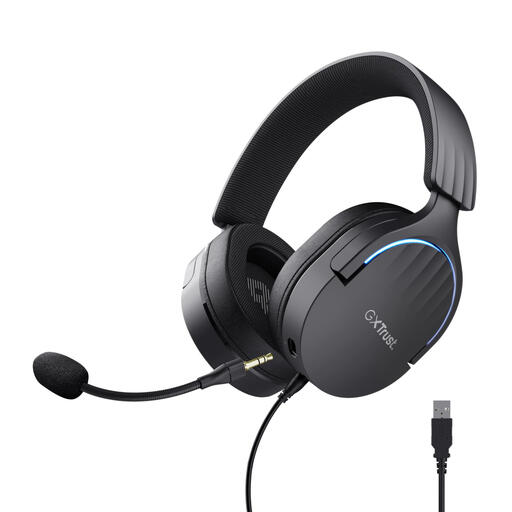
Trust GXT 490 FAYZO Over-Ear 7.1 USB Gaming Headset
A wired USB headset for recording speech and listening back to practice recordings; check that your computer has a suitable USB port.
The product description lists a flexible, detachable noise-cancelling microphone, stereo sound and volume and mute controls.
View at Joybuy
 No image available
Trust Ayda wired headset, USB-A, black
This wired headset is an option for practising on a computer; check the USB connection and that the headset works as both an input and output device.
The product description lists a microphone that flips up to mute and volume controls on the ear cup.
USB-A and a USB-C adapter cable are listed for connection.
View at Joybuy
 No image available
Razer Blackshark V2 X wired gaming headset, black
A headset with a 3.5 mm connection for practising and listening back to recordings; check that your device supports microphone and headphone functions through this connection.
The product description lists a cardioid microphone, a mute button and volume control.
For PCs with separate audio and microphone ports, the description lists a splitter cable.
View at Joybuy
 No image available
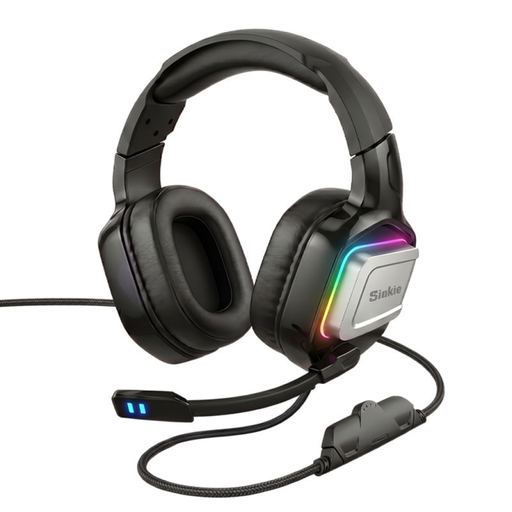
Siukie L200 wired gaming headset, USB and 3.5 mm, RGB
The stated USB and 3.5 mm connections give you different ways to connect the headset to a recording device; check which connection your device uses.
The product description lists an omnidirectional noise-cancelling microphone. The product name states a 50 mm driver diameter.
View at Joybuy
Frequently asked questions
How can you check whether your headset microphone is being recorded?
Select the headset as your input device and make a short test recording. RØDE discusses choosing input and output in the NTH-100M manual; also check your own device settings.
What can you do if loud words or plosives sound distorted?
Check the position of the boom microphone and listen to a new recording. RØDE also recommends checking the distance and recording levels if there’s distortion. Lowering the input gain alone won’t help if the microphone itself is being overloaded by excessive sound pressure.
Do you need extra equipment for an XLR broadcast headset?
You’ll need suitable connections for both the microphone and the headphones. Audio-Technica specifies an XLR microphone plug and a 6.3 mm headphone plug for the BPHS1; check that your mixer or audio interface supports both.
What warranty and cooling-off period apply when buying online in the Netherlands?
For a consumer purchase, a product must perform as you could reasonably expect under normal use; ACM ConsuWijzer advises contacting the seller if it doesn’t. For an online purchase from a business, the cooling-off period ends 14 days after delivery, according to ACM ConsuWijzer, subject to statutory exceptions. A manufacturer’s warranty does not replace your statutory rights.


