
Speaker in a hybrid meeting
You’re presenting the concept to colleagues working remotely and want them to hear you clearly. Logitech and Jabra describe personal headsets with microphone features for calls.


A personal headset is a good choice if you’re the speaker and mainly need colleagues working remotely to hear you clearly. If several people around the table also need to be heard, a shared speakerphone is a different type of solution. Choose a headset with a connection that suits your device, and check microphone noise filtering and mute controls separately: ANC for your ears doesn’t automatically affect the sound picked up by your microphone.
You’re presenting the concept to colleagues working remotely and want them to hear you clearly. Logitech and Jabra describe personal headsets with microphone features for calls.
You’re in the same room as other speakers, so first decide whether you need a shared microphone setup. Microsoft and HP describe speakerphones for shared spaces.
You move between workspaces during or between meetings, and need to weigh flexibility against connection and charging requirements. Jabra describes the Evolve2 65 Flex as a wireless headset for changing workspaces.
A good choice when: you’re the speaker and work at a fixed laptop or PC.
Bear in mind: the cable limits your movement, and a headset designed for one wearer won’t automatically pick up everyone around the table.
A good choice when: you move between workspaces while discussing the concept and mainly need your own voice to be picked up.
Bear in mind: check the battery, connection and any charging or connection accessories you need. Going wireless doesn’t make the headset suitable for picking up other speakers in the room.
A good choice when: several colleagues are speaking together in the room and remote participants need to hear each of them.
Bear in mind: everyone will hear the loudspeaker, and coverage depends on the room, the number of speakers and where the speakerphone is placed.
| What to consider | What should you look for? | Who is this important to? |
|---|---|---|
| Making sure everyone can be heard | Work out who will be speaking in the room, then compare a headset for one wearer with a speakerphone for the room. | If several colleagues are speaking around the table, I want remote participants to be able to hear all of them. Around 29% of consumers prioritise making sure people around the table can be heard clearly. |
| How clearly your voice comes through | Look for microphone noise filtering; ANC in the earcups is a separate feature. | If noise around me could disrupt the meeting, I want my own voice to come through clearly. Around 24% of consumers prioritise how clearly their own voice can be heard. |
| Muting in low light | Check whether the model has a physical button, a flip-up microphone boom or spoken mute notifications. | If I can’t see the controls clearly in dim light, I want to be able to find mute by touch. Around 18% of consumers put easy-to-use controls in low light at the top of their list. |
| Connection and meeting platform | Check whether you need USB-A or USB-C, an adapter, and the right Teams or UC version for your device and meeting software. | I want the headset to work with my device and meeting software without any surprises. Around 17% of consumers name connection and platform compatibility as their main consideration. |
| Comfort and freedom to move | Compare mono and stereo versions, and wired and wireless models. For wireless headsets, also check which charging accessories you need. | For a long meeting, I want a comfortable fit or the freedom to move around. Around 12% of consumers prioritise comfort or freedom of movement. |
A headset for one wearer and a speakerphone for a shared space are designed to meet different recording needs.
Before choosing, work out who will be speaking in the room and who needs to hear them remotely.
These features deal with different sides of a conversation. ANC for the listener doesn’t prove that other people on the call will hear less background noise.
Check separately whether the specifications mention microphone noise filtering, and don’t treat manufacturers’ claims as independent comparative tests.
A product range may include different connections or platform versions.
Compare the full model name and what’s included with your device’s ports and the meeting software you use.
Jabra’s Evolve2 40 SE is a wired headset range with USB-A and USB-C versions, as well as mono and stereo models. The Evolve2 65 Flex is a separate wireless model for changing workspaces.
The Zone Wired 2 for Business is a wired USB headset for an individual speaker in a busy working environment.
The IMPACT 460 is a wired stereo headset which EPOS lists with a USB-C to USB-A adapter.
The Blackwire 3325 USB-C is a personal on-ear headset. The Sync series speakerphones are a different type of product, designed for shared spaces.
These are personal headsets for calls. Check each model’s connection and controls to make sure they suit your meeting.
 No image available
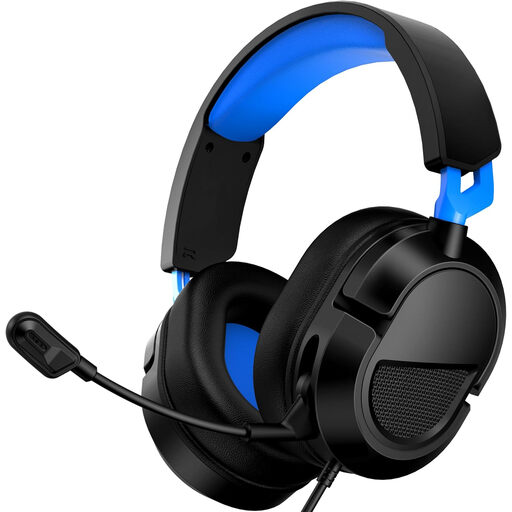
A wired headset for speakers who want mute controls close to hand. The product description lists USB-A, Teams optimisation, two integrated microphones and inline mute controls. For USB-C, it mentions using a suitable adapter.
 No image available
A wired headset for anyone looking for a microphone with noise cancellation. The product title lists a 3.5 mm connection; check that it’s compatible with the device you’ll use for the meeting.
 No image available
A wireless headset for anyone who wants to move around during work calls. The product description lists Bluetooth, an included USB-C cable and mute controls via the desk stand. Check that these controls suit your workspace.
 No image available
A wired headset with a physical mute switch for the microphone. The product description lists a cardioid microphone and a 3.5 mm connection; check that it’s compatible with your device.
 No image available
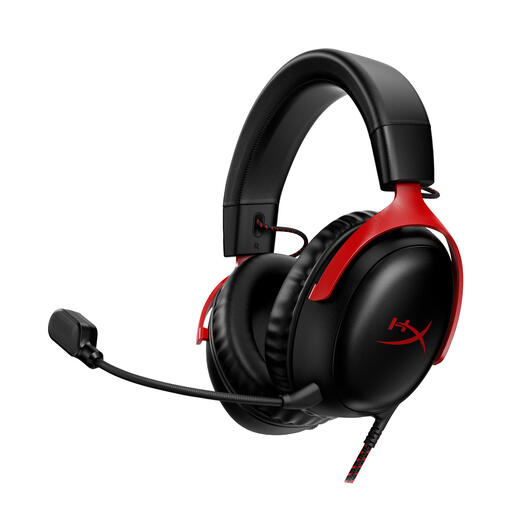
A headset for anyone looking for microphone noise cancellation and mute controls. The product description lists a noise-cancelling microphone and 3.5 mm, USB-A and USB-C connections.
Don’t assume so: a personal headset is designed for the person wearing it. If people around the table will also be speaking, consider a shared speakerphone and whether it can cover the room in question.
Connect the right USB version, select the headset as your microphone and speaker in your meeting software, and test mute in advance. Logitech describes the Zone Wired 2 as having a flip-up microphone boom and spoken mute notifications; don’t assume other models have the same controls.
No, there’s no general legal requirement to do so. Microsoft describes certification as a programme for tested peripherals with plug-and-play functionality and call controls in Teams. Check the exact version if those controls are important to you.
According to ACM ConsuWijzer, when you make a consumer purchase online, you generally have up to 14 days after delivery to change your mind, although there are exceptions that you should check at the time of purchase. You’re also entitled to a statutory guarantee if the product doesn’t meet reasonable expectations under normal use. This is separate from any manufacturer’s or extended warranty offered.