Choose a headset with a connection that works with your laptop and a microphone you can position close to your mouth. With kitchen noise in the background, the microphone matters more to what others hear than the ear cushions’ isolation. A wired headset doesn’t need charging, while a wireless one gives you more freedom to move around.
Who is this buying guide for?
Meetings in a busy kitchen
Your main priority is making sure colleagues can hear you clearly when there’s noise around you. Look at the microphone and distinguish between noise cancellation for the people you’re speaking to and sound isolation for your own ears.
Staying at your laptop during meetings
You usually stay in one place and want to connect your headset quickly and be able to mute it easily. Check which ports are available, the cable length and where the mute control is.
Getting up during a meeting
You want to be able to leave the kitchen table without being tethered by an audio cable. A wireless headset could be a good fit if you can also work its connection and charging into your routine.
What should you look for when choosing?
Wired USB headset
Best for: usually staying at the table and using a laptop with a compatible USB port.
Bear in mind: you won’t need to charge a headset battery, but the cable limits how far you can move.
Wireless headset
Best for: getting up or moving around regularly during meetings.
Bear in mind: check how the specific model connects and how it needs to be charged.
Wired headset with a 3.5 mm connection
Best for: a device with a suitable 3.5 mm connection, if you don’t want to use USB.
Bear in mind: check that your device’s connection also supports a headset microphone.
First, check that the connection and microphone are right for your laptop and meeting space. Then decide how much freedom to move and ear coverage you want.
| What to consider |
What to look for |
Who is this important for? |
| Clear speech with background noise |
Check the microphone’s position and whether the product information describes noise cancellation for the microphone, rather than just isolation for the wearer. |
If I want colleagues to hear me clearly while there’s noise at home, I focus on the microphone. Around 33% of consumers rank clear speech as their top priority. |
| Connection and muting |
Compare the plug with your laptop’s ports and check where the mute control is. If you use Teams, also check that the specific model supports the controls you want. |
If you want to get started without connection issues and mute quickly, pay attention to the port and controls. Around 27% of consumers put these points first. |
| Comfort and background noise |
Check whether the headband is adjustable and whether the model is mono or stereo. Fit is still a personal matter. |
If I’m wearing a headset for a long time, I want to know how it feels and whether I can keep one ear free. This is the main concern for around 20% of consumers. |
| Freedom to move |
Check how the wireless model connects to your device and whether charging will suit the way you use it. |
If you want to get up during a meeting, a connection without an audio cable is especially useful. Around 20% of consumers prioritise freedom to move. |
Common pitfalls
-
Confusing microphone noise cancellation with quiet for yourself
The microphone processes the sound your meeting partners hear; isolating ear cushions mainly affect how much surrounding noise you hear. So one doesn’t automatically mean you get the other.
Decide which problem you want to address and check whether the product description refers to the microphone or the ear cushions.
-
Assuming every product in a range has the same connection
A range can include models with different connections or Teams features. If the plug doesn’t fit your laptop, you may need a suitable adapter.
Compare the full model details with your laptop’s ports before ordering; don’t rely on the range name alone.
You may need an extra adapter if the plug doesn’t match your device’s connection.
-
Choosing wireless without checking the connection
Freedom to move is only useful if the headset you choose connects to your meeting device in the way you need and is charged.
Check the details for the exact model to see whether you need Bluetooth, an adapter or both, and how to charge the headset.
Brands to consider
Logitech
The H390 and H151 are wired options with different connections.
- Logitech lists in-line controls for both models. The H390 has a USB-A connection and a 1.9 m cable.
- The H151 uses a suitable 3.5 mm connection. Check which port your device has.
Jabra
The Evolve2 40 SE is a wired option, while the Evolve2 65 is designed for wireless use.
- Jabra describes the Evolve2 40 SE as having a microphone boom and isolating ear cushions. There’s a separate Teams-certified version of the Evolve2 65.
- Product claims about isolation or call quality aren’t independent measurements made at a kitchen table. Check the model and connection.
Trust
The Ayda USB-ENC is a wired on-ear headset for meetings.
- Trust lists an adjustable headband, volume control and a flip-up microphone mute.
- Trust describes noise cancellation as a product feature; check which plug the model on offer has.
HP Poly
The wired Blackwire 3200 series includes office headsets in a range of models.
- HP describes adjustable headsets as well as mono and stereo versions in the series.
- Not every model combines all the connections and wearing styles, so check the specifications for the exact model.
JLab
The original GO Work is a wireless on-ear office headset.
- JLab lists Bluetooth 5 and an included cable for wired use with the original GO Work.
- Don’t confuse this model with GO Work 2nd Gen; specifications can vary between generations.
Headsets for team meetings
This selection includes wireless headsets and wired USB and 3.5 mm models for online team meetings.
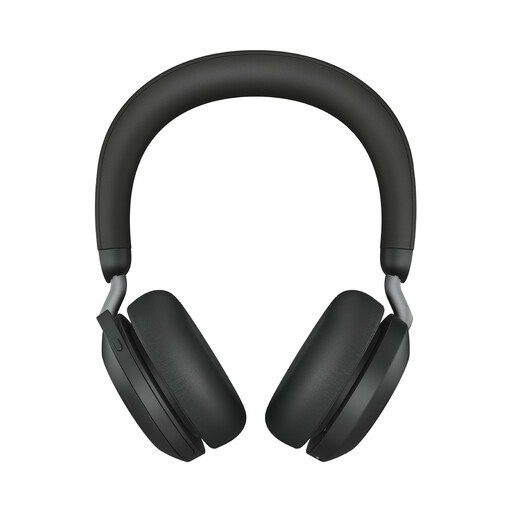 Image unavailable
Jabra Evolve2 75 USB-A MS Teams, Black
A wireless option if you want to move around during meetings.
The product title specifies a USB-A MS Teams model; the description mentions a Bluetooth adapter and Teams button. Wireless use requires charging.
Joybuy
 Image unavailable
Logitech PC 960 USB headset
A wired option if you usually stay at the table and want controls on the cable.
The product description lists USB, an adjustable microphone boom, and in-line mute and volume controls. The cable limits how far you can move.
Joybuy
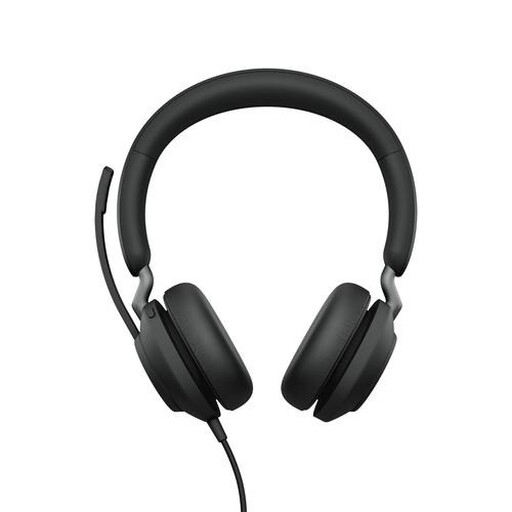 Image unavailable
Jabra Evolve2 65 USB-A Black MS Mono
A wireless mono model for anyone who wants to keep one ear free during meetings.
The product title specifies USB-A and MS Mono; the description mentions a USB-A Bluetooth adapter and a Teams button. Wireless use requires charging.
Joybuy
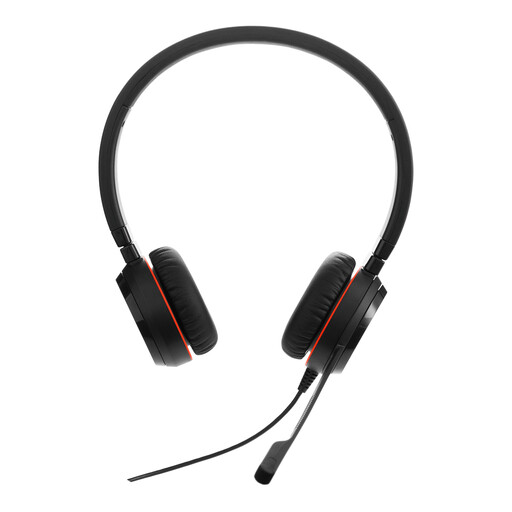 Image unavailable
Jabra Evolve 30 II MS Stereo
A wired stereo option if your device has a suitable connection.
The product description lists a 3.5 mm connection and an included LINK MS controller for USB. The stated cable length is 0.95 m, which may limit how far you can sit from your device.
Joybuy
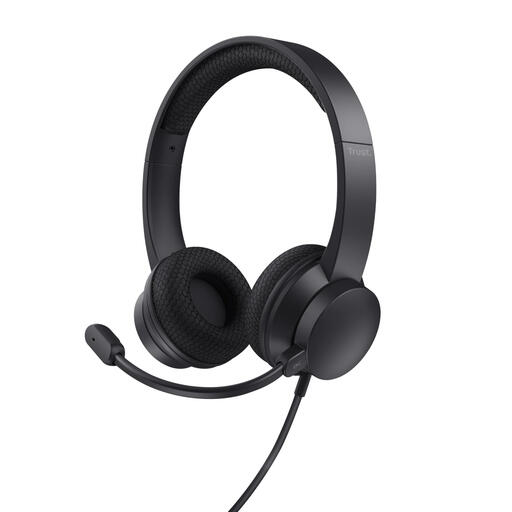 Image unavailable
Trust Ayda USB Type-A headset
A wired option if you want to meet at the table and having controls on the headset matters to you.
The product title specifies USB Type-A. The description mentions on-ear volume control and a flip-up microphone mute. The cable limits how far you can move.
Joybuy
Frequently asked questions
Does your headset need to be certified for Microsoft Teams?
Not for every meeting. If headset controls and mute-status synchronisation with Teams matter to you, check the certification for the exact model. Microsoft describes these features for certified personal devices.
How do you set up a headset for meetings at the kitchen table?
Connect or pair your headset, then select the speaker and microphone you want to use in your meeting app. Test the mute function before your call, adjust the headband and position any microphone boom close to your mouth. Jabra recommends doing the latter.
Does a headset automatically make working from home securely private?
No. A headset doesn’t replace the need to secure your communications appropriately. The Dutch Data Protection Authority says organisations must offer secure options for video calls and chat. You should also follow your organisation’s security guidelines.


