
Practising in a busy space
You mainly record your own interview questions and want to hear how much background conversation comes through when you play the recording back.


If you mainly record your own interview questions, choose a headset with a microphone and listening connection that works with your computer or recorder, then check the result with a test recording in the shared space. If you also want to capture the answers clearly, test the second speaker’s position. You may need an extra microphone or input to record each voice separately.
You mainly record your own interview questions and want to hear how much background conversation comes through when you play the recording back.
You want to review both questions and answers. So think about where the second speaker will be recorded and whether you need to capture each voice separately.
You use a specific audio input and want to connect your microphone and headphones correctly, possibly through separate connections.
A good choice if: you want to record practice questions on a computer and listen back straight away.
Keep in mind: the cable and differences between USB-A, USB-C, mono and stereo versions. Jabra describes several versions of the Evolve2 40 SE.
A good choice if: your recorder or mixer can connect the microphone and headphones to separate inputs. The RØDE NTH-100M is an example of this setup.
Keep in mind: the plug type and power requirements. RØDE recommends a suitable adapter with plug-in power to connect the NTH-100M microphone to an XLR input.
A good choice if: freedom of movement while practising matters and your computer or recorder supports the connection you choose.
Keep in mind: charging and the version you choose. Logitech says the Zone Wireless 2’s talk time varies depending on use and conditions.
| What to consider | What to check before buying | Who should consider this? |
|---|---|---|
| How clearly your own voice comes through | Check the microphone position and make a test recording where you plan to practise. | If you mainly want to hear your own questions among other conversations, the recording itself is what matters most; around 36% of consumers prioritise how clearly their own voice comes through. |
| Recording both interview voices | Decide whether a single mixed track is enough or if you need separate microphones or inputs. | If you want to review both questions and answers, test the other speaker’s position too; around 29% of consumers prioritise capturing both voices. |
| Connecting to your equipment | Compare the headset’s exact connection with the inputs available on your computer, recorder or mixer. | If you want to keep using your existing equipment, check in advance how the microphone and headphones connect to it; around 21% of consumers make connectivity their main consideration. |
| Comfort during practice | Compare the fit and, if there are several versions, the mono or stereo option. | For repeated or longer practice sessions, fit may matter more to you than other features; around 14% of consumers say comfort is their top priority. |
Noise reduction for the wearer and processing of the microphone signal are different functions. A quieter listening experience doesn’t automatically mean your voice will sound clear in the recording.
Make a test recording with the background conversations you expect while practising, then listen back.
A microphone near the interviewer’s mouth won’t necessarily work well for someone speaking from another position. Noise processing doesn’t guarantee that the second voice will be captured clearly either.
Decide whether you need one mixed recording or separate voices, then test both speaking positions. You may need a second microphone or recording input to record each voice separately.
Connections and mono or stereo options can vary between versions. The series name alone won’t tell you which connection works with your equipment.
Check the full model number and compare that version’s connections with your computer or recorder.
Depending on the version you choose, you may also need a suitable adapter.
Jabra describes the Evolve2 40 SE as a wired office headset, available in different USB, mono and stereo versions, including models for computer use.
Logitech describes the Zone Wired as a wired USB headset and the Zone Wireless 2 as a separate wireless model.
HP describes the Blackwire 5200 series as designed for wired computer use and lists the Blackwire 5220 as a stereo version.
According to RØDE, the NTH-100M combines over-ear headphones with a detachable headset microphone.
EPOS describes the IMPACT 860T ANC as a wired headset with USB-C and a USB-A adapter included.
This selection includes headsets for wired practice on a computer and listening back to your questions.
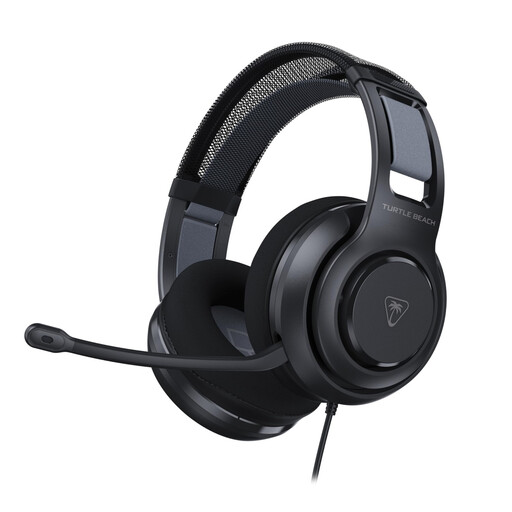 No image available
A wired headset for PC practice; check that the connections work with your computer.
The product name lists a 3.5mm connection and a flip-to-mute microphone.
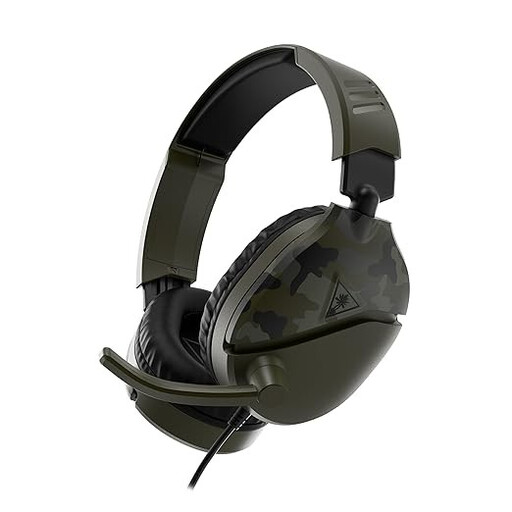 No image available
A wired headset listed as suitable for PC; check the connections on your recording device.
The product name lists a 3.5mm connection and a flip-to-mute microphone.
 No image available
An option to consider for practising on a computer; check the exact connection and whether the headset suits your recording setup.
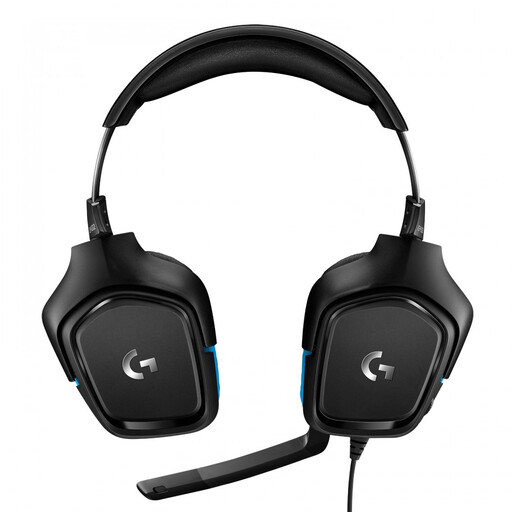 No image available
A wired headset for PC practice; check which connections your computer and any recorder support.
The product name specifies a wired design.
 No image available
A wired headset for computer use; check that the connection works with your computer or recorder.
The product name specifies USB Type-A.
Don’t assume it will without making a test recording. The microphone is close to the wearer, and background-noise features don’t guarantee that someone speaking from another position will be recorded clearly. Test both positions and see whether you need a second microphone or input for the recording you want.
It depends on the connections on your headset and mixer. RØDE describes a splitter for the NTH-100M that separates the headphone and microphone connections. For the described connection to an XLR microphone input, RØDE recommends a suitable adapter with plug-in power. Check the connection details for other models.
According to the Government of the Netherlands, you have a statutory guarantee and the seller must offer a solution if the product is faulty. Under the government’s guidance, the Netherlands has no fixed statutory guarantee period. Normal wear and tear or damage caused by the user isn’t automatically covered by free repair; a manufacturer’s warranty may provide additional cover.
An audio recording that identifies someone can be personal data. If the GDPR applies to the processing, you need a valid legal basis and must meet information requirements. Consent is one possible legal basis, but it isn’t automatically the only one. The Dutch Data Protection Authority describes an exception for use that is exclusively personal or domestic. Whether that exception and other rules apply depends on the purpose, the participants and any sharing. Owning a headset does not, by itself, mean you have consent.