
Voice artist who can hear room reverberation
You want to record your voice clearly in a reflective room. Shure and RØDE emphasise the importance of microphone placement and choosing a less reflective recording spot.


Start with your set-up: position the microphone close to your mouth and, if possible, choose a less reflective spot. Shure and RØDE emphasise that microphone placement and room acoustics matter; a headset won’t make the room itself less reverberant. A broadcast headset is a good fit if your recording equipment supports its separate connectors, while a USB headset is an option if plugging in directly is more important. Always assess a test recording: features described for calls don’t show how reverberation will sound in your audio file.
You want to record your voice clearly in a reflective room. Shure and RØDE emphasise the importance of microphone placement and choosing a less reflective recording spot.
You want to record on a computer and listen back without a separate audio interface. Logitech and Jabra describe USB headset models with different connectors.
You want to be able to listen while recording or afterwards, and you’re taking the connections into account when choosing. Audio-Technica and HP describe headsets with separate headphone or connection options.
Shure explains how reflections affect a recording, while RØDE recommends finding the quietest possible spot with few reflective surfaces. So compare not only headset features, but also microphone placement and where you record.
Choose this option if: you have an adjustable microphone boom and recording equipment with compatible connections. According to Audio-Technica, the BPHS1 has a cardioid dynamic microphone.
Bear in mind: the BPHS1 has an XLR microphone connector and a 6,3 mm headphone connector, but no USB connection. The microphone won’t remove existing room reverberation.
Choose this option if: you want to plug straight into a computer and first use a test recording to see if the sound in your room is usable. The Logitech H390 and Jabra Evolve2 40 SE are examples of wired USB headsets.
Bear in mind: Logitech and Jabra describe features for calls; these don’t tell you how much reverberation will be in a recorded audio description. Also check which USB version you need and, for USB-C, whether your device and app support it.
Choose this option if: you switch between devices with different connections. HP lists USB-C with a USB-A adapter for PC, and 3,5 mm for mobile or tablet, for the Poly Blackwire 5200 series.
Bear in mind: check the exact model and the connection on your device. The microphone features for calls described by HP aren’t a measure of reverberation in a recording.
| What to consider | What should you check? | Which consumers is this for? |
|---|---|---|
| Clear voice over room reverberation | Microphone boom and placement; also make a test recording in a less reflective spot. | If my main aim is to make my voice clear in a reverberant room, I look at microphone placement and compare recording spots. Around 38% of consumers prioritise a clear voice over room reverberation. |
| Plugging in directly | USB-A or USB-C version, available port and recording input. | I want to record on my computer without a separate audio interface, so I check the connection first. Around 23% of consumers prioritise plugging in directly. |
| Listening back to and checking the recording | Headphone output and the option to listen back to the recorded microphone signal. | I want to hear how the file sounds while recording or afterwards, so I can check whether I need to record it again. Around 23% of consumers choose recording checks as their main priority. |
| Connecting to more devices | Available ports and, for mobile use, compatibility with the app you use. | I switch between devices and want to know in advance whether the headset will work with them. Around 16% of consumers prefer a headset that connects to multiple devices. |
A feature described for calls doesn’t automatically tell you how reverberation will sound in the saved file. Shure explains that microphone placement can’t correct a room’s acoustics.
First improve the microphone placement and recording spot, then compare short, unedited test recordings.
An unsuitable spot may mean you need to make extra test recordings and re-record.
The Audio-Technica BPHS1 has separate XLR and 6,3mm connections. Without compatible inputs, it won’t plug in directly like a USB headset.
Before buying, check the connections on both the headset and your recording equipment.
You may need additional audio equipment to use this connection.
Hearing less background noise while wearing the headset doesn’t prove that room reverberation will be kept out of the recording.
Assess the microphone by listening to the recorded file.
The BPHS1 is a broadcast headset for a recording set-up with compatible audio connections.
The Logitech H390 is a wired USB-A headset for a computer set-up.
The Evolve2 40 SE is a wired headset for calls, available in USB-A and USB-C versions.
The Blackwire 5200 series is designed for wired calls and offers different connection options.
These Joybuy options are headsets with microphones for anyone looking to record an audio description. Check that the connection is compatible with your recording device, then assess the sound with a test recording.
 Image unavailable
This could be a good fit if your recording device has a 3,5 mm connection and you’re looking for a flexible, detachable microphone. Make a test recording to see how the headset sounds in your room.
 Image unavailable
This version is suitable only if your recording device has a USB-A connection. Make a test recording and listen back to the file to assess the reverberation in your room.
 Image unavailable
This could be a good fit if your computer uses USB-A; if it has a USB-C connection, check that the supplied adapter solution is compatible with your device. Assess the reverberation by recording in the room where you plan to speak.
 Image unavailable
This could be a good fit if you need a 3,5 mm connection and want to position the microphone close to your mouth. The product information recommends a distance of around 1–2 inches; listen back to a test recording to assess how the room reverberation sounds.
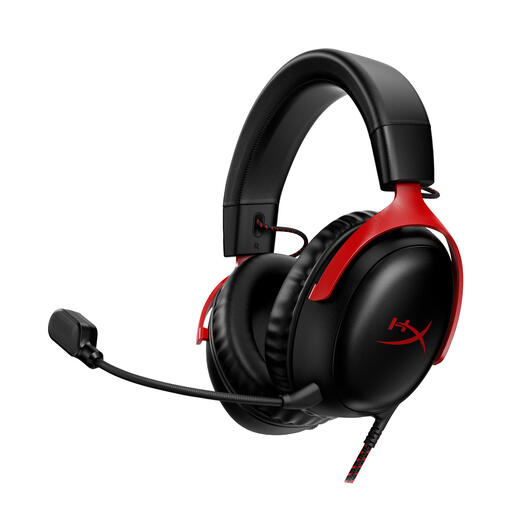 Image unavailable
The product title lists PC, PS5 and Xbox Series X|S. Check which connection your recording device requires, then make a test recording to assess the microphone and room reverberation in your own set-up.
No, not by itself. Shure explains that microphone placement doesn’t correct the room’s acoustics. Position the microphone close to your mouth and compare a test recording made in a less reflective spot; a feature described for calls doesn’t measure the reverberation in your file.
It depends on the connections. The Audio-Technica BPHS1 has an XLR plug for the microphone and a 6,3mm plug for the headphones. If your laptop doesn’t have these inputs, check what compatible audio equipment you’ll need.
Position the microphone close to your mouth and keep it in the same place while you record. Jabra recommends this positioning for the Evolve2 40 SE. Then listen back to the recording to assess how your voice and the room reverberation sound.
According to the Dutch government, online distance purchases from a business generally come with a 14-day cooling-off period. Check the seller’s information and the terms for the specific offer.