Who is this choice relevant to?

Quiet listener

You want to hear your memo without disturbing the people around you with playback noise. A comfortable fit and low volume are important. Bibliotheek Deventer asks visitors to use headphones for music, while Bibliotheek Noord-Veluwe emphasises avoiding noise disturbance.

Careful listener

You listen to spoken passages repeatedly and want to judge whether voices sound natural and clear. The Consumentenbond includes speech samples in its testing method for headphones and earphones.

Switching between devices

You might use a phone and a laptop, for example, and want to check in advance that the plug, Bluetooth connection or cable option will work with both.

What should you look for?

Wired in-ear earphones

A good choice if: you’re listening back for a short time, want to travel light and your device supports the connection.

Bear in mind: fit varies from one ear to another, and you may need an adapter for the plug.

Wired, closed-back over-ear headphones

A good choice if: you’re working with a recording for longer, have a suitable connection and don’t want to manage a battery.

Bear in mind: over-ear headphones are bulkier to carry, so check the comfort and connection.

Wireless, closed-back over-ear headphones

A good choice if: you switch between devices or want to use your headphones outside the library too.

Bear in mind: you’ll need to charge them, and the stated battery life depends on settings such as noise cancellation.

Open-back over-ear headphones

A good choice if: you’re mainly looking for an open-back design to use outside shared quiet spaces.

Bear in mind: in the library, check whether others can hear your headphones at your listening volume.

What to consider What to check before buying Who should pay particular attention?
Avoid disturbing others Check the fit and closed-back design. Listen quietly and see whether someone nearby can hear anything. ANC alone doesn’t tell you how much sound leaks out. If I’m listening in a quiet reading room, I want to hear my memo without distracting others. Around 36% of consumers put the peace and quiet of those around them first.
Speech clarity If possible, listen to one of your own memos, including both quiet and loud passages, at a low volume. Check whether any reviews assess speech. If you want to assess words and how voices sound in detail, a review of speech is more useful than a general impression of music quality alone. Around 29% of consumers prioritise speech intelligibility.
Connection and portability Check the output on your phone or laptop, the plug or Bluetooth options, and the battery life of wireless models with your preferred settings. If I want to use my headphones with different devices, I want to know in advance how they connect and how easy they are to carry. For around 21% of consumers, connectivity and portability are the main priorities.
Comfort during longer listening sessions Try the earphones, headband and ear cushions if possible. Also check that they fit comfortably if you wear glasses. If I’m listening back repeatedly or for a long time, I don’t want a pair that feels uncomfortable. Around 14% of consumers mainly focus on wearing comfort.

Common buying mistakes

  • Assuming ANC keeps the sound to yourself

    Noise cancellation affects the sounds you hear. A manufacturer’s claim about ambient noise isn’t a measurement of how much playback sound other people can hear.

    Assess the fit and sound leakage separately from ANC. Keep the volume low and follow the library’s rules.

  • Comparing maximum battery life without checking the ANC setting

    The stated battery life may vary depending on whether noise cancellation is on or off. Sony states that the WH-CH720N offers up to 35 hours with noise cancellation on and 50 hours with it off. JBL states that the Tune 770NC offers up to 70 hours with Bluetooth on and ANC off. These figures are given for different settings.

    Only compare battery life when the settings are the same, and check whether there’s a cable option if you want to listen without a charged battery.

    If you use your headphones wirelessly, remember that they’ll need charging, especially if you take them out with you often.

  • Waiting until you’re in the library to check the plug or fit

    A plug won’t necessarily fit every device, and the supplied ear tip size won’t feel comfortable for everyone.

    Check your device’s output and try the fit beforehand. Also read the terms for the specific product and seller.

Brands to consider

Sony

The MDR-EX110AP is a closed-back, wired in-ear model; the WH-CH720N is a closed-back, wireless over-ear pair with a cable input.

  • Sony states that the MDR-EX110AP comes with ear tips in three sizes and a 1.2 m cable with a four-pole mini plug.
  • Sony states that the WH-CH720N offers up to 35 hours with noise cancellation on and 50 hours with it off. These are manufacturer figures, not measurements of battery life in your own use.

Audio-Technica

The ATH-M20x is a closed-back, wired over-ear monitor headphone for anyone happy with a larger model and a wired connection.

  • Audio-Technica describes the design as closed-back.
  • The manufacturer’s description isn’t an independent measurement of sound leakage in a library. Check the connection and fit for yourself.

JBL

The Tune 770NC is a foldable, wireless over-ear model with noise cancellation and an Ambient Aware mode.

  • JBL states that it can connect to two Bluetooth devices at the same time.
  • The stated battery life of up to 70 hours applies with Bluetooth on and ANC off. It doesn’t tell you how long the battery lasts with ANC on or how clearly speech will sound.

soundcore

The Space One is a wireless over-ear option with adjustable transparency mode and ANC.

  • soundcore states that it offers 40 hours of use with ANC on and 55 hours with ANC off.
  • According to soundcore, its noise-reduction claim is based on its own laboratory conditions; it isn’t a library measurement of sound leakage.

Sennheiser

The open-back HD 560S shows how open-back models differ from closed-back ones. Sennheiser describes it as an open-back headphone for analytical listening.

  • The open-back design is a distinctive option if you’re not specifically looking for headphones that seal around your ears.
  • The product specifications don’t measure sound leakage next to other library visitors. Check at your usual listening volume.

Joybuy products

This selection includes wired in-ear earphones and wireless, closed-back over-ear headphones for listening back to an existing memo.
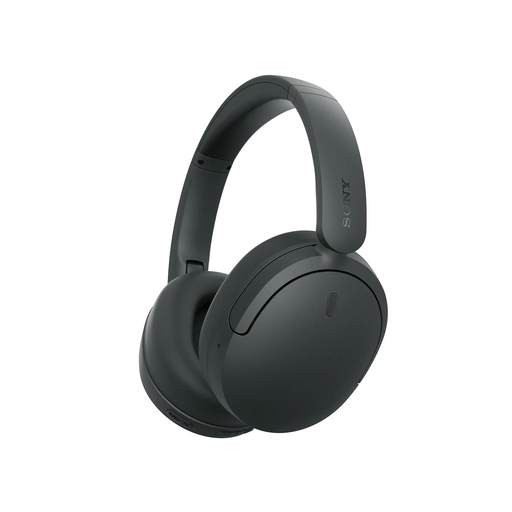
WH-CH730 wireless headphones, black

WH-CH730 wireless headphones, black

A closed-back over-ear model for anyone who wants to listen wirelessly and switch between devices.

The product description mentions multipoint, a detachable cable and wired listening without using the battery.

View at Joybuy
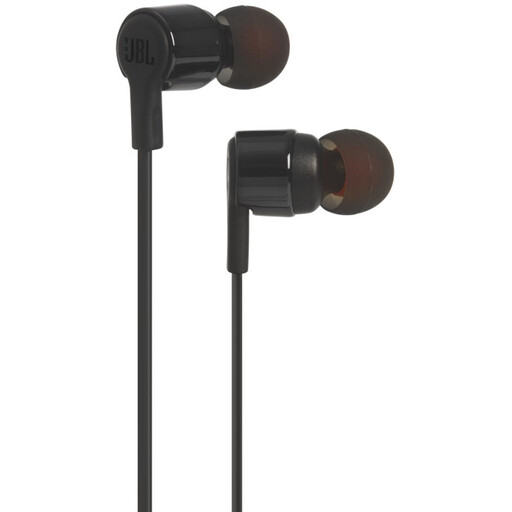
JBL Tune 210 wired in-ear earphones

JBL Tune 210 wired in-ear earphones

A compact wired option if your device has a compatible 3.5 mm connection.

The product information mentions a microphone, several sizes of ear tips and a 3.5 mm connection. No charging is needed; check in advance that your device supports the plug.

View at Joybuy
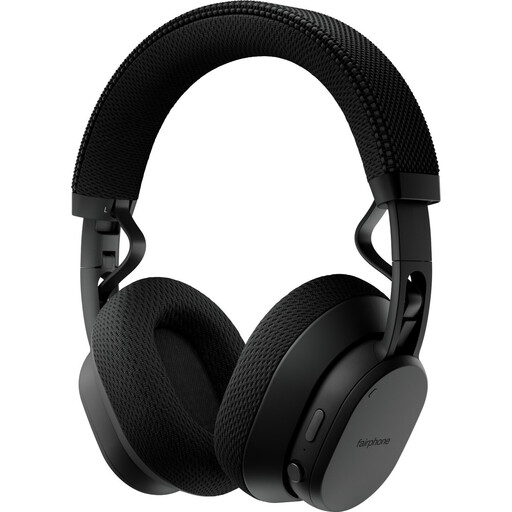
Fairphone Fairbuds XL 2025, black

Fairphone Fairbuds XL 2025, black

Closed-back wireless over-ear headphones for anyone who also wants to switch between devices.

The product description mentions hybrid ANC, Bluetooth multipoint for two devices, and mesh on the headband and ear cushions. It doesn’t prove how much sound people nearby will hear.

View at Joybuy
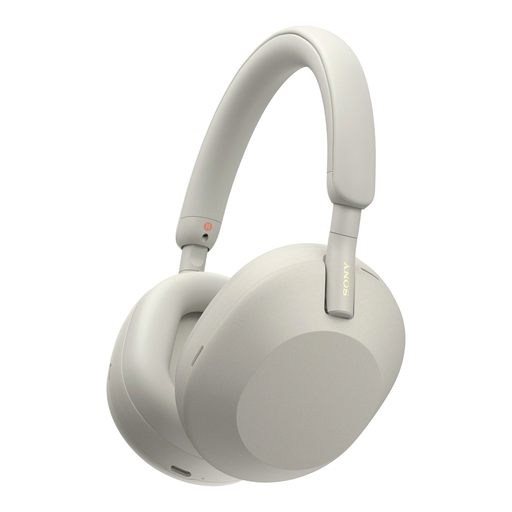
Sony WH-1000XM5 wireless headphones, silver

Sony WH-1000XM5 wireless headphones, silver

A wireless over-ear option if you’re also looking for noise cancellation and a connection to multiple devices.

The product information mentions Bluetooth, noise cancellation and simultaneous pairing with two devices. Check that the features suit the way you’ll use them; ANC doesn’t indicate how much sound leaks out.

View at Joybuy

Sony WH-CH720N wireless headphones, blue

Sony WH-CH720N wireless headphones, blue

Closed-back wireless over-ear headphones with a cable option, for anyone who wants to be able to listen without Bluetooth too.

Sony mentions a cable input and passive operation. The stated battery life is up to 35 hours with noise cancellation on and 50 hours with it off; these are manufacturer figures.

View at Joybuy

Frequently asked questions

Do you need noise-cancelling headphones to listen to a voice memo in a quiet library?

Not necessarily: start with a well-fitting pair of headphones and a low volume. ANC can be useful if you also listen in noisier places, but an ANC specification doesn’t prove that others won’t hear your memo.

How can you check that your headphones aren’t disturbing others?

Check the rules of the library you’re in, don’t use a speaker and listen at your usual low volume. If needed, ask someone nearby whether they can hear your memo. Bibliotheek Deventer asks visitors to use headphones for music; Bibliotheek Noord-Veluwe prohibits noise disturbance. These are rules for individual branches, not standard nationwide rules.

How can you listen to a quiet recording without constantly turning up the volume?

Keep the volume low and don’t turn it up indefinitely. The World Health Organization recommends, among other things, setting the volume no higher than 60% of the maximum and taking regular breaks. This is listening advice, not a legal volume limit or a guarantee that every device sounds equally loud at 60%.

What should you check before connecting your headphones?

Check whether your device has a suitable 3.5 mm output or which adapter you need. Pair a wireless model in advance and charge it if you want to use Bluetooth. Follow the manufacturer’s instructions for cleaning the earphones or ear cushions on the model you’ve chosen.

What returns and warranty rules apply when buying in the Netherlands?

According to ACM ConsuWijzer, online consumer purchases usually come with a 14-day cooling-off period from delivery, although there are exceptions. In a physical shop, returning an item simply because you’ve changed your mind isn’t automatically a legal right. Ask about the terms for the specific product and seller. Your statutory rights if a product is faulty are separate from any additional paid protection.
