
Listeners who want to stay within earshot
You do household tasks where it’s important to hear what’s going on around you, and are looking for an open design or an easy-to-access ambient mode.


If you want to stay within earshot while doing light household tasks, open-ear headphones could be a good fit. If background noise drowns out the vocal line, consider sealed in-ear headphones with an ambient mode, or over-ear headphones for practising when things are quieter. Check the fit and controls, and see whether your recording app can loop sections or adjust the tempo: these practice features are part of the software, not something headphones provide automatically.
You do household tasks where it’s important to hear what’s going on around you, and are looking for an open design or an easy-to-access ambient mode.
You want to hear a particular vocal line repeatedly without turning up the volume to drown out household noise, so you’re considering both the listening style and what your playback software can do.
You move between tasks and are particularly interested in a secure fit, accessible pause controls and enough listening time per charge.
A good fit if: you want to stay aware of your surroundings while doing light tasks on the move.
Bear in mind: household noise remains audible and can mask the vocal line.
A good fit if: you want to switch between following a vocal line and hearing more of your surroundings.
Bear in mind: an ambient mode doesn’t guarantee you’ll notice every important sound; check the fit and controls too.
A good fit if: you mainly want to practise with focus when things are quieter, and would rather not wear earbuds.
Bear in mind: a closed-back design isn’t necessarily suitable for tasks where you need to notice your surroundings straight away.
| What to consider | What to look for | Who should consider this? |
|---|---|---|
| Awareness of your surroundings | Compare open-ear headphones with a model that has an ambient mode; think about which sounds you need to hear while doing your tasks. | If I want to keep hearing important sounds while doing light tasks, an open design or switchable ambient mode is a priority. Around 33% of consumers put awareness of their surroundings first. |
| Following the vocal line | Check the listening modes and whether your recording or app can loop sections and adjust the tempo. | If I want to follow and repeat a second vocal part clearly, I consider both the listening style and my practice app. Around 27% of consumers prioritise being able to distinguish the vocal line. |
| Fit and controls | Consider how the headphones are worn and how easy it is to pause and resume when your hands are full. | If I move between tasks, I want headphones that stay comfortable and are easy to pause. Around 20% of consumers prioritise fit and controls. |
| Comfortable, controlled practice | Compare listening time per charge and keep the volume low; if you need to practise with focus, choose a quieter time. | If you practise the same section repeatedly, you’ll want to listen comfortably without constantly turning up the volume. Around 20% of consumers prioritise comfortable listening at a controlled volume. |
An open design lets household noise in. When you’re doing a noisy task, the vocal line may be harder to hear clearly.
Choose open-ear headphones if hearing what’s going on at home is your priority. It’s better to practise tricky phrases when things are quieter than to turn up the volume to drown out background noise.
These modes have different purposes: one reduces distracting noise, while the other lets more of your surroundings in.
Check which modes are available on the exact model you’re considering, and whether you can switch between them easily while working.
A battery life figure that includes the charging case is not the same as continuous listening on a single charge.
Compare the manufacturer’s stated listening time per charge and check which listening mode it applies to.
Looping, adjusting the stereo mix and changing the tempo also depend on the recording and playback software.
Try your own practice file and app first, then choose the listening style that suits the task.
The OpenFit 2 is an open-ear model with an ear hook, designed for people who want to stay aware of their surroundings while doing light tasks.
The AeroFit 2 is an open-ear model with adjustable ear hooks, designed for people who want to stay aware of their surroundings.
The WF-1000XM5 is a sealed in-ear model with an ambient sound mode; the WH-1000XM6 is a closed-back over-ear alternative.
The AirPods Pro 3 offer a sealed in-ear option with a transparency mode, noise cancellation and on-earbud controls.
This selection includes open-ear, sealed in-ear and over-ear models for practising while doing light tasks or when things are quieter.
 No image available
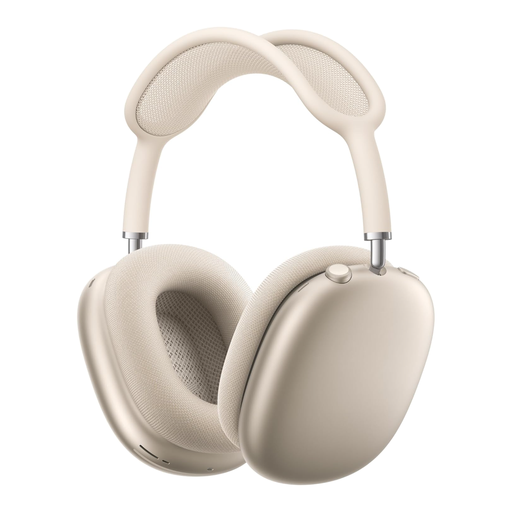
An over-ear option for listening closely to a vocal part, with an ambient mode available when you need it.
 No image available
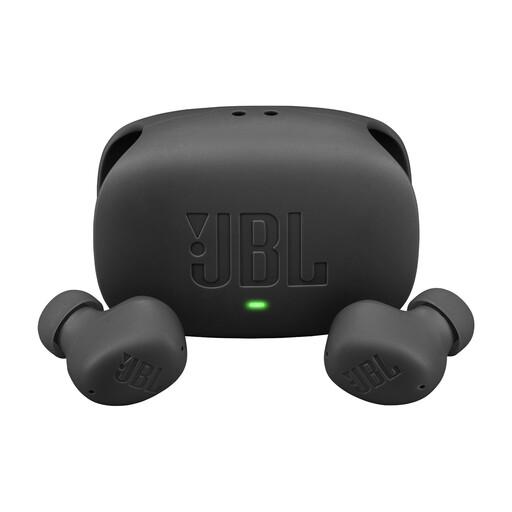
An in-ear option for switching between following a vocal part and hearing your surroundings while practising, with controls on the earbuds.
 No image available
An over-ear option for focused practice when things are quieter, with controls on the earcup.
Claimed battery life: 60 hours. This model isn’t water-resistant, so keep it away from damp tasks.
 No image available
An in-ear option for reducing background noise while practising and tailoring the sound to your listening preferences.
 No image available
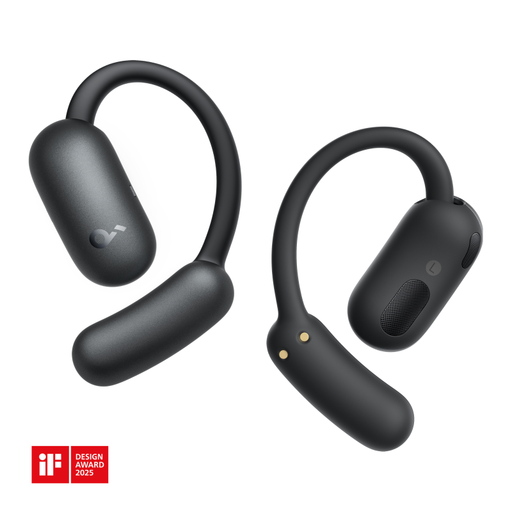
An open-ear option for light tasks where you want to stay aware of your surroundings. The design doesn’t block out household noise, so the vocal line may be harder to hear clearly when it’s noisy.
No. Check what your recording and playback app can do. According to the Audacity manual, Change Tempo adjusts the tempo without changing the pitch; Play-at-Speed changes the pitch as well.
Check the recording’s mix first. With supported AirPods and Apple devices, you can turn on mono audio so the same content plays in both ears; Apple notes that spatial audio and head tracking aren’t available in this mode.
The World Health Organization advises keeping the volume low, for example at no more than 60% of the maximum. Also consider how long and how often you listen, and try not to drown out household noise by turning the volume up.
According to ACM ConsuWijzer, online purchases often come with a 14-day cooling-off period after delivery, although exceptions apply; check the terms for the specific product. If a product is faulty, you’re also covered by statutory warranty based on what you could reasonably expect from a properly functioning product.
No. The European Commission describes the Radio Equipment Directive (2014/53/EU) as the framework for radio equipment placed on the market. A CE mark isn’t independent EU approval of sound quality or safety during a specific task.