What should you look for when choosing?
First decide whether you mainly need less train noise, long-lasting comfort or awareness of your surroundings. Then compare size and features; a specification alone won’t tell you how clearly you’ll hear poetry.
| What to consider |
What to look for when buying |
Who is this important for? |
| Speech intelligibility amid train noise |
Compare fit, sound isolation and noise cancellation; also check whether you can quickly switch to ambient sound. Don’t assume speech performance is guaranteed. |
If I want to follow a reading in a noisy carriage without turning up the volume, speech intelligibility comes first. Around 28% of consumers have this as their main concern. |
| Comfort while travelling |
If possible, try the style on and see whether it stays comfortable. Over-ear headphones take up more room in your bag; on-ear headphones can press on your ears. |
For a long journey, the main thing is for the ear cushions or earbuds to remain comfortable. Around 22% of consumers put comfort first. |
| Hearing announcements and your surroundings |
Check whether the model has a transparency mode and how quickly you can switch it on. With an open-back design, more ambient noise comes through, which can also make the reading harder to hear. |
If I want to be able to hear announcements quickly, staying aware of my surroundings matters more than maximum sound isolation. Around 22% of consumers have this priority. |
| Features and budget |
Decide which features you’ll actually use on your journey and compare them across models. Noise cancellation or an ambient mode won’t be essential for everyone. |
If I don’t want to pay for features that add little to my journey, I’m mainly looking for an option that suits my budget. Around 17% of consumers prioritise affordability. |
| Easy to carry |
Compare the size of in-ear, on-ear and foldable over-ear models. For foldable models, check how compact they actually become. |
If you have little room in your bag, a compact design could be the deciding factor. Around 11% of consumers want to keep what they carry as compact as possible. |
Joybuy products for travelling
This selection of Joybuy products includes earbuds and foldable over-ear models for listening on the go. Compare the features listed with your need for less train noise, a compact design and awareness of your surroundings.
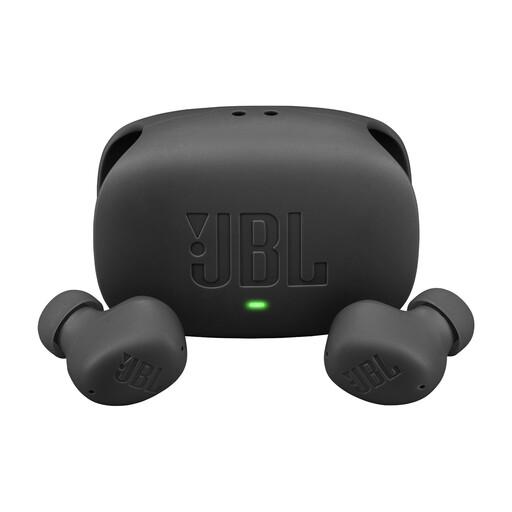 Image unavailable
JBL Wave Buds 2, black
An in-ear option to compare if you want to reduce noise while travelling but still be able to let ambient sound in.
The product description mentions active noise cancellation, Smart Ambient and multipoint connectivity. Check how the ambient mode works for your journey.
View at Joybuy
 Image unavailable
AOC ACT2615 wireless earbuds
These wireless earbuds are worth comparing if you’re looking for a compact design for listening on the go.
The product title mentions active noise cancellation. This isn’t a measure of how clearly you’ll hear spoken poetry.
View at Joybuy
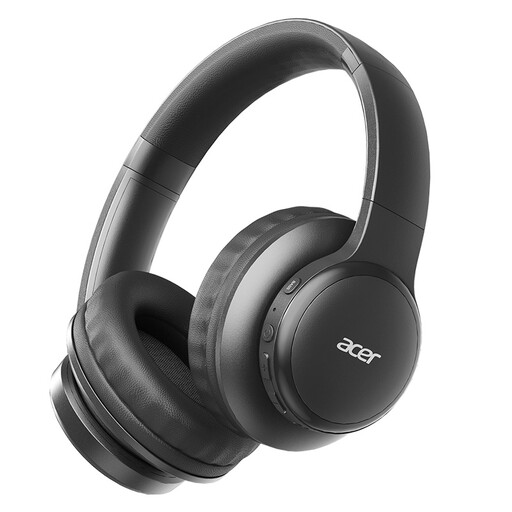 Image unavailable
Acer OHR559 wireless over-ear headphones
A foldable over-ear model to consider if you want ear cushions and headphones you can take with you on the go.
The product title mentions Bluetooth 5.3 and a foldable design. Check whether the fit stays comfortable during a longer listening session.
View at Joybuy
 Image unavailable
Samsung Galaxy Buds4 Pro, black
These in-ear earbuds are a compact option to compare if you want to reduce train noise.
The product title mentions active noise cancellation. Check the fit for yourself and see how you can hear ambient sound.
View at Joybuy
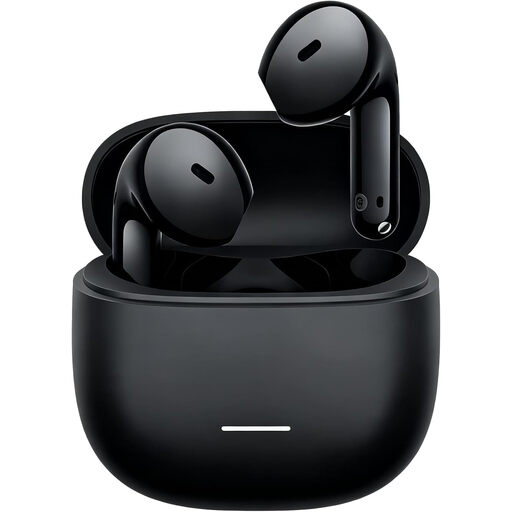 Image unavailable
REDMI Buds 8 Active, black
A compact in-ear option to take with you if you want to listen to audio while travelling.
The product description mentions earbuds weighing 3,8 g each and a charging case. On its own, this doesn’t tell you how clearly you’ll hear audio on the train.
View at Joybuy
Frequently asked questions
Do I always need noise cancellation to listen to a poem on the train?
No, active noise cancellation isn’t always necessary. If a well-fitting, less sound-isolating pair of headphones works for your journey, you can choose that instead. If ambient noise is distracting, noise cancellation can help you avoid turning up the volume.
How can I hear announcements while wearing headphones?
Before you set off, check how to pause playback or turn on a transparency mode, if available. Controls vary by model: JBL lists Ambient Aware and TalkThru for the Tune 770NC; Bose describes controls for switching between Quiet and Aware on the QuietComfort Headphones. Neither mode guarantees that you’ll understand every announcement.
How can I avoid turning the volume up too high on the train?
The WHO recommends keeping the volume low, taking listening breaks and using well-fitting headphones, with noise cancellation if needed. Its general guideline suggests a maximum of 60% of your device’s volume; that percentage isn’t a measure of your actual sound exposure.
What can I do if headphones I’ve bought online aren’t suitable or become faulty?
According to the Dutch government, online purchases from a business often come with a 14-day cooling-off period, subject to exceptions and specific returns conditions that you should check. If a product is faulty, the seller must offer an appropriate solution; the Netherlands doesn’t have one fixed statutory guarantee period that applies to all products.
Can I listen to a reading in an NS quiet zone?
NS rules say that quiet zones must be genuinely quiet and that passengers must not disturb others with loud conversations or music. Make sure no sound can be heard from your headphones. These are NS rules, not a general rule for all train operators.


