
Listener in a shared library
Wants to follow an improvisation without disturbing others, so pays attention to sound leakage and listening volume. RTINGS.com notes that open-back headphones can let sound escape into the surrounding area.


For a quiet library, a well-fitting pair of closed-back headphones is a sensible first choice. They generally let less sound escape than an open-back model, but they can’t guarantee silence for others. Choose a wired pair if you want to listen back without needing to recharge; consider ANC if background noise distracts you, and check the fit, sound leakage and sound quality of each model at your usual listening volume.
Wants to follow an improvisation without disturbing others, so pays attention to sound leakage and listening volume. RTINGS.com notes that open-back headphones can let sound escape into the surrounding area.
Listens to passages repeatedly to follow instrument lines and timing, for example, and wants to assess the sound using their own audio source. The Consumers’ Association includes jazz among the music genres in its headphone listening assessment.
Wears headphones for extended periods, so wants to consider the fit and controls and, for wireless models, battery life with their chosen settings.
Start by considering the risk of sound leakage in a shared space. Then compare the sound, comfort and connectivity options that suit the way you study.
| What to consider | What should you look for? | Who is this important for? |
|---|---|---|
| Sound leakage | Compare open-back and closed-back earcups, and check for leakage at a moderate listening volume. | I want to follow passages without disturbing the next table. Around 33% of consumers put not disturbing others first. |
| Jazz sound | Compare familiar jazz tracks and check whether you can switch off sound effects. | I want to follow instrument lines and passages clearly when listening back. Around 27% of this group of consumers put jazz sound first. |
| Comfort | Assess the fit during a realistic listening session, including if you wear glasses. | I want to continue a long study session without the fit becoming uncomfortable. Around 20% of consumers prioritise long-wearing comfort above all else. |
| Connectivity and battery life | Check the audio output, the connection you want and the battery life with your chosen settings. | I want to listen wirelessly or adjust background noise, but need to know which features use power. Around 20% of consumers prioritise wireless convenience or noise reduction above all else. |
An open-back design can be enjoyable for listening to music, but it generally lets more sound escape. This can disturb others in a quiet, shared space.
It’s best to save open-back models for your own space. If you choose a closed-back alternative, still check how much sound escapes at your usual listening volume.
Active noise cancellation is designed to reduce background noise for the listener; it doesn’t tell you how much music other people can hear.
To limit sound leakage, also consider the design, fit and volume.
Claimed battery life can vary depending on the mode you use. For example, Sony lists up to 30 hours with noise cancellation on and up to 40 hours with noise cancellation off for the WH-1000XM6.
Only compare battery figures for the same settings, and bear in mind that claimed figures don’t guarantee actual battery life.
These examples illustrate different designs and features; they aren’t an overall assessment of the brands or their entire ranges.
The wired ATH-M50x is a closed-back model with passive isolation, designed for anyone who wants to listen back to passages without relying on a battery.
According to Sony Netherlands, the WH-1000XM6 is a closed-back over-ear model with ANC, a cable input and multipoint connectivity.
According to JBL, the Live 770NC is a wireless over-ear model with ANC and Smart Ambient.
According to soundcore, the Space One has adjustable ANC and a transparency mode.
Sennheiser positions the open-back, wired HD 560S for analytical listening in your own space.
These product picks are relevant to headphones for studying jazz; check that each model’s design, connectivity and fit suit the way you use your library.
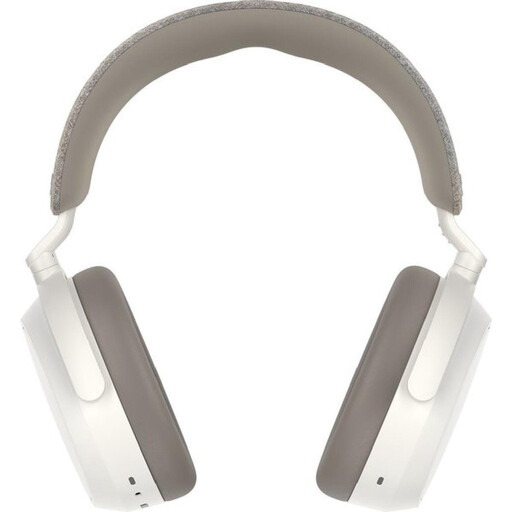 No image available
For anyone who wants to listen wirelessly and also have the option of a wired connection; check that the fit and sound leakage are suitable for a shared library.
The product description lists ANC, EQ settings and passive wired use without a battery. It also mentions an included 3.5mm audio cable and up to 60 hours of playback time.
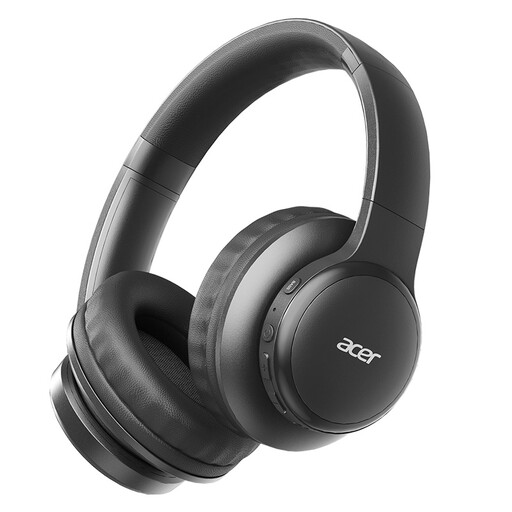 No image available
For anyone who wants to listen wirelessly and is looking for a foldable model; check that the fit and sound leakage are suitable for the library.
The product title lists Bluetooth 5.3 and a foldable design.
 No image available
For anyone looking for in-ear earbuds with ANC; check that this style feels comfortable during your study session.
The product description lists an equaliser and up to 6 hours of playback per charge of the earbuds with ANC on, or up to 26 hours including the charging case.
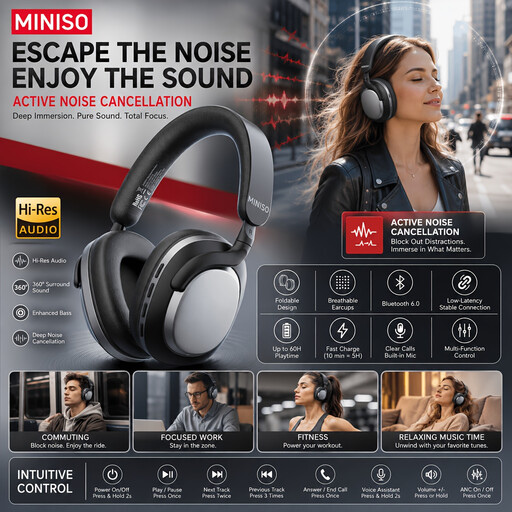 No image available
For anyone looking for wireless over-ear headphones with ANC; check the fit and how much sound leaks out to others.
The product title lists ANC and a claimed battery life of 24 hours.
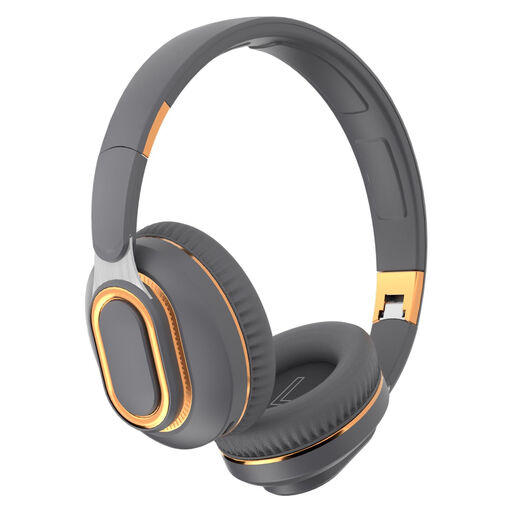 No image available
For anyone who wants to switch between wireless and wired listening; check that the connection is compatible with your audio source.
The product information lists Bluetooth 5.0, a wired connection, TF card playback and a foldable design. The description states a maximum battery life of 16 hours.
You can, but open-back headphones generally let more sound escape than closed-back models. If you choose a closed-back alternative, still check for leakage at your usual listening volume and follow the library’s rules.
No. ANC reduces background noise for you and doesn’t guarantee that other people won’t hear your music. The design, fit and volume also affect sound leakage.
Wired listening means you don’t need a charged battery for playback, as long as your audio source has a compatible connection. Wireless may be more convenient if you prefer that connection; if so, check the battery life with the features you use.
No, it depends on the headphones and audio source. Sennheiser says an amplifier isn’t essential for the 120-ohm HD 560S, though it may be beneficial with recordings that have a wide dynamic range. Also check that your source has the right connection.