
The listener in a noisy group
Wants to follow spoken explanations without constantly turning up the volume to drown out noise at the table. Look at speech clarity, fit and how well the headphones reduce noise in your own space.


Choose closed-back over-ear headphones with adjustable noise cancelling if conversations at the table often drown out your lecture; open-ear earbuds may suit you better if you need to respond regularly and the room is quiet enough. Neither option guarantees that you’ll hear every voice clearly or that others won’t hear your lecture, so test the fit, speech clarity and any sound leakage where you’ll be listening.
Wants to follow spoken explanations without constantly turning up the volume to drown out noise at the table. Look at speech clarity, fit and how well the headphones reduce noise in your own space.
Wants to stay approachable while listening independently and is choosing between an easily accessible ambient mode and an open design.
May listen for several sessions in a row and will want to consider fit, pressure around the head or ears, and keeping the volume at a manageable level.
May suit you better if: conversations at the table often drown out your lecture and you usually listen on your own.
Bear in mind: over-ear headphones take up space in your bag; ANC doesn’t reduce every sound equally, and an ambient mode won’t necessarily let you hear every comment.
May suit you better if: you often need to respond to people at the table straight away while listening, and the room is quiet enough.
Bear in mind: you’ll still hear the sounds around you, and people sitting nearby may be able to hear your lecture.
May suit you better if: you want a compact option and can get a comfortable, snug fit with earbuds.
Bear in mind: fit and comfort vary from person to person, and you may be less likely to notice when someone at the table speaks to you.
Compare speech clarity and noise reduction separately. Consumentenbond treats them as separate features too; an ANC label alone doesn’t tell you how much speech at the table will be reduced in your room.
| What to consider | What should you check? | Who should pay particular attention? |
|---|---|---|
| Understanding spoken explanations | Listen to a similar speech recording at your usual volume. Assess fit, speech clarity and noise reduction separately. | If I miss technical terms as soon as someone at the table starts talking, I want to assess voices and noise reduction separately. Around 33% of consumers put clear speech first. |
| Staying approachable | Try the ambient mode or open-ear earbuds with someone you can talk to. Ask them to check whether your lecture is audible from the usual seating distance. | If I need to talk things over from time to time, I want to be able to respond quickly without disturbing others with my audio. Around 27% of consumers prioritise staying approachable. |
| Comfort and listening volume | Try the fit, including with glasses if relevant. Consider both volume and listening time; the WHO identifies both as factors in exposure to loud sound. | For longer sessions, I want a fit that stays comfortable and not to have to keep turning up the volume. Around 20% of consumers name long-term comfort as their main concern. |
| Switching between devices and battery life | Check multipoint and the controls on the exact version. Compare battery life only with the same ANC setting, and check which accessories are included. | If I switch between devices or listen for long stretches, I want to know which features I’ll actually use and how often I’ll need to charge. Around 20% of consumers prioritise practical use and cost. |
An ANC label doesn’t tell you on its own how natural a lecture will sound or how much noise at your table will be reduced.
Compare speech clarity and noise reduction using a similar recording at a normal listening volume.
An open design helps you stay more aware of your surroundings, but people at the table may be able to hear the lecture you’re playing.
Ask someone to listen from the usual seating distance. If the sound leakage is distracting, choose a better-sealing option or turn the volume down.
JBL quotes up to 70 hours for the Tune 770NC with ANC off, and 44 hours with another specified setting. The highest figure doesn’t apply to every mode of use.
Compare manufacturer figures only when the settings are the same, and allow for charging between listening sessions.
Teufel states that a USB-C charging adapter isn’t included with the REAL BLUE PRO. You may need a suitable adapter if you don’t already have one.
Check what’s included and whether an adapter you already own is suitable.
If you don’t have a suitable adapter, you’ll need to arrange one separately before you can charge the headphones.
The WH-1000XM6 is a closed-back wireless option to compare if you’re looking for ANC and an adjustable ambient mode.
The Tune 770NC is an over-ear option with ANC, Ambient Aware and TalkThru, so you can switch between listening and a quick chat.
The OpenFit 2 is an open-ear option for anyone who regularly needs to respond to people at the table while listening.
The ACCENTUM Plus Wireless is an over-ear option with adaptive ANC.
The REAL BLUE PRO is an over-ear option with hybrid ANC and an audio cable included.
The Joybuy picks below are mostly closed-back over-ear models with ANC and ambient features, plus one open-ear option for anyone who wants to stay in touch with people at the table while listening.
 No image available
An option to compare if you’re looking for closed-back over-ear headphones with ANC and an ambient mode.
The product description lists adaptive ANC, Transparency Mode, up to 60 hours of playback and a 3.5mm audio cable included.
 No image available
May suit you if you want to use ANC during a lecture and switch to an ambient mode when it’s time to talk.
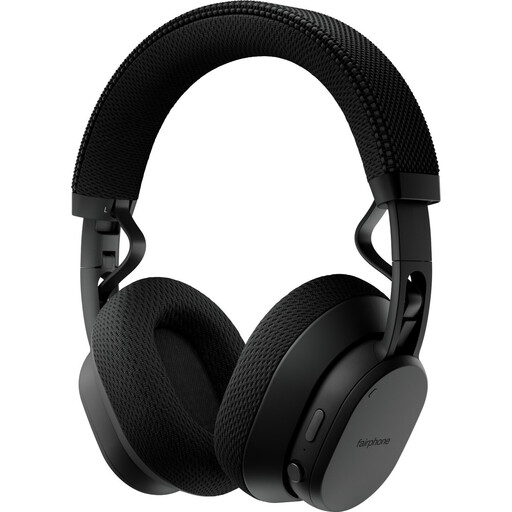
The description lists Hybrid ANC, Ambient Sound, multipoint and up to 26 hours with ANC on. It also mentions breathable mesh on the headband and ear pads, as well as replaceable parts.
 No image available
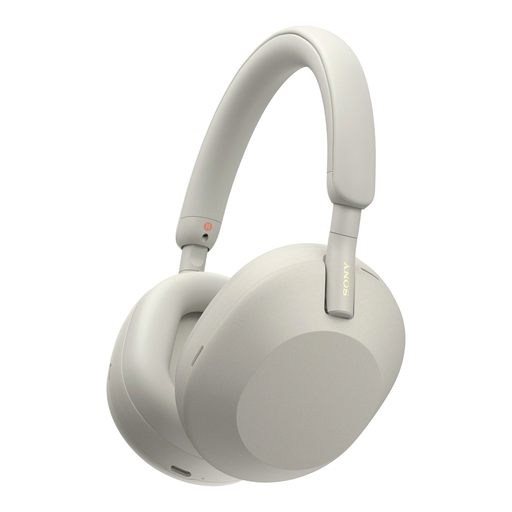
A closed-back wireless option to consider if you want to use ANC while listening on your own and switch between devices.
The product description lists simultaneous connection to two devices, up to 30 hours of battery life with noise cancelling on, and Speak-To-Chat.
 No image available
May suit you if you want to adjust ANC and switch to an ambient mode during a lecture.
The description lists up to 35 hours with noise cancelling on, multipoint, 20-step ANC adjustment and Ambient Sound mode.
 No image available
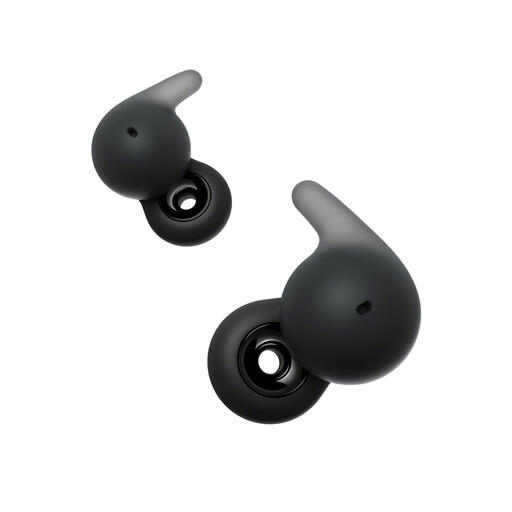
An open-ear option if you want to stay approachable during a lecture; you’ll still hear the sounds around you.
The description lists multipoint, up to 22 hours of total battery life, IPX4 and a weight of 4,8 g per earbud. With an open design, people nearby may also hear your audio.
No, don’t choose based on the ANC label alone. Consumentenbond treats speech clarity and noise cancelling as separate features. Try a similar lecture in your own space at a moderate volume.
First connect your playback device and practise pausing or switching on ambient mode. Sony describes Ambient Sound and multipoint settings for the WH-1000XM6 in Sound Connect; JBL lists Ambient Aware and TalkThru for the Tune 770NC. Check the instructions for the exact model.
It depends on both the actual sound level and your total listening time. The WHO gives an average of 80 dB for up to 40 hours per week as a reference for adults; a position on the volume slider doesn’t automatically correspond to a particular decibel level unless you measure it. Don’t keep turning the sound up to drown out noise at the table.
No. According to ACM ConsuWijzer, Dutch legal warranty has no fixed term: a product must meet what you could reasonably expect from it under normal use. If a product is faulty, the seller is the point of contact for an appropriate solution at no extra cost.
Not always. ACM ConsuWijzer describes a cooling-off period that is usually 14 days after delivery, with exceptions, including potentially hygiene products whose seal has been broken. Before opening the packaging, check which terms apply to the earbuds you’ve bought; this isn’t a general exception for every type of headphones.