
Roommate who listens sitting up
You want to follow spoken comedy without using a speaker in your shared bedroom, and you’re looking for comfortable headphones.


If you mainly listen sitting up, wired over-ear headphones are a sensible option if your playback device has a compatible socket; Philips lists a 2 m cable for the TAH2005BK/00. If you listen lying on your side, consider small sleep earbuds instead and pay attention to how they fit you. Noise cancellation may be useful if background noise bothers you, but it doesn’t tell you how much sound your roommate can hear.
You want to follow spoken comedy without using a speaker in your shared bedroom, and you’re looking for comfortable headphones.
You listen lying on your side, so pressure from an earcup or earbud against your pillow is a factor in your choice.
You want to follow speech without turning up the volume when there’s noise in the room.
Choose these if: you usually listen sitting up, your device has a compatible headphone output and you don’t want to charge a battery.
Bear in mind: a cable can get in the way beside the bed, and the earcups may press against your pillow.
Choose these if: you listen sitting up and value freedom of movement; noise cancellation is another consideration if background noise bothers you.
Bear in mind: you’ll need to charge the battery and decide for yourself whether the fit is comfortable.
Choose these if: you listen lying on your side and an over-ear earcup presses against your pillow; soundcore positions the Sleep A20 for side sleepers.
Bear in mind: fit and pressure in your ears are personal; also check playback time per charge and your device’s Bluetooth capabilities.
| What to consider | What should you check? | Who should consider this? |
|---|---|---|
| Comfort in your listening position | Decide whether you mainly listen sitting up or lying on your side; check the fit and, for sleep earbuds, the available ear tip sizes. | If I listen lying on my side, I don’t want an earcup pressing against my pillow, and I pay attention to pressure in my ear. Around 36% of consumers prioritise comfort in their usual listening position. |
| Not disturbing your roommate | Check that the fit is snug and keep the volume at the lowest usable level; blocking noise for yourself doesn’t prove that no sound leaks out. | In a shared room, I want to listen privately without assuming that noise cancellation will block sound for someone else. Around 29% of consumers prioritise not disturbing their roommate. |
| Understanding speech at low volume | Try following spoken audio at a comfortable, low volume; if background noise is bothersome, consider the fit and possibly noise cancellation. | If background noise drowns out comedy, I want to follow the speech without turning the volume up further. Around 21% of consumers prioritise being able to understand speech at low volume. |
| Connection and ease of use | Check your device’s headphone output or Bluetooth audio capability, the cable length and, for wireless earbuds, playback time per charge. | I want my radio or other audio source to connect directly, and I want to know whether I’ll need a cable or a charger. Around 14% of consumers prioritise connection and ease of use. |
Noise cancellation affects the sound you hear; it doesn’t prove how much of your comedy your roommate can hear.
Choose a fit that suits your listening position and keep the volume low. Treat noise cancellation only as a possible way to reduce noise that bothers you.
Earcups may feel comfortable when you’re sitting up, but press against your pillow when you lie on your side.
First decide whether you mainly listen sitting up or lying on your side, then check the fit of the type you choose.
Consumentenbond distinguishes between the playback time of the earbuds themselves and the extra charges provided by the case. soundcore lists separate figures for Bluetooth use and the case for the Sleep A20.
Compare the stated playback time of the earbuds themselves with how long you want to listen in one go.
Wired headphones need a compatible output; for Bluetooth playback, your audio source must be able to send audio wirelessly to headphones.
Before buying, check the outputs on your radio or the Bluetooth audio capability of the device you use for playback.
The TAH2005BK/00 is an example of a straightforward pair of wired over-ear headphones.
The WH-CH720N is an over-ear model with noise cancellation and the option to use it with a cable.
According to JBL, the Tune 720BT combines Bluetooth with a detachable audio cable.
According to soundcore, the Sleep A20 is designed as a small sleep earbud; the Space One offers an over-ear option from the same brand.
This product selection includes wireless in-ear and over-ear models for personal listening. The right style for you depends on your listening position and the connection available on your audio source.
 Image unavailable
For personal listening from a Bluetooth audio source that can send audio to earbuds.
In-ear, True Wireless, Bluetooth and active noise cancellation.
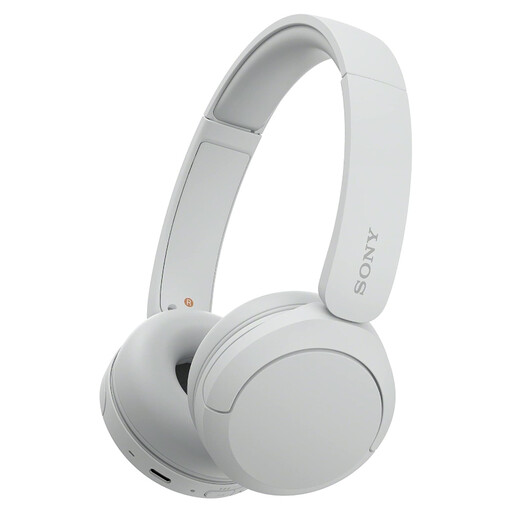 Image unavailable
For listening from a Bluetooth audio source; check whether the on-ear fit feels comfortable in your listening position.
On-ear, Bluetooth and adjustable headband.
 Image unavailable
For anyone looking for wireless over-ear playback with the option of listening via a cable; the earcups may press against your pillow when you lie on your side.
Bluetooth, adaptive noise cancellation and a 3.5mm audio cable included. The stated battery life is 60 hours.
 Image unavailable
For anyone who wants Bluetooth playback with the option of listening via a cable; check that your audio source has a compatible connection.
The product description lists active noise cancellation and an included audio cable. The over-ear earcups may press against your pillow when you lie on your side.
 Image unavailable
For anyone looking for over-ear Bluetooth headphones; check the fit if you also want to listen lying down.
Bluetooth and active noise cancellation.
Not necessarily: first choose a fit that suits your listening position. Noise cancellation is most relevant if background noise bothers you; it doesn’t prove that your roommate can’t hear anything.
Only if your audio source can send Bluetooth audio to headphones. If not, check what kind of headphone output your radio has before choosing a wired model.
Try the available ear tip sizes to find a comfortable fit, and compare playback time per charge with playback time including the case. Follow the instructions for your chosen model on storage and cleaning; Consumentenbond notes that the small batteries in wireless earbuds are generally not replaceable.
Keep the volume as low as is practical for you and take listening breaks. The World Health Organization gives exposure examples of up to 40 hours per week at an average of 80 dB and four hours at 90 dB; these aren’t guaranteed safe volume settings for a specific device.
According to ACM ConsuWijzer, online purchases generally come with a statutory 14-day cooling-off period after delivery. For products covered by a hygiene exception, opening the packaging may affect this right; check the terms for the specific earbuds. You’re also covered by the statutory guarantee if a product doesn’t perform as you could reasonably expect under normal use.