
Mindful of your roommate
You’re following a lesson while someone else in the same room is resting or busy. So you’ll want to consider how much sound escapes and keep your listening volume at a manageable level.


For an audio course in a shared bedroom, first choose a fit that stays comfortable, then check how much sound leaks out at your normal listening volume. ANC for the wearer alone tells you nothing about how much sound reaches your roommate. Closed-back wired headphones suit a fixed listening spot with a compatible connection, while wireless ANC headphones are worth considering if room noise distracts you, but they do require battery management. Check the fit and connection, and, if possible, test for sound leakage before you buy or within the applicable returns period.
You’re following a lesson while someone else in the same room is resting or busy. So you’ll want to consider how much sound escapes and keep your listening volume at a manageable level.
Conversations or other sounds in the room make it hard to follow the lesson. A close-fitting design may be important for you, without needing to keep turning up the volume.
You take longer lessons or switch between devices. In that case, fit, battery life and connectivity all affect how practical the headphones are during your course.
| What matters | What to look for when buying | Who is this more important for? |
|---|---|---|
| Not disturbing your roommate | Check the design and, if possible, test the headphones with someone sitting beside you while your course plays at your normal volume. | If someone is resting beside me, I want as little sound as possible to escape at my usual course volume. Around 36% of consumers put limiting sound leakage first. |
| Following your course over room noise | Compare the fit and noise isolation for the sounds in your room; don’t rely on an ANC label alone. | When voices or other sounds in the room interrupt my lesson, I want to follow the course without constantly turning up the volume. Around 29% of consumers prioritise fewer distractions above all else. |
| Comfort throughout a whole lesson | Consider the pressure from the headband and ear cushions; compare on-ear and over-ear designs, and judge the fit for yourself. | For longer lessons, I want headphones that remain comfortable to wear over time. Around 21% of consumers choose wearing comfort as their main consideration. |
| Connecting and listening without interruption | Check your device’s connection, the cables included and, for Bluetooth, compatibility with the devices you use. | If I switch between devices or want to listen without interruption, the connection needs to suit my course set-up. Around 14% of consumers put connectivity and uninterrupted listening first. |
ANC is designed to reduce background noise for the wearer. It doesn’t tell you how much sound someone else will hear.
Test for sound leakage at your usual course volume, and don’t choose headphones based solely on an ANC label.
Open or poorly fitting headphones may let in more ambient noise. Turning up the volume isn’t a substitute for a good seal.
First compare a close-fitting design that creates a good seal, and keep the volume low.
Wired headphones need a compatible connection. Features such as multipoint are also only available on specific wireless models.
Check the port, Bluetooth support and cables included with the exact model. You may need a compatible adapter or a different playback device.
The WH-CH720N is an example of lightweight wireless over-ear headphones with ANC and multipoint connectivity.
The wired ATH-M50x is a closed-back headphone for listening in one place; the ATH-M50xBT2 is a separate wireless model.
The TAH2100WT/00 is a wired on-ear option; the TAH6509BK/00 is a separate wireless over-ear model.
The Space One Pro is a foldable pair of wireless over-ear headphones with ANC.
According to JBL, the LIVE 770NC and LIVE 670NC offer a choice of over-ear and on-ear designs, with ANC and an ambient mode.
These Joybuy options are relevant if you’re looking for wireless listening with ANC, or if you also want the option of a wired connection.
 No image available
Suitable for anyone who wants to listen wirelessly while keeping the option of a wired connection.
Joybuy’s product information lists Bluetooth, multipoint, a detachable audio cable and up to 24 hours of battery life. ANC reduces noise for the wearer, but doesn’t tell you how much sound a roommate will hear.
 No image available
Suitable for anyone who wants to switch between two devices during lessons and have the option of wired listening.
Joybuy lists multipoint, up to 30 hours of battery life, and USB-C and 3.5mm cables included. According to the product information, the Sonos Ace must be registered in the Sonos app to use multipoint. ANC doesn’t prove how much sound leaks out.
 No image available
Suitable for anyone who wants to listen wirelessly across devices and reduce room noise for themselves.
Joybuy lists connection to two devices and up to 30 hours of battery life with noise cancelling switched on. The product information says a good fit is needed for optimum noise cancelling; this doesn’t tell you how much sound will leak out to a roommate.
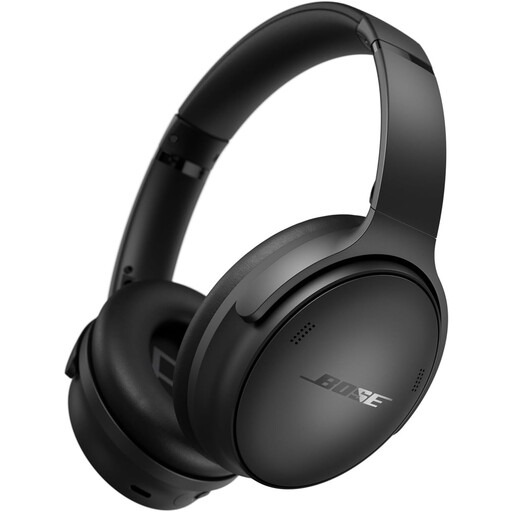 No image available
Suitable for anyone considering over-ear headphones with different listening modes.
The product information lists Quiet and Aware modes, along with soft ear cushions. Fit is personal; noise cancelling doesn’t tell you how much sound a roommate will hear.
 No image available
Suitable for anyone who wants to listen wirelessly but also needs a wired connection.
Joybuy lists Bluetooth 5.4 and a detachable cable with USB-C and 3.5mm connectors. According to the product information, no charger is included and PD fast charging isn’t supported. ANC doesn’t measure how much sound leaks out.
Not necessarily: ANC is designed to reduce background noise for the wearer. Check separately how much sound escapes at your listening volume; an ANC label won’t answer that.
The World Health Organization recommends keeping the volume low, taking regular breaks and using well-fitting headphones. As a practical guideline, it suggests a maximum of 60% of your device’s volume; the actual sound level and listening time also matter.
Check that your playback device supports the right audio connection or Bluetooth, and see which cables are supplied with the specific model. Adjust the headband or earbuds properly: according to the Consumers’ Association, their position affects sound reproduction.
Try the headphones during a longer listening session, as comfort depends on how the headband and ear cushions fit you. The Consumers’ Association explains that on-ear models can put more pressure on your ears, so compare them with a well-fitting over-ear design too.