Start with your own recording: at a comfortable volume, check whether you can follow quieter contributions, then try the fit during a listening session that reflects how you use your headphones. Closed-back wired headphones suit a fixed listening spot if the connection is compatible. If you often listen around background noise or switch between devices, compare wireless noise-cancelling models and check the battery life with the settings you use. Noise cancellation reduces background noise, but it won’t make a poorly recorded voice clearer.
Who listens back to seminar recordings?
Listener of quieter contributions
You replay existing seminar recordings to follow different voices or quieter comments. Compare headphones using the same recording at a comfortable volume. The Consumentenbond takes speech quality into account when assessing headphones for study or work.
Long-session listener
You work with audio files for extended periods and want to avoid uncomfortable pressure from the headband or ear cushions. Try the fit for yourself. Over-ear models can be comfortable during long sessions, but take up more room in your bag, as the Consumentenbond notes.
Listener in a busy environment
You play local files while there’s background noise around you. Compare the fit and any noise-cancelling features with the sounds that actually disturb you: blocking out background noise and reproducing voices are two different things.
What should you look for when choosing?
First, listen to a tricky passage from one of your own files. Then compare the connection, comfort and noise reduction.
Closed-back, wired
Best if: you mainly listen in one place, don’t want to recharge your headphones and have a compatible audio output.
Bear in mind: a cable limits your movement, so check the plug and whether you’ll need an adapter. Closed-back ear cups don’t guarantee that quieter voices in your recording will sound clear.
Wireless with active noise cancellation
Best if: you often listen in noisy surroundings or want to switch between devices.
Bear in mind: assess voice reproduction and noise reduction separately, and compare battery life using the same settings. Noise cancellation won’t improve the recording itself.
| What to consider |
What to look for |
Who should pay particular attention? |
| Clarity |
Compare the same recording at a comfortable volume; assess voice reproduction separately from noise reduction. |
I want to follow the words in quieter contributions in my own recording, rather than simply turning up the volume. Around 33% of consumers rank speech clarity as their main concern when buying. |
| Comfort |
Try the headphones for as long as you’d normally listen, and wear your glasses too if needed. |
During long listening sessions, I want to avoid uncomfortable pressure from the headband or ear cushions. Around 27% of consumers prioritise comfort. |
| Background noise |
Compare a well-fitting closed-back model with active noise cancellation against the type of background noise that bothers you. |
If background noise distracts me, I want to assess noise reduction separately from the voices in the file. Around 20% of consumers name noise reduction as their main buying priority. |
| Connectivity |
Check that the plug or Bluetooth connection is compatible with your playback device. For wireless use, check the battery life with your settings. |
I want to know in advance how my device connects and whether wireless use suits my listening sessions. Around 20% of consumers rank ease of connectivity as their main buying priority. |
Things to watch out for when buying
-
Confusing noise cancellation with repairing a recording
Noise cancellation is designed to reduce sounds in your listening environment. It won’t automatically make missing or unclear words in the audio file easier to understand.
Test a tricky passage from one of your own recordings and assess clarity separately from noise cancellation.
-
Choosing wired headphones without checking the connection
The plug on the supplied cable must fit the audio output on your playback device.
Before buying, compare your device’s connection with that of the exact headphones and cable you’re considering.
You may need a compatible adapter.
-
Assuming the maximum battery life applies with noise cancellation on
Battery life can vary depending on the settings. Sony states that the WH-1000XM6 offers up to 30 hours with noise cancellation on and up to 40 hours with it off.
Compare battery life using the settings you’ll actually listen with.
-
Confusing an extended warranty with your full statutory protection
According to ACM ConsuWijzer, statutory guarantees in the Netherlands don’t have a fixed term of exactly two years. What you can reasonably expect from a product is also a factor. A commercial warranty is separate.
If something goes wrong, first consider your statutory rights and ask the seller what would be an appropriate solution.
Brands to consider
Audio-Technica
The ATH-M40x is a wired monitor model to consider if you mainly listen in one place.
- Audio-Technica lists detachable cables and a closed-back design.
- Check your device’s connection. These features don’t tell you whether every seminar recording will sound clear.
Sennheiser
The HD 569 is a wired over-ear model for listening at home or at a fixed workstation.
- Sennheiser lists two detachable cables, including a 1.2 m cable with a 3.5 mm plug, and replaceable ear cushions.
- Check the plug, cable length and personal fit. According to the specifications, the HD 569 doesn’t have active noise cancellation.
JBL
The Tune 770NC is a wireless over-ear option to compare if noise cancellation and switching between devices matter to you.
- JBL lists a foldable design and up to 70 hours of battery life.
- Check which usage mode that maximum battery life applies to. It isn’t an independent measure of how clearly seminar voices will sound.
Sony
According to Sony, the WH-1000XM6 combines wireless listening, noise cancellation, an ambient sound mode, multipoint connectivity and a wired listening option.
- Sony lists passive wired operation and up to 30 hours of music playback with noise cancellation on, compared with 40 hours with it off.
- These are maximum figures. Try the voice reproduction and fit with your own audio.
Joybuy products for listening back
These Joybuy picks are suited to listening back to local audio, including wireless headphones and headsets for computer use.
 No image available
Sennheiser MOMENTUM 4 Wireless, Black
A wireless over-ear option for listening back to local recordings; the product title mentions noise cancellation.
The selection details also mention a wired listening option. Check that the connection and the listening mode you want are compatible with your device.
View at Joybuy
 No image available
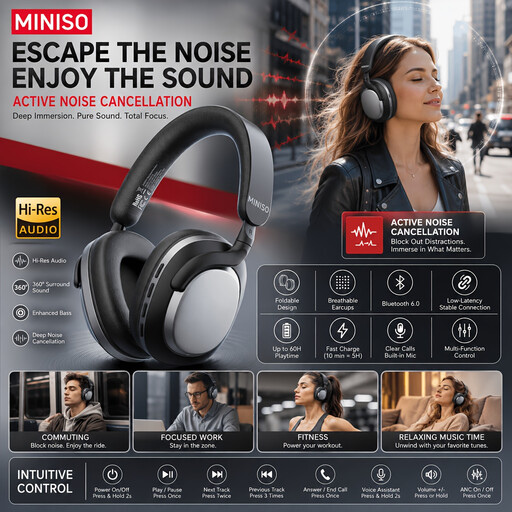
MINISO MG210, Black
A wireless over-ear option for local files; the product title mentions noise cancellation.
Compare how voices sound with one of your own recordings, and check which usage mode the stated battery life applies to for your listening sessions.
View at Joybuy
 No image available
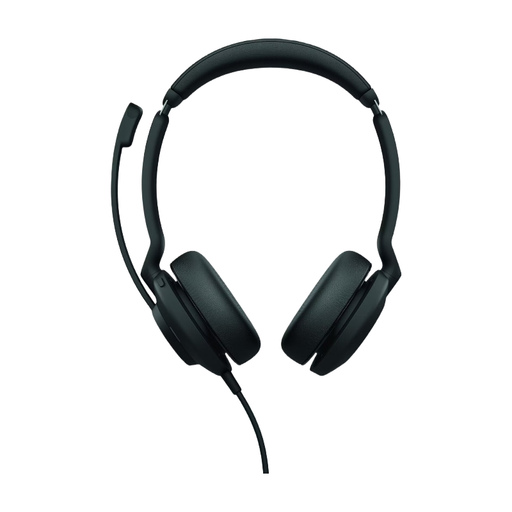
Jabra Evolve2 30 SE
A headset option for playing local audio from a computer.
Check that the USB-A connection on this version is compatible with the device your files are stored on.
View at Joybuy
 No image available
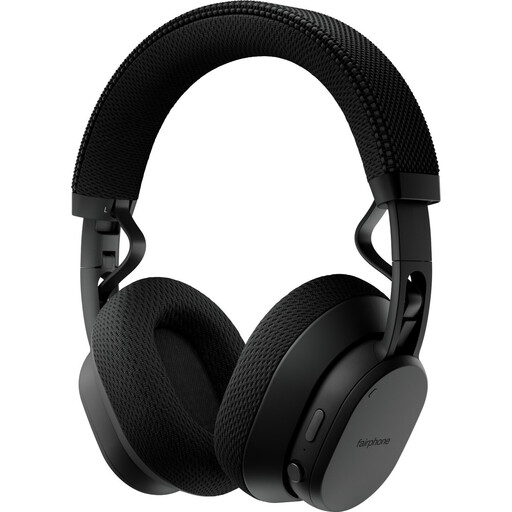
Fairphone Fairbuds XL 2025, Black
An over-ear option for listening to local audio wirelessly.
Before buying, check that the connection and any device-switching features suit your setup and how you plan to use the headphones.
View at Joybuy
 No image available
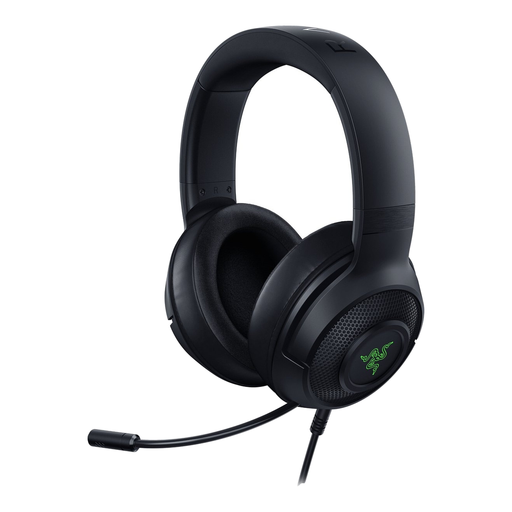
Razer Kraken V3 X, Black
A headset option for playing local audio.
Check the connection on this version and its compatibility with the device you use to store your files.
View at Joybuy
Frequently asked questions
Will noise cancellation make an unclear voice in my recording easier to understand?
No. Noise cancellation is designed to reduce sounds in your listening environment, not improve the recording itself. Compare voice reproduction and noise cancellation separately using the same recording, and don’t turn the volume up indefinitely to compensate for quieter passages.
How can I check whether my device works with wired headphones?
Compare your device’s audio output with the plug on the exact headphones and cable. Sennheiser lists a supplied cable with a 3.5 mm plug for the HD 569. If your device doesn’t have this connection, first check whether another connection or an adapter will work.
What should I consider during longer listening sessions?
Try the fit during a typical listening session and keep the volume comfortable. The World Health Organization notes that both sound level and exposure time matter for hearing risks. Check the exact model when looking for replacement parts; Sennheiser lists replaceable ear cushions for the HD 569.
What can I do if my headphones break too soon during normal use?
In the Netherlands, statutory guarantees depend on what you could reasonably expect from the product; there’s no fixed statutory period of exactly two years. ACM ConsuWijzer also distinguishes between statutory rights and commercial warranties. If something goes wrong, contact the seller to discuss an appropriate solution.
Can I keep or share existing seminar recordings without restriction?
First, check the applicable privacy requirements. If an organisation processes personal data in recordings, the GDPR requires an appropriate lawful basis and that the people concerned are given information. According to the Dutch Data Protection Authority, personal data must not be kept for longer than necessary. Whether a particular recording can be kept or shared further depends on the circumstances and is separate from your choice of headphones.


