
Listening back carefully
You replay sections to assess what people said and how they contributed. The Dutch Consumers’ Association assesses speech separately in its headphone test.


Start with the recording and the device you’ll play it on: check that speech is clear at a comfortable volume and that the connection is compatible. Wired, closed-back headphones may suit you if you don’t want to rely on a headphone battery. Wireless headphones with noise cancelling are worth considering if background noise is distracting. None of these features will automatically make quiet recordings or people talking over one another easier to understand.
You replay sections to assess what people said and how they contributed. The Dutch Consumers’ Association assesses speech separately in its headphone test.
You want to follow a recording despite background noise and decide whether passive isolation or noise cancelling is right for where you listen.
You listen for extended periods, so you’ll want to consider the fit, volume, battery life and whether a wired connection would suit you better than relying on a charge.
A good fit if: you don’t want to rely on a headphone battery and your playback device has a compatible output.
Bear in mind: you’ll have less freedom to move around and may need an adapter.
A good fit if: background noise distracts you and you want to listen wirelessly.
Bear in mind: noise cancelling won’t make an unclear recording clearer; battery life can also vary depending on the listening mode.
A good fit if: replaceable parts matter to you as well as wireless listening.
Bear in mind: check that the parts are compatible with the exact version; replaceability alone says nothing about speech reproduction.
| What to consider | What to check before buying | Who it’s for |
|---|---|---|
| Assessing speech | Listen to a familiar clip at a comfortable volume; look for a separate assessment of speech. | If I want to hear words and contributions clearly, I pay more attention to speech reproduction than to a music-focused description. Around 36% of consumers prioritise assessing speech above all else. |
| Background noise | Compare the fit and passive isolation; if the headphones have noise cancelling, check the ambient mode too. | If noise around me makes it hard to follow a recording, I want to weigh up how much isolation feels comfortable. Around 29% of consumers prioritise peace and quiet in noisy environments. |
| Wearing comfort | Try the fit yourself if possible; check the headband and ear cushions. | When listening to long recordings, I want my headphones to feel comfortable, even if I wear glasses. Around 21% of consumers prioritise comfort during long sessions. |
| Connection and battery | Check the ports on your playback device and which cable you need; compare battery life with noise cancelling on if you plan to use that mode. | If I want to avoid interruptions to charge, I check that a wired connection works with my device. Around 14% of consumers prioritise listening without relying on a battery. |
Noise cancelling reduces sound around you, but it won’t automatically separate voices that are quiet or talking over one another in a recording.
Compare headphones using a clip from your own recording and look for a separate assessment of speech reproduction.
Quoted playback time can differ depending on whether noise cancelling is on or off. Battery life is only meaningful to compare when the conditions are the same.
Check battery life in the mode you plan to use when listening back.
You can only listen over a cable if the headphones and playback device have compatible connections.
Check your device’s ports, the specifications for the exact version and which cables are included. You may need a compatible adapter or cable.
The ATH-M40x is a wired, closed-back monitor headphone worth comparing if you want to listen back without relying on a battery.
The WH-CH720N combines Bluetooth with noise cancelling. The Dutch specifications also list a connection cable and passive operation.
The Tune 770NC is a wireless over-ear headphone with noise cancelling and multipoint connectivity for two Bluetooth devices.
The Fairbuds XL is worth considering if you’re looking for wireless headphones with replaceable parts and a USB-C listening option.
These wireless over-ear headphones are options for listening back to recordings. They offer noise cancelling, and some models also have a wired listening option.
 No image available
A wireless option if you want to use noise cancelling and also listen over a cable.
Adaptive noise cancelling and transparency mode.
Up to 60 hours of playback according to the product description.
Bluetooth and a wired 3.5mm connection; passive wired use is listed.
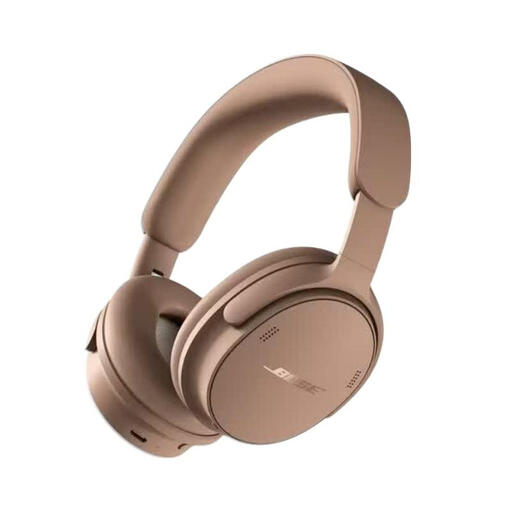 No image available
A wireless option if you want to switch between noise cancelling and a mode that lets in background sound while you listen.
Quiet and Aware modes.
Up to 24 hours of playback with noise cancelling on, according to the product description.
Bluetooth and a wired listening option.
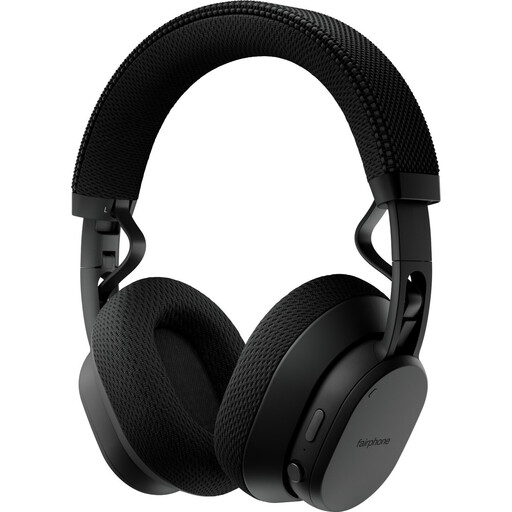 No image available
A wireless option if replaceable parts matter to you as well as noise cancelling.
Bluetooth, hybrid ANC and an ambient sound mode.
Up to 26 hours of playback with ANC on, according to the product description.
Nine replaceable parts, including the battery and ear cushions.
 No image available
A wireless option if you also want the option of wired listening via one of the listed connections.
Up to 30 hours of listening with active noise cancelling, according to the product description.
Bluetooth and wired audio sources via USB-C and 3.5mm.
Adjustable ear cups and memory foam ear cushions are listed in the product description.
 No image available
A wireless option if you want to use noise cancelling and often listen to longer recordings.
Bluetooth, over-ear design and multipoint connectivity.
Up to 35 hours of playback with noise cancelling on, according to the product description.
Weight: 192 g according to the product description.
Not necessarily. Noise cancelling is designed to reduce background noise while you listen, not to separate voices that overlap in a recording. Try a clip from your own recording; the Dutch Consumers’ Association assesses speech reproduction separately.
Play the file on the device it’s saved to and check whether the headphones can connect to it. Sony specifies Bluetooth and a connection cable with passive operation for the WH-CH720N; the ATH-M40x uses detachable cables. Check in advance which connection or adapter your device needs.
According to the World Health Organization, risks depend on sound level, duration and frequency. As an example, it gives an average of 80 dB for up to 40 hours per week, compared with four hours per week at 90 dB. These are guidelines for sound exposure, not a volume setting for a specific model; keep the volume low and take breaks.
For an online consumer purchase, you generally have a statutory cooling-off period of up to 14 days after delivery. Check the exceptions and conditions for trying products described by ACM ConsuWijzer. The legal guarantee applies if a product used normally doesn’t do what you could reasonably expect; in the Netherlands, there is no fixed general guarantee period. Bluetooth equipment placed on the EU market is subject to the European framework for radio equipment. CE marking is the manufacturer’s declaration that the product complies with the relevant EU product rules, not an independent quality assessment.