Who is this guide for?

Listeners who rewind technical terms

You follow Dutch lectures and want to be able to listen to an explanation or term again. Compare speech using your own recording and test the replay function in the app you actually use. The Consumers’ Association includes speech clips in its headphone tests; Apple Support explains how to change playback speed in Apple Podcasts on iPhone and iPad.

Listeners in noisy surroundings

You want to keep following a lecture when travel noise or household sounds are distracting, for example, without constantly turning up the volume. Sony says noise cancelling works best with constant, low-to-mid-frequency sounds.

Listeners of long lectures

You wear your headphones for longer periods and don’t want pressure on your ears or head to interrupt your listening. The Consumers’ Association notes that over-ear headphones can be comfortable during long listening sessions, but take up more room in your bag.

What should you look for when choosing?

Closed-back over-ear with noise cancelling

Choose these when: You often listen somewhere with constant background noise and find the earcups comfortable.

The trade-off: Noise cancelling works best with low, steady sounds; voices may still be audible. Over-ear models take up more space.

Closed-back over-ear without a focus on noise cancelling

Choose these when: You usually listen in a quiet room and speech reproduction, fit and controls matter more to you than active noise cancelling.

The trade-off: You’ll get less additional noise reduction when background noise increases. Assess comfort and speech reproduction separately.

Compact in-ear or open-ear headphones

Choose these when: Portability or staying aware of your surroundings is a priority, and you find the fit comfortable.

The trade-off: Sealing in-ear headphones can block out background noise, while open-ear models let more sound through. This can make quiet speech harder to follow in a noisy place.

What to consider What should you check? Who will find this most relevant?
Speech clarity Compare the same quiet passage and technical terms at a comfortable volume. Test a podcast mode or equaliser separately from noise cancelling. If I miss quiet words or technical terms, I want to compare my own recording and test settings individually. Around 28% of consumers put clear Dutch speech first.
Background noise Assess the fit and noise cancelling where you listen; also check whether you can let background sound back in. When travel or household noise drowns out a lecture, I want to listen without constantly turning up the volume. Around 22% of consumers prioritise background noise.
Comfort Pay attention to pressure around your ears and head. Try the fit for long enough, and wear glasses if you use them. During a long lecture, I don’t want pressure on my ears or head to interrupt my listening. Around 22% of consumers make long-term comfort their top priority.
Replay controls Use your own phone or computer to check whether the controls and playback app let you go back to a passage as you want. If I listen to difficult passages repeatedly, I want to get back to the right point quickly. Around 17% of consumers prioritise replay controls.
Connectivity and battery life Check that Bluetooth or any cable is compatible with your device. Compare battery life with noise cancelling switched on if you use that setting. I want suitable connectivity and battery life without paying for features I don’t need. Around 11% of consumers prioritise practical connectivity and battery life.

Common buying mistakes

  • Confusing noise cancelling with removing voices from a recording

    Active noise cancelling is designed to tackle background noise. Sony says it works best with constant, low-to-mid-frequency sounds; it is less predictable when reducing changing sounds such as voices.

    First check whether the distracting voice is in your recording or coming from your surroundings. Compare speech reproduction and noise cancelling separately.

  • Assuming the longest battery life applies with noise cancelling on

    Manufacturers may give different battery life figures for each listening mode. Sony states that the WH-CH720N offers up to 35 hours with noise cancelling on and 50 hours with it off.

    Compare the quoted battery life for the setting you’ll use during lectures.

    You may need to charge your headphones more often than you’d expect based on the highest figure quoted.

  • Assuming a pause button will rewind a passage

    Rewinding and playback speed also depend on the software and controls you use.

    Try your own lecture, device and app together. Pausing or skipping to the next track isn’t the same as going back a few seconds.

  • Assuming a quick fit check is enough for a long lecture

    Pressure on your ears, head or ear canal can matter more during long listening sessions than a specification on paper. The Consumers’ Association also assesses comfort while wearing glasses.

    Assess the fit for the length of time you’ll use them, and check the terms and conditions that apply to your order before buying online.

Brands to compare

Sennheiser

The ACCENTUM Wireless is an over-ear model to consider if you want to compare adjustable sound settings for spoken recordings.

  • Sennheiser says this model has a podcast mode, a 5-band equaliser and hybrid noise cancelling. The brand quotes up to 50 hours of playback with noise cancelling on.
  • These are manufacturer claims; try the podcast mode yourself to see if it makes your lecture sound clearer.

Sony

The WH-CH720N is a closed-back over-ear model to consider if you’re weighing up wireless listening against using a 3.5 mm cable.

  • Sony lists an Ambient Sound mode and up to 35 hours of music playback with noise cancelling on, or 50 hours with it off. Multipoint, which lets you connect two Bluetooth devices, can be set up separately.
  • These features don’t prove that speech will sound clearer; test them with your own recording.

JBL

The foldable Tune 770NC is an over-ear model to consider if you want to compare noise cancelling with switching to ambient sound.

  • JBL lists Ambient Aware, TalkThru, multipoint and an adjustable equaliser.
  • Battery life depends on the listening mode you choose. These features aren’t an independent comparison of speech clarity.

soundcore

The Space One is an over-ear model to consider if you want to compare adjustable ambient sound and wired or wireless listening.

  • soundcore lists five transparency levels and up to 40 hours with active noise cancelling or 55 hours without it.
  • The brand’s noise reduction claims don’t prove that Dutch lecture recordings will sound clearer.

Joybuy products for lectures

This Joybuy selection includes over-ear models and compact earbuds to help you weigh up speech reproduction, sound adjustments and background noise. Check that each product’s connectivity and controls are compatible with your playback device.
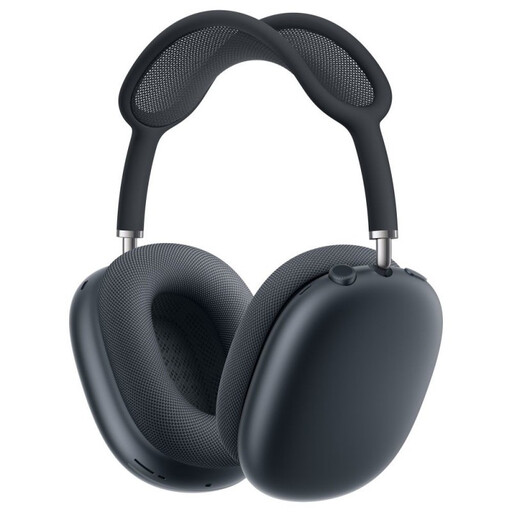
AirPods Max 2 in Midnight

AirPods Max 2, Midnight

An over-ear option if background noise distracts you and you want to switch between noise cancelling and hearing your surroundings.

The product information lists active noise cancelling, Transparency and Conversation Awareness, as well as a listening mode button.

The description mentions a mesh headband and memory foam ear cushions; decide for yourself whether they remain comfortable during a long lecture.

View product at Joybuy
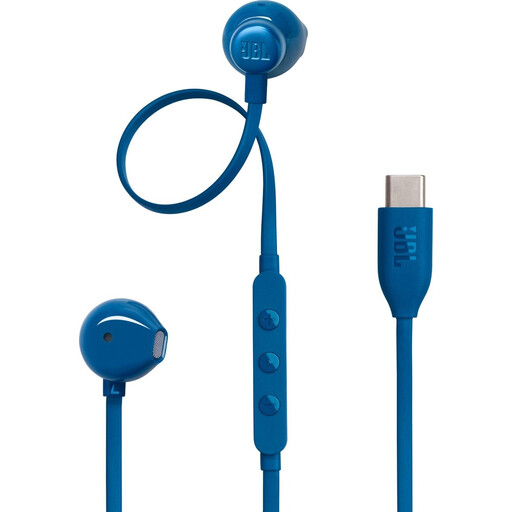
JBL Tune 305C wired USB-C earbuds in blue

JBL Tune 305C, wired USB-C earbuds, blue

A compact option if speech settings and playback controls are important to you.

The product information lists a vocal EQ preset and three-button playback and volume controls.

The connection is USB-C; check that your playback device supports it.

View product at Joybuy
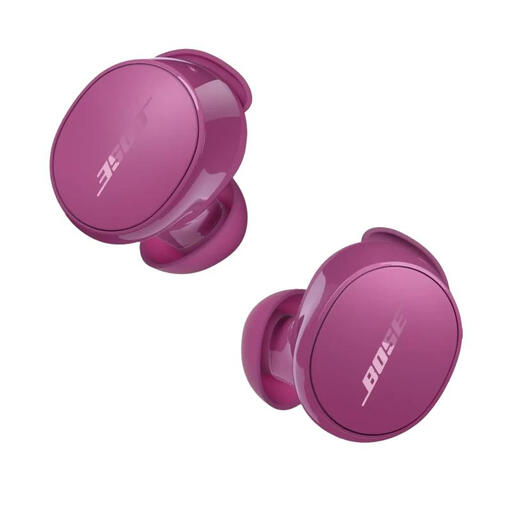
Bose QuietComfort Earbuds in Rosewood Mauve

Bose QuietComfort Earbuds, Rosewood Mauve

A compact option if you want to switch between blocking out sound and hearing more of your surroundings.

The product information lists Quiet and Aware modes, as well as Bluetooth multipoint for switching between listening devices.

The description states that the earbuds have an IPX4 water and sweat resistance rating.

View product at Joybuy

Sennheiser MOMENTUM 4 Wireless in black

Sennheiser MOMENTUM 4 Wireless, black

An over-ear option if you want adjustable sound settings and the option to let in background noise.

The product information lists adaptive noise cancelling, a transparency mode, an equaliser and sound presets.

The description mentions touch controls and a padded headband with deep, cushioned ear cups.

View product at Joybuy
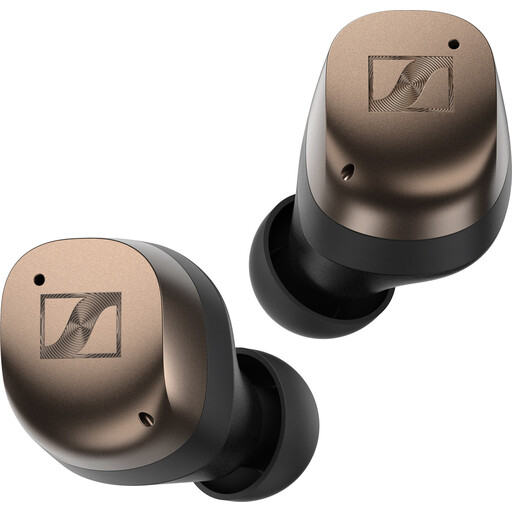
Sennheiser MOMENTUM True Wireless 4 in Black Copper

Sennheiser MOMENTUM True Wireless 4, Black Copper

A compact option if you want sound settings and playback controls close at hand.

The product information lists an adjustable 5-band equaliser, an app and customisable touch playback controls.

Adaptive noise cancelling, a transparency mode and silicone ear tips are also listed. Check that the fit stays comfortable during long listening sessions.

View product at Joybuy

Frequently asked questions

Can headphones rewind a difficult sentence by a few seconds?

Don’t assume they can: check the controls alongside your playback app. Apple Support, for example, explains how to change playback speed in Apple Podcasts on iPhone and iPad, but that app feature isn’t automatically available with every pair of headphones or on every platform.

How do you set up wireless headphones for lectures?

Pair your headphones with your playback device and test the pause control using one of your own lectures. Sony explains how to pair the WH-CH720N manually and enable multipoint separately in the app; the process and features vary by model.

Is the maximum battery life a useful guide to how long you can listen?

Only if the quoted listening mode matches the setting you use. Sony states that the WH-CH720N offers up to 35 hours with noise cancelling on and 50 hours with it off; these figures come from the manufacturer.

How can you listen safely if you replay a lecture often?

Keep the volume low, take regular listening breaks and avoid turning it up repeatedly to hear over noise. The World Health Organization gives an average of 80 dB for up to 40 hours per week as an example, compared with four hours per week at 90 dB. This is general health guidance, not a guaranteed safe volume for every person or situation.

What warranty and cooling-off period apply to an online purchase in the Netherlands?

According to the Dutch Government, there is no fixed statutory time limit for the legal guarantee in the Netherlands; if a product is faulty, the seller is your point of contact. For online purchases from a business, you generally have a 14-day cooling-off period. Check what applies to your purchase, and don’t confuse an additional manufacturer’s warranty with your statutory rights.
