Who is this choice relevant to?

Editing speech in a shared room

You want to assess quiet speech passages without turning up the volume to drown out room noise. RTINGS.com and VeiligheidNL cover playback volume when monitoring and listening in the presence of background noise respectively.

Student who also records intros

You monitor your recording as you go and want to stop the playback signal from reaching your microphone. RTINGS.com discusses closed-back headphones as a way to reduce the chance of sound leakage.

Editor with long listening sessions

You listen back repeatedly and want to assess the fit, listening volume and connection for your workspace. Consider your own comfort and check the connection on the model you choose.

What should you look for when choosing?

Closed-back, wired

Suitable if: you edit in a shared or noisy room, or monitor your voice through a microphone while recording.

Bear in mind: the seal depends on the model and how it fits. Also check the cable, plug and wearing comfort.

Open-back or semi-open, wired

Suitable if: you only edit afterwards in a quiet place and isolation is not a top priority.

Bear in mind: there is less isolation from both background noise and sound from the headphones. They are not an equivalent choice if you are recording at the same time.

What to consider What should you look for? Who is this important to?
Assessing speech Listen to a familiar recording on the same device at a comfortable, consistent volume. Pay attention to voices, transitions and unwanted noise. I want to assess the words and transitions in my own intro clearly; about 36% of consumers make speech quality their top buying priority.
Room noise and sound leakage into recordings Check the fit and seal in your workspace, and bear in mind that playback sound may reach the microphone. If I work in a shared room or record at the same time, I want room noise to mask quiet passages less; about 29% of consumers put isolation and sound leakage at the top of their list.
Wearing comfort Check the fit of the earcups and headband for yourself. If buying replacement ear pads, make sure they fit the exact model variant. When listening back repeatedly or for a long time, I want comfortable headphones; about 21% of consumers make wearing comfort their top buying priority.
Connection and cable Check the output on your laptop or audio interface and the plug or adapter you need. Compare a fixed cable with a detachable one. I want to use the headphones at my workspace without connection surprises and understand what replacing the cable involves; about 14% of consumers put connectivity and maintenance first.

Common mistakes when choosing

  • Assuming open-back or semi-open headphones are just as suitable for recording

    When you record, playback sound can reach the microphone. That is a different consideration from choosing a sound profile for editing afterwards.

    Start by considering whether you record and monitor at the same time, and how quiet your room is. Consider open-back or semi-open headphones mainly if you work in a quiet room without a microphone.

  • Relying on the word ‘closed-back’ alone for sound isolation

    A closed-back design does not guarantee that room noise will disappear; the fit around your ears matters too.

    Check the fit and test them with the sounds and speech recordings you want to edit in your room.

  • Treating similarly named model variants as identical

    According to beyerdynamic, the DT 770 PRO and DT 770 PRO X differ in areas including cable type and impedance.

    Before buying, check the full model name and cable variant so you know which connection and maintenance options come with the model.

Brands to compare

Audio-Technica

The closed-back, wired ATH-M40x is a model worth comparing for recording and editing.

  • Audio-Technica lists detachable cables, a 3.5 mm plug and 35 ohms for the ATH-M40x.
  • The manufacturer describes the tuning as flat and the earcups as isolating; how well they work in your room also depends on the fit.

beyerdynamic

The closed-back DT 770 PRO and DT 770 PRO X come with different cable and impedance options.

  • According to the manufacturer, the DT 770 PRO is available in 32, 80 and 250 ohms; the DT 770 PRO X has 48 ohms and a detachable cable.
  • The DT 770 PRO has a fixed cable and is not identical to the PRO X. If buying replacement ear pads, check that they fit the exact variant.

Sony

The wired MDR-7506 is a model to include in a comparison for recording and studio use.

  • Sony lists a 3 m cable and a weight of 230 g for the MDR7506.EU.
  • The cable length and weight alone do not determine whether the headphones will feel comfortable during your editing sessions.

AKG

The closed-back K371 and semi-open K240 Studio represent different monitoring options.

  • AKG describes the K371 as closed-back and foldable, and the K240 Studio as semi-open.
  • A semi-open model is not an equivalent choice when isolation during recording is a priority. AKG’s claims about accuracy and comfort are the manufacturer’s own.

Sennheiser

The closed-back HD 280 PRO and open-back HD 560S are separate options for monitoring and listening in a quiet place respectively.

  • Sennheiser describes the HD 280 PRO as closed-back and the HD 560S as open-back.
  • The open-back HD 560S is not automatically suitable if you want to limit sound leakage while recording.

Joybuy headphones for speech editing

These Joybuy options have listed features that may be worth considering for speech editing, such as wired listening, a closed-back design or a particular connection. For each model, check that the connection, fit and intended use suit your recording setup.

Sennheiser MOMENTUM 4 Wireless headphones, black

Sennheiser MOMENTUM 4 Wireless, black

May be worth considering if you want to listen back using a wired connection; the product information lists an included 3.5 mm audio cable and passive use without a battery.

The stated playback time is up to 60 hours. Check that the cable and connection are compatible with your laptop or audio interface.

View at Joybuy
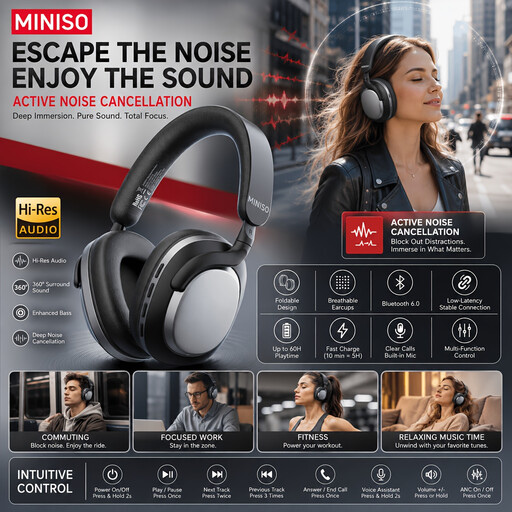
MINISO MG210 wireless noise-cancelling headphones

MINISO MG210, black

The product information lists a closed-back, over-ear design; check that the connection options suit your recording setup.

The product name states a battery life of 24 hours. The product information also mentions active noise cancellation.

View at Joybuy

Bose QuietComfort Ultra Bluetooth Headphones, black

Bose QuietComfort Ultra Bluetooth Headphones, black

The product information lists a closed-back design and an audio cable for wired listening; check that the connection is compatible with your recording equipment.

The listed connections are 2.5 mm and 3.5 mm. Active noise cancellation is also mentioned.

View at Joybuy
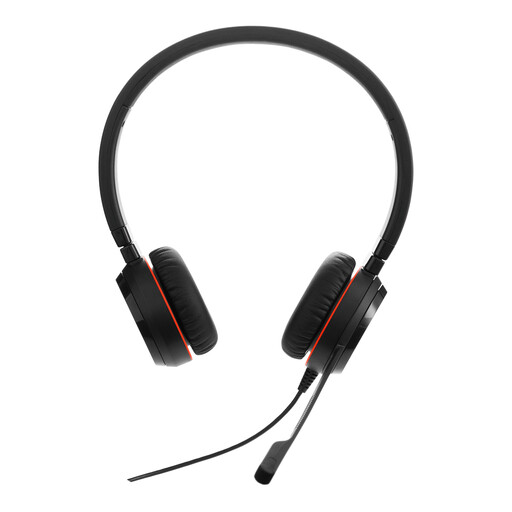
Jabra EVOLVE 30 II MS Stereo headset

Jabra EVOLVE 30 II MS Stereo

The listed wired 3.5 mm connection and USB controller may be useful when connecting to your workspace; check which connection you will actually use.

The product information lists a 0.95 m cable and on-ear earcups.

View at Joybuy

Bose QuietComfort Ultra Headphones (2nd Gen), black

Bose QuietComfort Ultra Headphones (2nd Gen), black

The product information lists a detachable cable with USB-C and 3.5 mm connections, which may be worth considering if you want to listen back using a wired connection.

Active noise cancellation is listed. According to the product information, the headphones need to be charged before use; check the connections and conditions of use for your setup.

View at Joybuy

Frequently asked questions

Should you choose closed-back headphones if you record your intro at the same time?

Closed-back headphones are a sensible starting point. For podcast monitoring, RTINGS.com discusses closed-back wired models as a way to reduce the chance of sound reaching the microphone. Test the result with your microphone, fit and listening volume.

How do you connect studio headphones?

First, check which headphone output your laptop or audio interface has, and which plug or adapter your exact model requires. According to Audio-Technica, the ATH-M40x has a 3.5 mm plug; check that it fits your device.

How can you listen safely during long editing sessions?

Keep the volume low and limit prolonged exposure. The World Health Organization gives an average of 80 dB for up to 40 hours a week as an example of safe listening for adults; this is not a guarantee for every individual situation. A good seal may reduce the need to turn the volume up to drown out background noise.

What can you do if your headphones break after you buy them?

In the Netherlands, you can contact the retailer if there is a problem with a product. The Dutch government states that there is no fixed statutory guarantee period; the assessment depends on what you could reasonably expect from the product and the circumstances of the problem.

Can you return headphones bought online if the fit is disappointing?

Many applicable distance consumer purchases come with a 14-day cooling-off period. Check the terms and any return costs before buying, as not every transaction or product category is covered by the same rules.
