Who is this suitable for?

Quiet practice in the library

You listen to harmonies and practise your entrance in your head, without singing aloud. Pay attention to sound leakage during playback and to your library’s rules; Rotterdam Library asks visitors not to cause noise nuisance.

Preparing now and recording somewhere else later

You prepare the part quietly, then sing or record it somewhere suitable. The right headphone connection is also important, as are direct monitoring options if you use an audio interface; Focusrite explains direct monitoring for supported equipment.

Listening for long periods

You listen for longer to pick out vocal lines and want a comfortable fit that means you don’t have to keep turning up the volume. RTINGS specifically compared the ATH-M40x with the HD 280 Pro 2016 and rated the ATH-M40x as more comfortable in that comparison; that assessment doesn’t automatically apply to other models or every listener.

What should you look for when choosing?

Closed-back, wired over-ear headphones

Choose these if: you mainly want to listen to backing tracks and vocal lines, perhaps with a microphone later.

Bear in mind: fit and connection; the earcups may feel warm or tight during long sessions, and they won’t keep your own voice in.

Wired, snug-fitting in-ear headphones

Choose these if: you’re looking for a compact design and can find ear tips that fit well.

Bear in mind: the seal depends on your ear shape and fit; in-ear headphones aren’t comfortable for everyone to wear for long periods.

Open-back headphones

Choose these if: you practise somewhere else and limiting sound leakage during playback isn’t a priority.

Bear in mind: an open-back design generally lets more sound escape, so it’s less suitable alongside other library visitors.

What to consider What should you look for? Who is this important for?
Sound leakage during playback Compare a closed-back model with well-fitting in-ear headphones, and keep your usual volume moderate; your own voice will still be audible. If I want to listen to the backing track on its own in a quiet space, I don’t want to disturb others. Around 33% of consumers put minimal sound leakage during playback first.
Monitoring and connection Check the headphone output and, if you use an audio interface, whether it supports direct monitoring of the microphone input. When I record somewhere else, I want to hear my own voice back in time. Around 27% of consumers prioritise monitoring their own voice without delay.
Comfort If possible, try the fit during a typical listening session; with in-ear headphones, check that the ear tips feel comfortable. If I listen to vocal lines for a long time, I want a fit I can keep wearing comfortably. Around 20% of consumers put long-term wearing comfort first.
Following the vocal line Compare the same clip at a similar, moderate volume; when recording, check whether your equipment supports a monitor mix. When I’m trying to pick out a harmony from a recording, I want to follow the vocal part clearly without turning up the volume. Around 20% of consumers put vocal-line clarity first.

Buying pitfalls

  • Assuming headphones will keep your voice quiet

    A closed-back model can limit sound from your playback escaping, but it won’t make your own singing quiet for others.

    Use the library for quiet listening and ask your branch where you’re allowed to practise aloud.

  • Assuming isolation means no audible leakage

    How much background noise you can hear doesn’t, on its own, tell you how much of the music you’re playing others can hear. With in-ear headphones, the seal also depends on the fit.

    Assess the fit and sound leakage separately, at a moderate volume.

  • Not checking the recording connection

    Wired headphones don’t automatically let you monitor a microphone; the connected equipment needs to support that feature.

    Check the plug, available output and monitoring options on your recording equipment in advance.

    Depending on your phone or recording set-up, you may need a suitable adapter or audio interface.

  • Turning up the volume to hear the vocal line

    A higher volume can make playback more likely to be audible to people nearby. The World Health Organization identifies volume, listening duration and frequency of exposure as factors in sound exposure.

    Start at a moderate volume and check the fit and monitor mix before adjusting it.

Brands to consider

Audio-Technica

The wired ATH-M40x is a foldable over-ear option with a detachable cable.

  • Audio-Technica lists a 3.5mm connection and detachable cables for the ATH-M40x.
  • In its comparison with the HD 280 Pro 2016, RTINGS rated the ATH-M40x as more comfortable, but that assessment doesn’t apply to every listener or other models.

Shure

The wired SE215 is a compact in-ear option for anyone comparing ear tips and a detachable cable.

  • Shure lists a 3.5mm cable and included ear tips for the SE215.
  • The seal depends on your ear shape, ear tip and fit; Shure says the earphones are not hearing protection.

Sennheiser

The closed-back HD 280 PRO and HD 480 PRO are wired studio options to compare for fit, cable and ease of maintenance, among other things.

  • Sennheiser lists replaceable earpads for the HD 280 PRO and a detachable cable for the HD 480 PRO.
  • Manufacturer claims about comfort and isolation apply to specific models; a positive assessment of one model doesn’t determine which headphones are right for every library visitor.

beyerdynamic

The closed-back DT 770 PRO range is an over-ear option to include in a comparison for monitoring.

  • beyerdynamic describes the DT 770 PRO as having velour earpads and replaceable parts.
  • Check the exact version and connection; features of this range don’t automatically apply to other models from the brand.

Sony

The closed-back MDR-7506 is a foldable, wired studio option to assess alongside other over-ear headphones.

  • Sony describes the MDR-7506 as having a foldable design.
  • Check current availability with the retailer; product availability may vary between sellers.

Products at Joybuy

This Joybuy selection includes headphones and earphones for personal listening. Check each model to make sure the fit and connection suit quiet practice or your recording set-up.

Samsung Galaxy Buds4 Pro, black true wireless in-ear headphones

Samsung Galaxy Buds4 Pro True Wireless, black

A true wireless in-ear option if you prefer listening without a cable; check the fit for longer listening sessions.

The product name mentions Active Noise Cancelling.

View at Joybuy
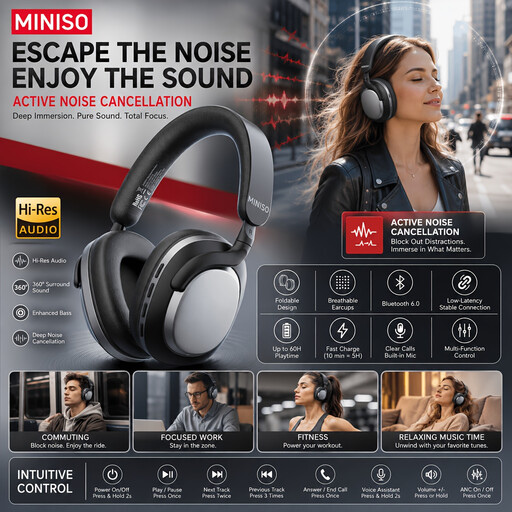
MINISO MG210 wireless noise-cancelling over-ear headphones

MINISO MG210 wireless over-ear headphones

A wireless over-ear option if you prefer wearing earcups; compare the fit with your preferences for long listening sessions.

The product name mentions noise cancelling and a claimed battery life of 24 hours. That alone doesn’t tell you how much playback others can hear.

View at Joybuy
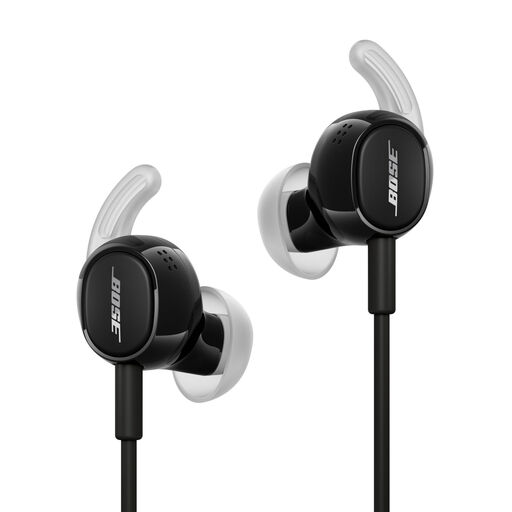
Bose wired noise-cancelling earphones, black

Bose wired earphones, black

A wired in-ear option if you prefer earphones; check that your device has a compatible USB-C audio connection.

The product name mentions noise cancelling. Assess the fit and sound leakage separately.

View at Joybuy
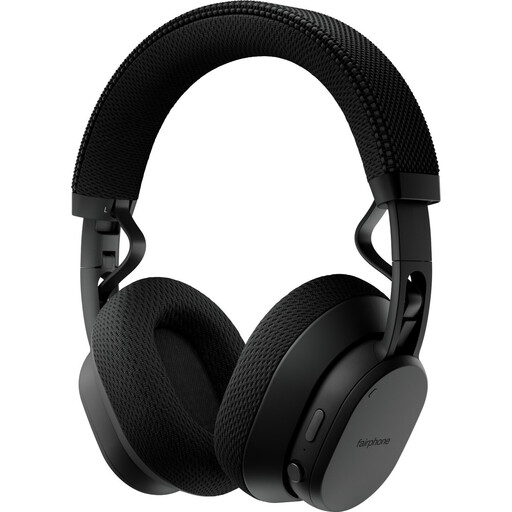
Fairphone Fairbuds XL 2025, black

Fairphone Fairbuds XL 2025, black

An over-ear model to compare if you prefer wearing earcups; check that the fit remains comfortable during your usual listening session.

View at Joybuy
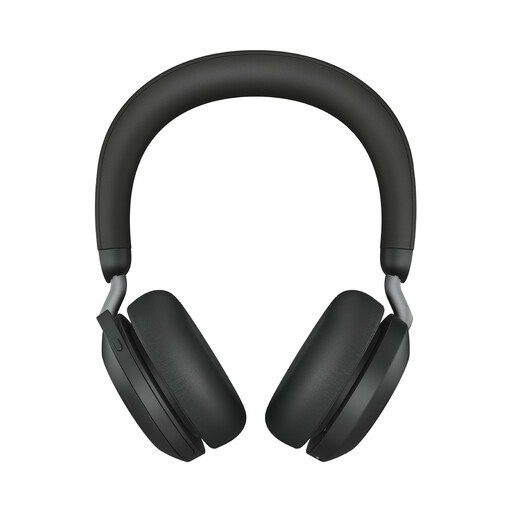
Jabra Evolve2 75 USB-A MS Teams headset, black

Jabra Evolve2 75 USB-A MS Teams, black

A headset to compare if you’re also looking for headphones for office work; check that the USB-A connection is compatible with your equipment.

The product name specifies the MS Teams version.

View at Joybuy

Frequently asked questions

Can I practise backing vocals aloud with headphones in a quiet library?

Headphones can limit the sound you’re playing, but not the sound of your own voice. Rotterdam Library asks visitors not to cause noise nuisance; Bibliocenter asks people to use headphones for music and not to have loud conversations. These are the rules of those organisations, not general permission to sing in every library. Check your own branch’s rules and, if needed, find a suitable room for singing aloud.

How can I avoid delay when recording my singing?

Use direct monitoring through an audio interface if your interface supports this feature. Focusrite explains how it works with the Scarlett and Saffire set-ups mentioned; check your own interface’s manual and make sure your headphones connect to the right output.

How should I care for snug-fitting in-ear headphones?

Check that the ear tips fit well, and keep both the tips and earphones clean and dry. Shure recommends carefully cleaning the sound opening as instructed in the manual; don’t use a cleaning tool inside your ear.

What if the cable or earpads wear out, and what about the warranty?

Check which parts are replaceable for the exact model. In the Netherlands, a purchase is also covered by the statutory guarantee if, under normal use, the product doesn’t do what you could reasonably expect. ACM ConsuWijzer says there is no fixed statutory guarantee period in the Netherlands; an offered manufacturer’s warranty doesn’t replace your statutory rights.

Do headphones sold in the Netherlands need a CE marking?

CE marking isn’t automatically required for every product. According to the European Commission, it’s only mandatory for products covered by specific harmonised EU rules; check which rules apply to the product, and don’t infer compliance from advertising copy alone.
