
Quiet evening listener
You listen while someone beside you is resting or asleep, so you’re particularly concerned about sound leaking from your headphones.


To avoid your room-mate hearing the poetry, start with well-fitting closed-back headphones or noise-isolating in-ear headphones. Open-back models generally leak more sound, according to RTINGS.com. ANC can help reduce the background noise you hear, but it won’t block every sound, and it doesn’t tell you how much sound leaks out. If you listen lying down, also consider pressure points, fit and how the headphones connect to your playback device.
You listen while someone beside you is resting or asleep, so you’re particularly concerned about sound leaking from your headphones.
You want to follow spoken word clearly despite background noise, and are comparing passive noise isolation with isolation combined with ANC.
You listen for long periods or lie on your side; pressure from earcups or earbuds, and whether there’s a cable, may influence your choice.
A good fit if: minimising sound leakage and listening without having to recharge are your priorities, and your device has a compatible audio connection.
Bear in mind: a cable can get in the way in bed, and without ANC, noise reduction depends on the fit.
A good fit if: you want freedom to move and to reduce persistent background noise.
Bear in mind: ANC won’t block every sound, and doesn’t tell you how much your room-mate will hear; the earcups may press against a pillow.
A good fit if: a headband or large earcups are uncomfortable in your preferred sleeping position, provided the earbuds fit well.
Bear in mind: noise isolation and comfort depend heavily on the fit.
A good fit if: your room-mate doesn’t mind sound leakage and you’re looking for an open design.
Bear in mind: open-back models generally leak more sound and block out less background noise than closed-back models, according to RTINGS.com.
| Consideration | What to look for when buying | Who should pay particular attention? |
|---|---|---|
| Sound reaching your room-mate | Check that the design is closed-back and assess sound leakage at a low listening volume. Closed-back models can still leak sound. | If someone is sleeping beside you, you’ll want to avoid disturbing them with the poetry. Around 31% of consumers say sound leakage is their main concern when buying. |
| Clarity in background noise | Pay attention to the fit and battery life with ANC switched on; try following the poetry at a comfortable, low volume. | If background noise drowns out quieter passages, you’ll want to follow the words without continually turning up the volume. Around 25% of consumers say clarity is their top priority in this situation. |
| Comfort when lying down | Check the shape and size of the earcups or earbuds, and consider whether they’ll press against a pillow. | If you listen on your side, the earcups or earbuds may press on sensitive areas. Around 25% of consumers put comfort when lying down first. |
| Connecting and charging | Check whether your device has the right audio output or whether you’ll need an adapter. If you’re going wireless, compare battery life with the features you want to use. | If you want a simple connection or would rather not charge a battery, you can base your choice on the cable and your device. Around 19% of consumers put connectivity and ease of use first. |
ANC is designed to reduce the sound you hear; it doesn’t tell you how much of the poetry leaks out to your room-mate.
Assess noise isolation and sound leakage separately. If possible, try the headphones at a low volume in a quiet room.
Open-back designs generally let more audio out and more background noise in than closed-back models, according to RTINGS.com.
Choose an open-back design only if your room-mate doesn’t mind sound leakage.
The maximum battery life quoted may depend on the settings you choose. For the Sony WH-CH720N, Joybuy lists up to 50 hours without noise cancelling and 35 hours with it on.
Compare battery life claims using the same settings, and check the version you intend to buy.
The WH-CH720N is a closed-back model with Bluetooth and ANC, and can also be used with a cable.
The Tune 770NC is a wireless over-ear model with ANC and the ability to connect to two Bluetooth devices.
The wired, closed-back HD 280 PRO is an option if passive noise isolation and replaceable parts matter to you.
The SHP9600/00 is an example of a wired over-ear model with an open back.
This selection includes closed-back over-ear headphones with ANC and noise-isolating in-ear headphones for listening in a shared bedroom.
 Image unavailable
Closed-back over-ear headphones to consider if you also want to reduce background noise; fit is a personal matter.
The product description lists ANC and an included audio cable. Closed-back models generally leak less sound than open-back models, according to RTINGS.com.
 Image unavailable
Closed-back over-ear headphones to consider if you want to reduce background noise and find a headband comfortable to wear.
The product description lists ANC, an ambient sound mode and connection to two devices.
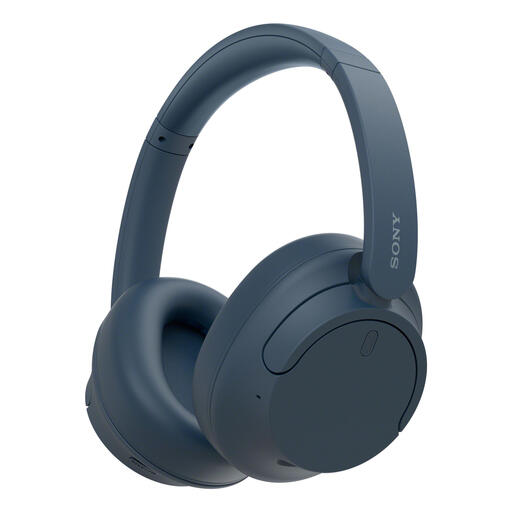 Image unavailable
Closed-back wireless over-ear headphones to consider if you also want to reduce background noise while listening.
The product description lists multipoint connectivity and up to 35 hours of battery life with ANC switched on. Closed-back models generally leak less sound than open-back models, according to RTINGS.com.
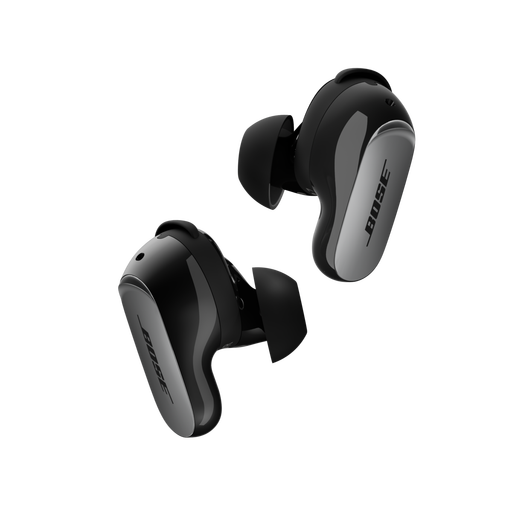 Image unavailable
In-ear headphones can be an alternative if a headband or large earcups are uncomfortable when you’re lying down; check that the earbuds fit comfortably.
The product description lists ANC, an ambient sound mode and ear tips in three sizes.
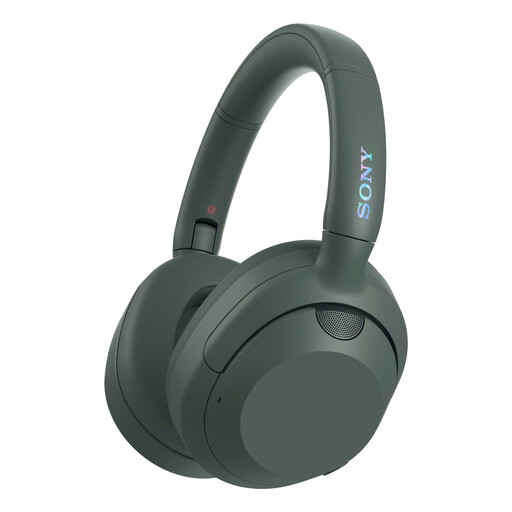 Image unavailable
Closed-back wireless over-ear headphones to consider if you want ANC and prefer a headband to in-ear headphones.
The product description lists ANC, an ambient sound mode and multipoint connectivity.
No. ANC is designed to reduce the sound you hear from outside. To minimise audible sound leakage, focus on a closed-back design, a good fit and a low listening volume; closed-back models aren’t necessarily leak-proof.
First, check the audio output on your playback device. Sennheiser says the HD 280 PRO has a 3.5 mm plug with a 6.3 mm adapter; if your device doesn’t have a compatible output, check which adapter you need.
Keep the volume comfortably low and limit prolonged exposure to loud sound. The World Health Organization gives an average of 80 dB for up to 40 hours a week as an example of a safe-listening reference level. This isn’t a legal volume requirement in the Netherlands, and it doesn’t tell you which volume setting on your device will produce 80 dB.
If you buy in the Netherlands, you’re entitled to a legal guarantee, and the retailer is your point of contact if there’s a fault, according to the Dutch government. For distance purchases, you generally have a 14-day cooling-off period; check the terms for your purchase, especially if you plan to open and try in-ear headphones.
The Radio Equipment Directive applies to radio equipment placed on the EU market. According to the European Union, the CE mark indicates that the manufacturer declares the product met the relevant EU requirements when it was placed on the market. It isn’t an independent certification of sound quality, comfort or ANC performance.