
Podcast listener who values quiet
You listen alongside other visitors and want to hear speech clearly without disturbing them with audible sound. The rules at Amsterdam Public Library illustrate why this matters at individual locations.


Start with a comfortable, secure fit and keep the volume low. This helps limit sound leakage without making you listen unnecessarily loudly. Wired over-ear headphones suit listening in one place, as long as the connection is compatible; wireless over-ears and well-fitting in-ears differ mainly in fit, portability and battery use. ANC isn’t automatically an advantage in a quiet space, so consider speech clarity and the library’s rules too.
You listen alongside other visitors and want to hear speech clearly without disturbing them with audible sound. The rules at Amsterdam Public Library illustrate why this matters at individual locations.
You listen to a full podcast or longer and want over-ear headphones or eartips that stay comfortable. The Consumers’ Association often recommends over-ears for long listening sessions, although they take up more room in your bag.
You might switch between your phone and laptop, and want to know whether the connection or wireless pairing will work and how long the battery will last. Sony, for example, lists battery life separately with ANC on and off.
Choose these if: you listen in one place and your device has a compatible headphone socket.
Bear in mind: the cable restricts your movement and needs to be compatible with your device.
Choose these if: you also listen outside the library or switch between devices.
Bear in mind: ANC reduces ambient noise for the wearer; it doesn’t tell you whether sound leaks out.
Choose these if: compact storage matters and you can find eartips that fit comfortably.
Bear in mind: fit varies from ear to ear, and playback time per charge is different from total playback time with a charging case.
Choose these if: being able to hear your surroundings is your priority.
Bear in mind: open-back headphones can let sound out, while open-ear designs let more ambient noise in. Headphones.com explains these differences between designs.
| What to consider | What to look for when buying | Who is this important for? |
|---|---|---|
| Sound leakage and volume | Compare closed and open designs, and check the seal. Listen at your usual volume. | I want to hear a podcast alongside other people without my audio leaking out audibly. For around 33% of consumers in this library listening situation, not disturbing others is the top priority. |
| Speech clarity | Try a speech sample and check how you pause and rewind. | I want to follow spoken content clearly, even at my usual listening volume. For around 27% of consumers in this situation, speech clarity comes first. |
| Comfort | Try the headband and ear cushions, or test the available eartip sizes. | I want to listen to a whole podcast without the headphones or eartips becoming uncomfortable. Long-wearing comfort matters most to around 27% of consumers. |
| Connection and battery | Check the connection or wireless pairing, and compare battery life only with the same ANC setting. | I switch between devices and want to know in advance how the headphones connect and get their power. For around 13% of consumers, compatibility or power is the top priority. |
ANC reduces ambient noise for you, but it doesn’t prove that other visitors can’t hear your audio.
Check the seal and listen at your usual volume, especially when you’re sitting near other people.
Sony lists up to 8.5 hours per charge with ANC on for the WF-C710N, and 30 hours in total when you recharge them with the case along the way.
Compare playback time per charge with total playback time, and check which ANC setting applies.
A cable will only work if its plug is compatible with your playback device.
Check which audio connection your device has before you buy.
According to ACM ConsuWijzer, statutory rights apply even if you haven’t bought a commercial warranty.
Compare any additional cover with your statutory rights, and read the terms and conditions.
The TAH2005BK/00 is a straightforward pair of wired over-ear headphones that Philips positions, among other uses, for podcasts.
The WH-CH720N is a closed-back over-ear with ANC and a cable input; the WF-C710N is a more compact in-ear model with sealing eartips.
The ACCENTUM Wireless is a closed-back wireless over-ear with hybrid ANC and a podcast mode listed by the manufacturer.
The Tune 770NC is a foldable wireless over-ear with ANC and a mode that lets you hear ambient noise.
The ATH-M50x is a pair of closed-back wired headphones for anyone considering a model without a wireless battery.
These Joybuy picks cover wireless headphones and earbuds for podcasts. For each individual device, check that it carries the correct CE marking, as required for electronic headphones sold in the Netherlands.
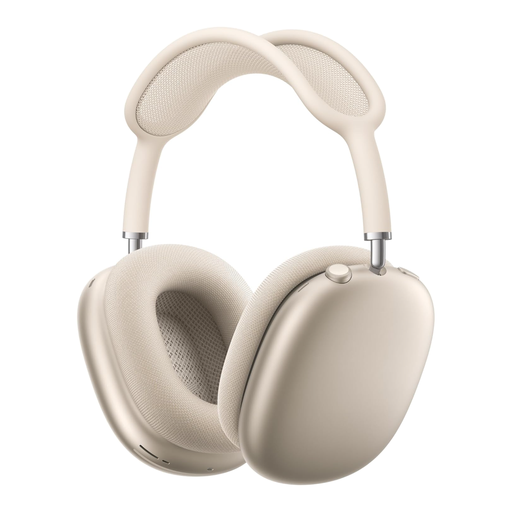 Image unavailable
The product description mentions Conversation Awareness, which lowers the playback volume when someone speaks. Check whether this feature suits the way you listen in a quiet library.
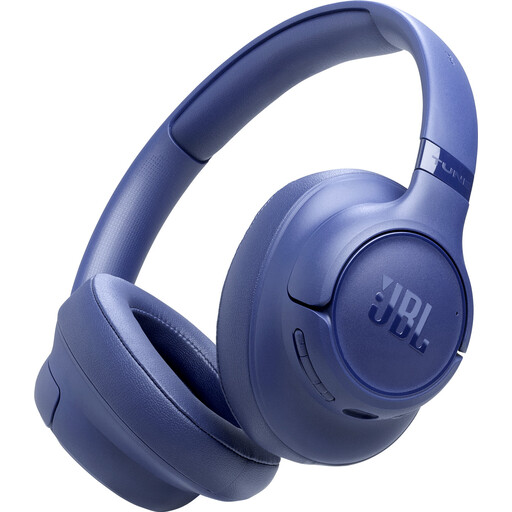 Image unavailable
If you want to adjust the emphasis on voices when listening to podcasts, check the listed Vocal-EQ preset. The product description says that a charging cable isn’t included.
 Image unavailable
The product description also mentions wired listening using the included 3.5mm cable. Check that the connection is compatible with your device.
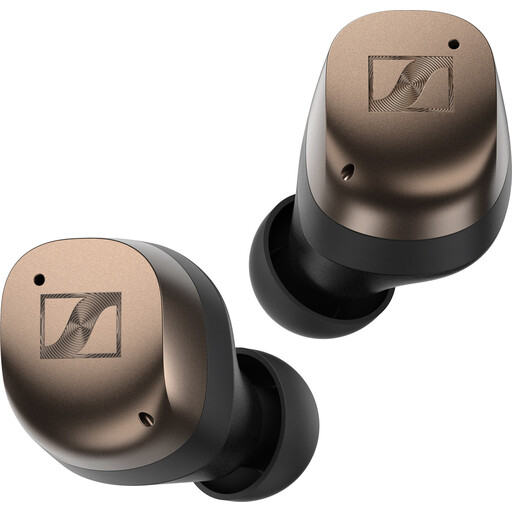 Image unavailable
If you prefer earbuds to a headband, this in-ear model may suit you. Check that the available eartips feel comfortable.
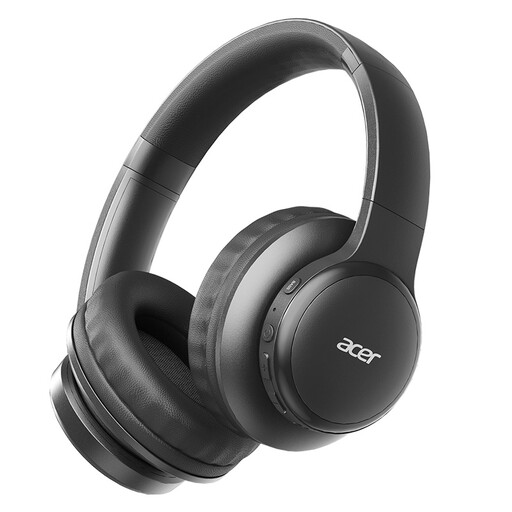 Image unavailable
The product title mentions a foldable design and Bluetooth 5.3. Check that the wireless pairing and fit suit your device and how you plan to use it.
Not necessarily. ANC is designed to reduce ambient noise for the wearer; the Consumers’ Association gives low humming sounds as an example. For podcasts, also consider the fit, speech clarity and whether sound might leak out and disturb others.
Pair the headphones with your own device, check that the sound isn’t playing through the speaker, and start at a low volume. For in-ears, choose eartips that fit well; Sony describes a fit check in the companion app for the WF-C710N.
According to the World Health Organization, the risks depend on both volume and listening time. The organisation gives an average of 80 dB for up to 40 hours a week as an example; at 90 dB, that falls to four hours. Keep the volume low and take breaks. The volume percentage on your phone doesn’t directly measure the sound level at your ear.
According to the Dutch Authority for Digital Infrastructure, electronic headphones sold in the Netherlands must carry the correct CE marking on the device. Library rules vary by location: Amsterdam Public Library, for example, asks visitors not to disturb others with loud conversations or music.
No. According to ACM ConsuWijzer, statutory warranty in the Netherlands doesn’t have a fixed two-year term: with normal use, a product should last as long as you can reasonably expect it to. If a product is faulty, the retailer is your point of contact for a suitable solution.