If you’re working on piano mixes with colleagues in the same room, start with closed-back, wired studio headphones. They generally reduce both background noise and sound leakage. Open-back headphones can be useful for checking stereo imaging, but ideally you’ll listen in a separate, quiet space. Also check the fit and make sure they’ll connect to your laptop or audio interface.
Who is this for?
Mixing at a shared desk
You mix while colleagues work nearby and want fewer distractions and less audible sound leakage. Closed-back headphones are worth considering for this. RTINGS explains that open-back models let sound leak out and do little to block background noise.
Pianist who also records
You use the same workspace to record piano and listen back to your recordings. Closed-back headphones can help prevent headphone sound from reaching a microphone. beyerdynamic describes the DT 700 PRO X as a closed-back model for recording, monitoring and mixing.
Mixing in a separate listening space
You can move to a quiet space to check room ambience and stereo placement. In that case, you could also consider open-back headphones, bearing in mind that their design can let sound leak out.
What should you look for when buying?
| Key consideration |
What should you check? |
Who is this important for? |
| Isolation and sound leakage |
Check whether the model is closed-back and whether the ear cups fit snugly. Bear in mind that the fit affects how much noise they block in practice. |
If I’m mixing at a shared desk, I want to hear less office noise and avoid disturbing my colleagues. Around 33% of consumers prioritise reducing sound leakage and background noise. |
| Piano sound and stereo imaging |
Use familiar recordings as a reference. Only consider an open-back model if you can listen separately and sound leakage won’t be a problem. |
When I want to assess piano sound and stereo placement critically, I want to do so without losing sight of the fact that I’m in a shared workspace. Around 27% of consumers prioritise evaluating the mix. |
| Comfort and maintenance |
Try the headphones on, including if you wear glasses, and check whether the ear pads and cable are replaceable on the exact version you’re considering. |
During long mixing sessions, I want the headphones to stay comfortable and to be able to replace worn ear pads or a damaged cable. Around 20% of consumers prioritise comfort and ease of maintenance. |
| Compatibility with your equipment |
Check the plug, any adapter you may need, and the connection on your laptop or audio interface. Don’t judge compatibility by impedance alone. |
If I switch between a laptop and an audio interface, I want to know in advance whether the headphones will connect to my equipment and work at a usable volume. Around 20% of consumers start by checking device compatibility. |
Common pitfalls
-
Choosing an open-back model without considering your colleagues
Open-back headphones may be designed for mixing, but that doesn’t mean they block office noise or are quiet for the people around you.
If you’re using them at a shared desk, choose a closed-back model instead. Save open-back headphones for a separate listening space where sound leakage is acceptable.
-
Focusing only on impedance or the shape of the plug
Whether the connection works in practice also depends on the output of your laptop or audio interface, as well as the cable or adapter supplied with the specific model.
Before buying, check which connection and adapter you’ll need, then test the setup at a comfortable volume.
-
Assuming the manufacturer’s warranty is the same as your statutory rights
A stated manufacturer’s warranty period doesn’t automatically determine how long you have statutory rights to a product that works as it should. According to the Dutch government, there is no fixed term for the statutory guarantee in the Netherlands; if something goes wrong, contact the seller.
Keep your proof of purchase and contact the seller if there’s a fault. Check separately which terms apply if you’re buying the headphones for business use.
Brands to consider
beyerdynamic
The DT 700 PRO X is a closed-back, wired option for monitoring and mixing. The DT 900 PRO X is an open-back alternative for listening in a quiet, separate space.
- beyerdynamic specifies an impedance of 48 ohms and a detachable cable for the DT 700 PRO X.
- The wider stereo presentation of the open-back DT 900 PRO X is a claim made by beyerdynamic. Its open design is less suitable if colleagues are sitting nearby.
Audio-Technica
The ATH-M40x is a closed-back, wired option if you want to use the same headphones for recording and mixing.
- Audio-Technica lists a detachable cable, along with both a straight cable and a coiled cable.
- The description ‘flat-tuned’ is a manufacturer’s claim, not an independent measurement. You’ll need to judge the fit and sound for yourself.
Sennheiser
The HD 480 PRO is a closed-back model for mixing, while the open-back HD 490 PRO is better suited to listening in a separate space.
- Sennheiser describes the HD 480 PRO as offering passive isolation, and says the HD 490 PRO has replaceable, washable ear pads.
- The open-back HD 490 PRO doesn’t offer the same isolation in a shared workspace as a closed-back model.
AKG
The K371 is a closed-back, foldable monitor headphone with detachable cables.
- AKG lists replaceable ear pads and three detachable cables: two straight cables and one coiled cable.
- Claims about neutral tuning and comfort come from AKG; fit and sound preferences are still personal.
Neumann
Neumann positions the closed-back NDH 20 for monitoring and mixing, including in noisy environments.
- Neumann highlights isolation, two detachable cables and reduced sound leakage to people nearby.
- The stated sound benefits are the manufacturer’s claims, not the result of an independent comparison with other models.
Joybuy products
This selection features wireless headphones whose product information mentions noise cancelling, for anyone looking to reduce distractions in a shared workspace. The product information doesn’t establish whether these models are suitable as studio headphones for critical piano mixing, so check whether they can be used with a wired connection and consider your own listening setup.
 No image available
JBL Tune 730BT, blue
The product title mentions noise cancelling, which may be useful if you’re looking to reduce distractions in a shared workspace. The product description mentions soft ear pads and a foldable design.
Wireless; the product description mentions customisable EQ settings.
View at Joybuy
 No image available
Sennheiser MOMENTUM 4 Wireless, black
The product information mentions noise cancelling. Check whether the headphones will also connect to the equipment you use for mixing.
Wireless over-ear model; the title states a 60-hour battery life. The product description mentions a 3.5mm cable for passive use.
View at Joybuy
 No image available
Bose QuietComfort Ultra Headphones (2nd Gen), Olive Green
The product description mentions active noise cancellation. For piano mixing, also check how the headphones connect to your audio output.
The product description mentions a detachable cable with USB-C and 3.5mm connections.
View at Joybuy
 No image available
Bose QuietComfort Ultra Bluetooth, black
The product description mentions active noise cancelling. Also check whether the wired listening option is compatible with your equipment.
Closed-back Bluetooth model; the product description mentions an audio cable for use without battery power.
View at Joybuy
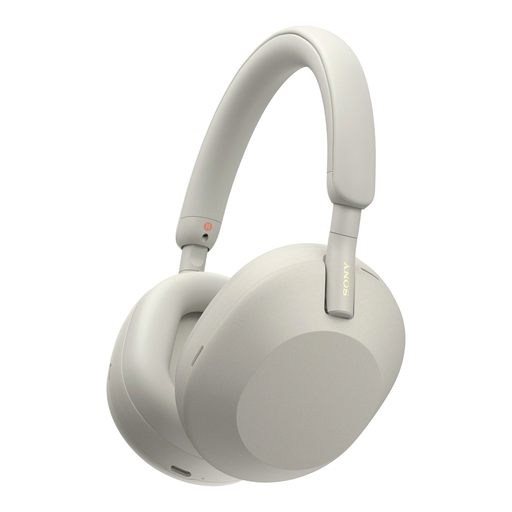 No image available
Sony WH-1000XM5, silver
The product title mentions noise cancelling. Check whether the model suits your workflow for assessing piano mixes.
Wireless; the product description mentions LDAC audio and simultaneous pairing with two devices.
View at Joybuy
Frequently asked questions
Can you mix using open-back headphones while colleagues are working next to you?
You can, but an open-back design lets sound out and does little to block office noise. It’s best to save this listening check for a separate, quiet space where sound leakage won’t be a problem.
How do I connect studio headphones to my workspace equipment?
Check the connection on your laptop or audio interface, as well as the plug and adapter for the exact model you’ve chosen. Then test that the setup works at a comfortable volume; impedance alone won’t tell you this.
How can I keep long listening and mixing sessions safe?
Keep the volume low and take breaks. The World Health Organization gives a maximum of 40 hours per week at an average of 80 dB as an example. This is general guidance on sound exposure, not a guaranteed safe level for every person or listening session.
What Dutch rules apply to online purchases, returns and guarantees?
For eligible distance purchases by consumers, you generally have a 14-day cooling-off period. Check the terms and any exceptions that apply to your purchase. According to the Dutch government, there is no fixed term for the statutory guarantee in the Netherlands, and the seller is your point of contact if a product is faulty. Don’t assume the same rules apply to a business purchase for the office.


