
Mixing vocals in a quiet room
You mainly work on balancing and positioning several vocal tracks, and don’t need isolation while mixing.


If you mainly mix in a quiet room, start with open-back studio headphones. If you also record vocals or work around background noise, compare closed-back models. Semi-open headphones are an alternative if complete isolation isn’t essential. Whatever you choose, fit, connectivity and checking your mix on other playback systems all matter.
You mainly work on balancing and positioning several vocal tracks, and don’t need isolation while mixing.
You want to use the same headphones for recording and playback. How well they block out your surroundings may be a factor.
You mix with background noise or wear your headphones for longer periods. Consider the fit and decide how much isolation you need.
Choose the design to suit your recording and working environment. Then consider which other features matter for your mixing work.
Best suited to: mainly mixing vocal layers in a quiet room when you don’t need to record at the same time.
Worth noting: open-back headphones block out less of your surroundings than closed-back models. Check your mix on other playback systems too.
Best suited to: recording vocals as well as mixing, or wanting more isolation in a shared space.
Worth noting: isolation alone doesn’t prove that you can judge stereo positioning or mix balance more accurately.
Best suited to: comparing a semi-open option for mixing when full isolation for recording isn’t necessary.
Worth noting: don’t assume the term ‘semi-open’ tells you how much sound your model blocks. Assess it in your own space.
| What to consider | What to look for when buying | Who should consider this? |
|---|---|---|
| Vocal layers and positioning | Compare open-back models with familiar reference tracks, and check your mix elsewhere too. | If I’m mainly judging the balance and positioning of vocal layers in a quiet room, I want to know how my mix translates. This is the main concern for around 36% of consumers when buying for mix monitoring. |
| Isolation when recording | Check whether the model is closed-back and assess the isolation in your own working environment. | If I also record vocals or find background noise distracting, isolation matters more than when mixing in a quiet space. Around 29% of consumers say recording or isolation is their main concern when buying. |
| Comfort | If possible, try the fit with the glasses you usually wear and check whether the ear pads can be replaced. | For longer sessions, I want the fit to stay comfortable; product specifications can’t predict my personal experience. This is a top priority for around 21% of consumers. |
| Connectivity and maintenance | Compare your computer or audio interface output with the plug and adapter. Check which cables and ear pads are available for each model. | If connectivity with my equipment or replaceable parts will determine my choice, I check these before buying. Connectivity or maintenance is the main concern for around 14% of consumers. |
If you record vocals in the same room or are bothered by background noise, isolation may be important. Beyerdynamic also describes the closed-back DT 700 PRO X as suitable for recording, monitoring and mixing.
Start by considering your recording and room conditions, then compare the sound for your mixing work.
Beyerdynamic’s classic DT 770 PRO and PRO X models differ in features including their cable design.
Check the full model name, impedance version, cable type and what’s included in the box.
If the cable or adapter isn’t right for your setup, you may need to source one separately.
The DT 900 PRO X is open-back, while the DT 700 PRO X and DT 770 PRO 80 Ohm are closed-back. Compare the design of each model.
The open-back HD 490 PRO is worth comparing if you mainly mix and want the option of using different sets of ear pads.
The closed-back ATH-M50x is worth considering if isolation and a detachable cable matter to you.
The semi-open K240 Studio is an option to compare with open-back and closed-back models.
The models shown are over-ear headphones with a stated wired listening option. Their product names don’t specifically describe them as studio headphones, so check for yourself whether the connectivity and sound are suitable for critical vocal mixing.
 No image available
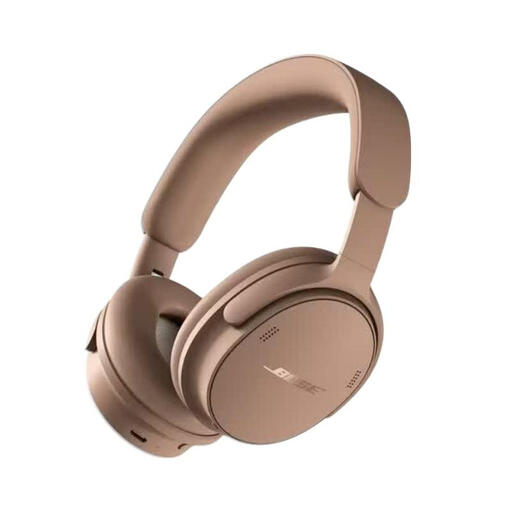
An over-ear model with a stated wired listening option; check that it works with your audio interface and mixing workflow.
The product name lists noise cancelling, a 60u battery life, fast charging and 4 microphones. The product description mentions a 3.5mm audio cable and passive listening without a battery.
 No image available
The product information lists a wired listening option; check that the connection suits your equipment before choosing this model for mixing.
The product information lists stereo audio and a wired listening option.
Yes, closed-back headphones can still be used for mixing. Beyerdynamic describes the DT 700 PRO X as suitable for recording, monitoring and mixing. Choose the design according to how much isolation you need, and check your mix on another playback system too.
Compare your interface’s output with the plug and adapter supplied. According to Audio-Technica, the ATH-M50x comes with a 6.3mm screw-on adapter; check separately which output your interface has.
Keep the volume low and take breaks. The World Health Organization links listening time to sound level and gives a maximum of 40 hours per week at an average of 80 dB as an example. This isn’t a measurement of any of the headphones mentioned here.
Online consumer purchases generally come with a statutory cooling-off period of up to 14 days after delivery, with some exceptions. Products must also meet legal requirements; if something is faulty, the seller is your point of contact for a solution. The ACM and the Dutch Government explain these consumer rights. Before trying out a product, check the applicable returns policy too.