
Listeners in a noisy home
You want to compare small changes while conversations or household sounds are going on around you. So pay attention to the fit and seal of closed-back headphones.


In a noisy home, a well-fitting pair of closed-back wired studio headphones is a sensible starting point for reducing household noise while comparing sections of a mix. An open-back model is better suited to quieter listening sessions. Active noise cancellation can reduce distractions, but it doesn’t prove that the sound is suitable as your only mix reference. Compare familiar sections using the same settings, and check important decisions on a second playback system too.
You want to compare small changes while conversations or household sounds are going on around you. So pay attention to the fit and seal of closed-back headphones.
You assess balance and detail repeatedly, and can sometimes choose a quieter time to listen. Consider whether isolation matters more than an open-back reference for that session.
You’re considering active noise cancellation because household noise varies, but still want to assess sections of a mix using consistent settings.
First, choose the approach that suits when you listen: isolation for persistent household noise, an open-back model for quiet sessions, or noise cancellation when reducing distractions is your priority.
Choose this option: if voices or household sounds interrupt your listening.
Bear in mind: the seal depends on the fit, and a closed-back design isn’t automatically sonically neutral.
Choose this option: for detailed mix checks when the room is quiet enough.
Bear in mind: household noise will still be audible, and sound may leak out to others or into a microphone.
Choose this option: if reducing distractions is your main priority and you can keep your listening settings consistent.
Bear in mind: active noise cancellation doesn’t remove every sound or guarantee a neutral mix playback.
| What to consider | What to look for when buying | Who it matters more to |
|---|---|---|
| Reducing household noise | Check the fit and seal; closed-back doesn’t mean completely soundproof. | If voices mask a section, I want household noise to have less of an impact without constantly turning up the volume. Around 33% of consumers put sound isolation at the top of their buying priorities. |
| Assessing balance and detail | Compare familiar sections at the same volume and check a decision on a second playback system. | I want to assess small changes in balance and detail, even if maximum isolation is less important. Around 25% of consumers prioritise evaluating mixes. |
| Comfort | Try them on, including with glasses, and check for pressure from the headband and ear pads. | For longer sessions, I want a fit that doesn’t feel too tight or warm. Around 17% of consumers make comfort their top consideration. |
| Fewer distractions with ANC | Check whether wired listening is possible, and keep the noise-cancelling mode the same when comparing. | If changing household noise disrupts my concentration, I want to reduce distractions without changing settings between sections. Around 17% of consumers make active noise cancellation their top priority. |
| Connections and upkeep | Check the plug, any adapter you may need, and whether parts are available for the exact model. | I want my headphones to connect to my audio source and be practical to maintain. Around 8% of consumers give connections and upkeep top priority. |
Open-back headphones let in ambient sound and can leak audio to others. That makes them a poor substitute for headphones in a consistently noisy room.
Choose an open-back model for quieter moments. If household noise persists, first try how a closed-back model fits your head.
Active noise cancellation can reduce distractions, but it won’t remove every sound and doesn’t, by itself, tell you whether the sound is neutral.
Compare the same section of a mix with settings unchanged, and check important decisions on a second playback system.
Different versions of a model may have different connections and cables. A similar model name doesn’t mean it’s the same version.
Check the full model name, plug, any included adapter and the output on your audio source.
Worn ear pads can affect the fit. A manufacturer’s warranty doesn’t replace your statutory rights with the retailer.
Check whether replacement pads fit the exact model, and keep your proof of purchase.
Replacement ear pads may be an additional expense later on.
Sennheiser says the closed-back HD 480 PRO is designed for monitoring and mixing, while the open-back HD 490 PRO is better suited to quieter listening sessions.
beyerdynamic says the closed-back DT 700 PRO X is designed for recording, monitoring and mixing.
The closed-back, over-ear ATH-M50x has detachable cables and, according to Audio-Technica, is designed for studio use among other things.
The foldable, closed-back K371 is a studio-focused alternative if you want to consider fit and portability.
The closed-back WH-1000XM5 with active noise cancellation is an option if reducing distractions matters more to you than a design built solely for studio use.
The headphones below are designed to reduce distractions from your surroundings with active noise cancellation. Check mix decisions using consistent settings and a second playback system.
 No image available
May suit you if you’re looking to reduce distractions while listening; noise cancellation doesn’t prove that the sound is suitable as your only mix reference.
The product description lists active noise cancellation, an included 3.5mm cable, passive use and an equaliser in the app.
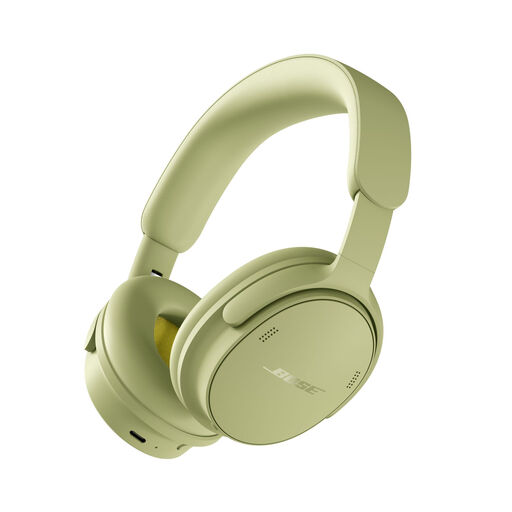 No image available
An option if you want fewer distractions and the ability to switch between noise cancellation and letting ambient sound through.
The product description lists Quiet Mode with noise cancellation, Aware Mode and lossless audio via USB.
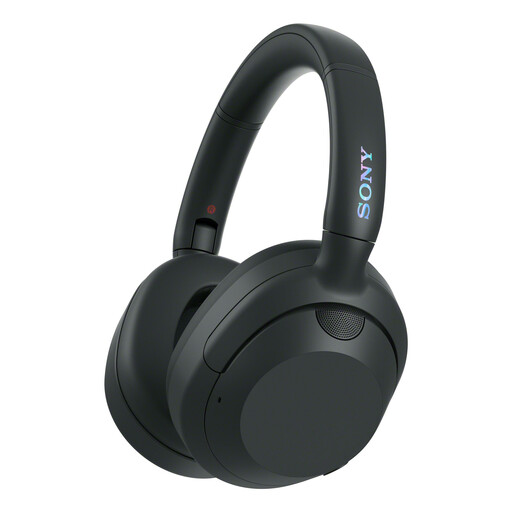 No image available
May suit you if you’re looking for closed-back headphones with active noise cancellation; assess mix changes using consistent settings as well.
The product information lists an over-ear design, a detachable cable and a 3.5mm connection.
 No image available
An option if you want to combine active noise cancellation with the option of wired listening; check the playback on a second source too.
The product information lists a detachable cable and 2.5mm and 3.5mm connections. The product is supplied without a charger.
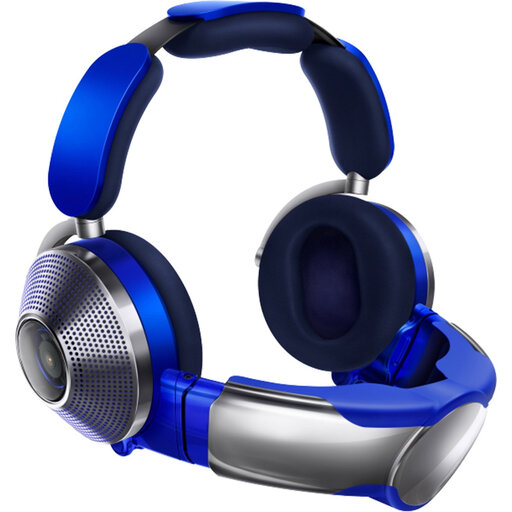 No image available
May suit you if you want fewer distractions from your surroundings; noise cancellation alone says nothing about whether the headphones are suitable as a mix reference.
The product information lists Bluetooth audio and up to 50 hours of use with active noise cancellation.
No. In a noisy home, closed-back headphones may be more practical because they reduce ambient noise. Open-back headphones are better suited to quieter moments when you’re happy for sound to leak out to others.
Check the output on your audio source and the plug on the exact model. For example, Audio-Technica lists a 6.3mm adapter with the ATH-M50x; don’t assume another model will include one too.
Don’t automatically turn up the volume to drown out ambient noise. The World Health Organization recommends well-fitting or noise-cancelling headphones to help limit this tendency, and highlights that both sound level and listening time matter.
Check in advance whether replacement pads fit the exact model. According to ACM ConsuWijzer, online consumer purchases generally come with a cooling-off period of up to 14 days after delivery, subject to exceptions and conditions. Your statutory guarantee is separate from the manufacturer’s warranty and depends on what you could reasonably expect from the product under normal use.
No. Noise cancellation reduces distractions, but doesn’t prove that mix playback is neutral. Compare familiar sections using the same settings, and check important decisions on a second playback system too.