
Listener in a shared room
You want to follow news lessons without room speakers and are paying attention to how speech sounds and how much noise escapes from your headphones.


First, choose headphones that connect to your playback device and feel comfortable throughout a lesson. Closed-back over-ear headphones are a sensible starting point in a shared room, but they won’t guarantee that nobody else can hear what you’re listening to. ANC may be worth considering if background noise is distracting. Also check that spoken news sounds clear and comfortable to you.
The Dutch Consumers' Association discusses comfort during longer listening sessions and also assesses how speech sounds. Both factors may matter when you’re following news lessons.
You want to follow news lessons without room speakers and are paying attention to how speech sounds and how much noise escapes from your headphones.
You follow longer lessons and want a comfortable fit, even if you wear glasses or your ears feel pressure.
Background noise bothers you during lessons, and you want to weigh up whether passive isolation is enough or ANC is worth trying.
Start with the connection and fit, then consider how speech sounds and how much background noise you want to reduce.
| What to consider | What to look for when buying | Who is this most relevant to? |
|---|---|---|
| Speech and sound leakage | Look for a closed-back design and, if possible, listen to a speech clip at your usual volume. | In a shared room, I want to follow spoken news without disturbing others unnecessarily. Around 36% of consumers rank speech and a shared space as their top buying priority. |
| Comfort during long lessons | Check how the headband and ear cushions feel, including when you’re wearing glasses. Fit varies from person to person. | During long lessons, I don’t want constant pressure on my ears or glasses. Around 29% of consumers put wearing comfort ahead of other buying factors. |
| Background noise | Compare ANC on and off in a similar environment, and check the stated battery life using the same settings. | If background noise disrupts my lesson, I want to know whether extra noise reduction helps without making speech less comfortable to listen to. Around 21% of consumers rank disruptive background noise as their top buying priority. |
| Connection and ease of use | Check that your device supports the chosen cable connection or Bluetooth audio. Also check whether an audio cable is included. | I want to connect my headphones easily and avoid relying on charging unnecessarily. Around 14% of consumers give connection and ease of use top priority. |
An open-back design lets in more background noise. Closed-back headphones are a more sensible starting point in a shared room, but they won’t guarantee that nobody else can hear what you’re listening to.
At your usual listening volume, check whether someone sitting next to you can hear the sound.
ANC doesn’t work equally well with every type of background noise. Fit and speech reproduction also matter.
Listen to a speech clip and compare ANC on and off in a similar environment.
An included cable won’t necessarily fit every playback device.
Before buying, compare the connections on your device with those on the headphones.
If the connections don’t match, you may need a suitable adapter or a different way to connect.
Sony’s stated maximum battery life for the Sony WH-CH720N differs depending on whether ANC is on or off.
Compare battery life using the same settings, and remember to charge the headphones if you listen wirelessly for long periods.
The wired TAH2005BK/00 is an over-ear option for lessons in one place.
The HD 400S is a wired, closed-back over-ear option for anyone who wants to listen without Bluetooth.
The Tune 720BT is a wireless over-ear option for anyone who wants to move around during news lessons or switch between devices.
The WH-CH720N is an over-ear option with ANC for lessons in noisy environments.
This selection focuses on wireless over-ear headphones with ANC for anyone following news lessons without room speakers and looking to take background noise into account.
 No image available
Wireless over-ear headphones with ANC for anyone who wants freedom of movement as well as the option to listen via a cable.
The product information lists Bluetooth, active noise cancellation and an included 3.5 mm audio cable.
The product name states a battery life of 60 hours. Check the conditions under which this figure applies.
 No image available
Wireless over-ear headphones with a closed-back design and noise cancellation for lessons where background noise is a factor.
The product information lists Bluetooth, multipoint and a detachable cable for wired listening.
The stated weight is approximately 207 g. Fit is a personal matter.
 No image available
Wireless over-ear headphones with ANC for anyone who also wants the option of listening via a cable.
The product information lists multipoint, active noise cancellation and an Aware mode, along with included USB-C and 3.5 mm cables.
According to the product information, these headphones aren’t designed to be worn while charging.
 No image available
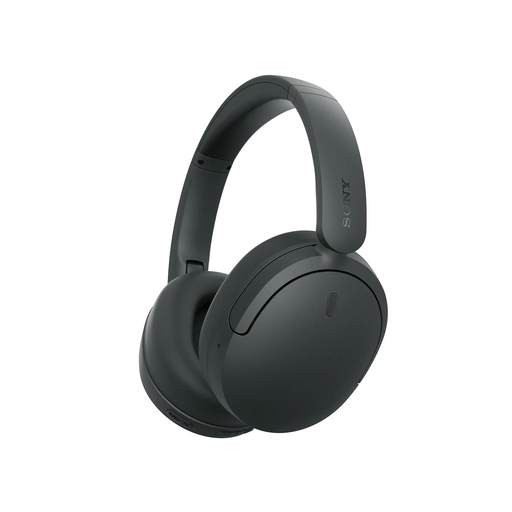
Wireless over-ear headphones with a closed-back design and ANC for anyone looking to reduce disruptive background noise.
Sony states that this model offers up to 35 hours of music playback with noise cancellation on.
The product information also lists multipoint. Check that the connections and fit suit the way you plan to use them.
 No image available
Wireless over-ear headphones with a closed-back design and ANC for listening on your own in a noisy environment.
The product information lists Bluetooth and a detachable cable with USB-C and 3.5 mm connections.
A charger isn’t included. The product information recommends a suitable charger of 1,8 W to 2,5 W and states that PD fast charging isn’t supported.
The product information warns about magnets near medical implants. Refer to the product information for the related warning.
Not necessarily. Start by considering fit, noise isolation and how speech sounds. ANC may help particularly with intrusive low-frequency hum. Try it with your own background noise and listening volume.
First, check which audio connection or Bluetooth audio feature your lesson device has. Connect the suitable cable or pair the headphones through the Bluetooth settings, then play a short speech clip to check that the sound is coming through the headphones.
Keep the volume as low as is practical and pay attention to how long you listen, too. The World Health Organization gives 80 dB for up to 40 hours per week as an example of safe listening; this isn’t a recommendation to listen at 80 dB. Without measuring it, you won’t know what sound level your headphones are reaching.
With normal use, a product should last as long as you could reasonably expect it to. If it doesn’t, contact the seller. ACM ConsuWijzer explains that the seller must resolve the problem free of charge if a product breaks too soon. A manufacturer’s guarantee doesn’t automatically limit this statutory right.
For online purchases, you generally have 14 days from delivery to change your mind. Exceptions may apply to certain hygiene products that have been removed from their packaging, so check the terms for the product in question. This is separate from your rights if a product is faulty or its description is misleading.