What should you look for when choosing?
The Consumentenbond treats voice reproduction and noise cancelling as separate considerations. So, test the same spoken exercise at a moderate volume to judge what you can still hear in your office.
| What to consider |
What to look for when buying |
Who should consider this? |
| Clarity |
Listen to a spoken exercise at a moderate volume and assess voice reproduction, fit and noise isolation in your office. |
If I want to follow words in a recording while people are talking, I look for clear voice reproduction and a good, close fit. Around 39% of consumers prioritise clarity when listening to recorded speech. |
| Staying approachable |
Decide whether you need to hear your colleagues all the time or whether pausing and switching to ambient sound will be enough. |
If I need to respond to colleagues while practising, I want to hear what’s going on around me without constantly taking off my headphones. Around 23% of consumers prioritise staying approachable. |
| Comfort |
Try the fit during a practice session about as long as your usual listening session; check for pressure and heat. |
If I’m planning longer practice sessions, I want a fit that stays comfortable. Around 23% of consumers put comfort first. |
| Practicality |
Check the connection and features you need, and compare battery life with the ANC setting you use. |
If I want to use the headphones with my devices and routine, I check which features I’ll need. Around 15% of consumers prioritise practicality and cost. |
Joybuy product picks
These picks include over-ear and in-ear models for language practice, with both wireless and wired options. Choose according to how much isolation you want, whether you need to stay approachable and how the headphones connect to your device.
 No image available
Sennheiser MOMENTUM 4 Wireless – White
An option to consider if you’re looking for an over-ear model with noise cancelling for language practice.
The product name states that it has noise cancelling and 60 hours of battery life.
View at Joybuy
 No image available
Samsung Galaxy Buds4 Pro True Wireless in-ear, Black
An in-ear option to compare if you want to use noise cancelling during language practice.
The product name states that it’s True Wireless and has Active Noise Cancelling.
View at Joybuy
 No image available
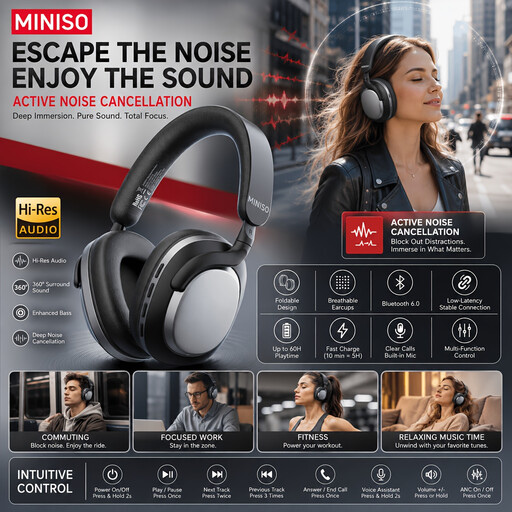
MINISO MG210 Wireless Noise-Cancelling Over-Ear Headphones, Black
An over-ear option to compare if you’re looking for noise cancelling for language practice.
The product name states that it has 24 hours of battery life.
View at Joybuy
 No image available
Bose Noise Cancelling Wired Earbuds, Black
A wired option to consider if you want to listen to language practice with noise cancelling.
This is a wired USB-C version; check that the connection is compatible with your device.
View at Joybuy
 No image available
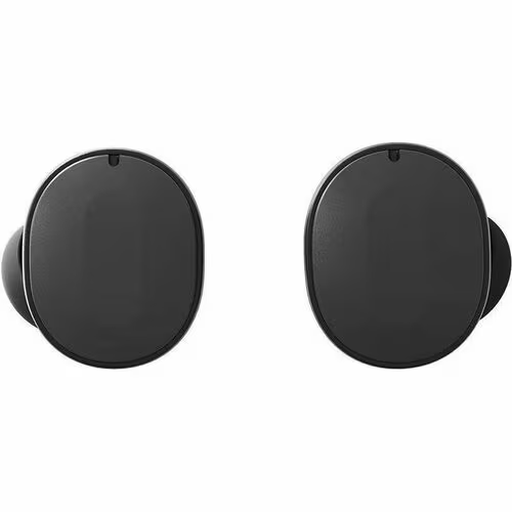
Fairphone Fairbuds Black
If you want to use ANC for language practice, check which features and battery life apply to this version.
View at Joybuy
Frequently asked questions
Is ANC enough to hear a language exercise clearly when colleagues are talking nearby?
No. Also check how clearly the exact model reproduces recorded voices and how well it fits. The Consumentenbond treats voice reproduction and noise cancelling as separate considerations for studying and office work, so try a recording in a similar environment.
How can I listen without constantly turning up the volume?
Start at a moderate volume, make sure the headphones fit well and take listening breaks. The World Health Organization recommends, among other things, well-fitting noise-cancelling headphones to reduce the need to turn up the volume in noisy situations. This doesn’t guarantee that every office recording will be clear.
What if my headphones break too soon during normal use?
If a faulty product breaks too soon during normal use, ACM ConsuWijzer says the seller must offer an appropriate solution at no cost, such as a repair, replacement or refund. The right solution depends on the circumstances; a manufacturer’s warranty doesn’t replace your statutory rights.
Can ordinary ANC headphones replace mandatory hearing protection at work?
Don’t assume so. According to Arboportaal, part of the Ministry of Social Affairs and Employment, employers must provide hearing protection when daily exposure exceeds 80 dB(A); above 85 dB(A), employees must wear it. A busy office doesn’t automatically mean these levels are reached. If you’re exposed to harmful workplace noise, follow your employer’s assessment and instructions.


