
Train passengers who want to understand speech
If you listen to spoken lessons amid background noise, consider a secure fit or noise cancelling. The Dutch Consumers’ Association also includes speech clips in its headphone and earbud testing method.


For language lessons on the train, a well-fitting in-ear or over-ear pair with noise cancelling is a good choice if you want to reduce constant train noise. A quick-to-access transparency mode is useful if you also want to hear announcements. Open-ear headphones let more sound in, but offer less isolation, which can make quiet lesson audio harder to follow in a noisy carriage. Check the fit, battery life with noise cancelling on, and the required CE marking for the version you’re buying.
If you listen to spoken lessons amid background noise, consider a secure fit or noise cancelling. The Dutch Consumers’ Association also includes speech clips in its headphone and earbud testing method.
If you want to stay connected to your surroundings while listening, consider a transparency mode or a less isolating design. Bear in mind, though, that more train noise may come through during your lesson.
For longer listening sessions, comfort and battery life at your chosen settings both matter. The World Health Organization recommends well-fitting headphones and identifies noise cancelling as a way to make you less likely to turn up the volume in noisy places.
Choose this style: if you listen to longer lessons and want to reduce constant travel noise.
Bear in mind: they take up more room in your bag, and you’ll need to find a fit that feels comfortable; announcements may not always be audible.
Choose this style: if portability matters and the ear tips create a good seal.
Bear in mind: fit and comfort vary from ear to ear. The earbuds’ own playback time is not the same as the extra charge provided by the case.
Choose this style: if hearing your surroundings matters more than blocking out the train.
Bear in mind: quiet speech can be harder to follow in a noisy carriage; don’t automatically turn up the volume to compensate.
| What to consider | What should you check? | Who should pay extra attention? |
|---|---|---|
| Understanding speech | Assess the fit and seal; check whether noise cancelling and an easy-to-access transparency mode are available. | If I want to follow lesson explanations over the constant sound of the train, I look for a good seal without immediately turning up the volume. Around 33% of consumers put speech clarity first. |
| Hearing announcements | Check how quickly you can switch to transparency mode; consider whether the limited isolation of open-ear headphones suits your journey. | If I want to hear travel information at stations or before my stop, I factor in ambient sound when choosing. Around 27% of consumers prioritise announcements and awareness of their surroundings. |
| Comfort and size | Try them on for a longer listening session and, for in-ear headphones, check which sizes of ear tips are included. | If I listen for a long time or have limited space in my bag, the design needs to suit my ears and luggage. Around 20% of consumers give comfort or portability top priority. |
| Battery life and connectivity | Compare playback time with noise cancelling on; check for multipoint if you want to switch between devices. | If I want to listen to lessons without interruption or switch between devices, I check the battery life in my listening mode. Around 20% of consumers put battery life or device switching at the top of their list. |
Maximum playback time can vary depending on whether noise cancelling is on or off. With earbuds, the playback time of the earbuds themselves is also different from the extra charge provided by the case.
Compare the stated battery life in the same mode you plan to use for your lessons. For earbuds, check the continuous playback time separately.
A shorter battery life in your listening mode could mean you need to recharge sooner during a journey.
Noise cancelling can reduce constant background noise, but it doesn’t guarantee that train announcements will remain clearly audible.
Check whether you can switch to transparency mode quickly, and pause your lesson when travel information matters.
A less isolating design lets more background noise through. The World Health Organization notes that higher sound levels can reduce the amount of time it’s safe to listen.
Choose a style that fits well and listen at a moderate volume, rather than trying to drown out train noise by turning it up again and again.
The WH-1000XM6 we looked at is an over-ear model, while the WF-1000XM6 is an in-ear model. Sony publishes separate specifications for these models.
The Tune 770NC we looked at is a foldable over-ear model; the Tour Pro 3 is an in-ear model with a charging case.
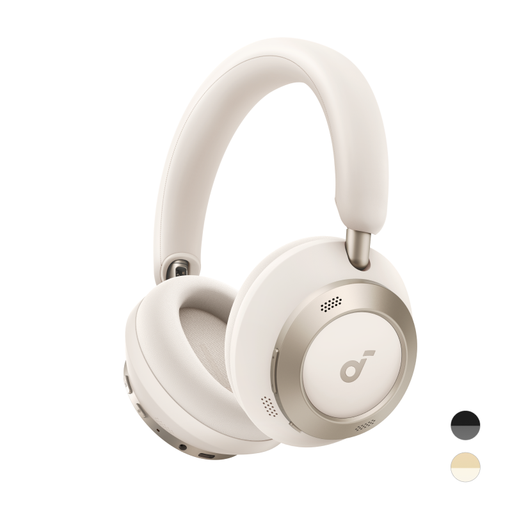
The Space One we looked at is a foldable over-ear model with noise cancelling and adjustable transparency.
The MOMENTUM 4 Wireless we looked at is an over-ear model with adaptive noise cancelling and a transparency mode.
These product picks focus mainly on noise-cancelling over-ear headphones, with a wireless in-ear option for anyone who prefers a compact design.
 No image available
A good fit for anyone who wants to reduce train noise during spoken lessons and let in ambient sound at certain times.
 No image available
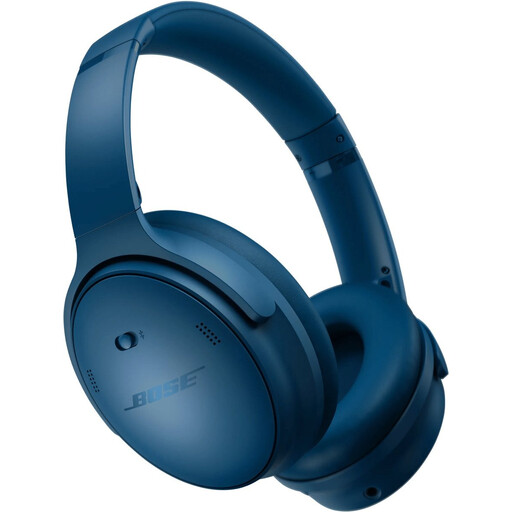
A good choice if you’re looking for an over-ear model to reduce constant travel noise during a language lesson.
The product name states a battery life of up to 35 hours.
 No image available
A good fit for anyone who wants to reduce train noise during lessons and let in ambient sound when needed.
 No image available
A good choice if you want to reduce constant train noise and are looking for foldable headphones to take with you.
The product name states that they have adaptive active noise cancelling, a foldable design and a battery life of up to 60 hours.
 No image available
A compact listening option for anyone who listens to spoken lessons on the go and wants to let in ambient sound at certain times. Check that the ear tips fit well and create a good seal.
No, it depends on what you want to hear during your journey. Noise cancelling can help if you want to reduce constant background noise. If you want to hear announcements, consider a transparency mode or a less isolating design.
Choose well-fitting headphones and consider noise cancelling, so you’re less likely to turn up the volume in noisy places. The World Health Organization gives a maximum of 40 hours per week at 80 dB as an example; this isn’t a measurement of the sound level from your headphones.
Check on your own device that playback, pausing and switching to ambient sound all work. For in-ear headphones, try the included ear tips to find a good seal, and follow the instructions for cleaning the model you choose.
For online consumer purchases, you generally have a statutory 14-day cooling-off period after delivery; check which exceptions and return conditions apply to your purchase. This is separate from your statutory guarantee: if a product doesn’t perform as you could reasonably expect under normal use, the seller is responsible for offering an appropriate solution.
NS house rules ask passengers to keep quiet in the quiet zone and not to disturb fellow passengers anywhere on the train with loud conversations or music. So listen without making noise that others can hear, and don’t practise speaking aloud in the quiet zone.
European rules apply to radio equipment sold on the Dutch market. The Dutch government states that electronic products such as these must have a CE marking. Check the marking and product information for the specific version being sold, as a similar model name or product page alone doesn’t confirm compliance.