
Listeners distracted by noise at home
If appliances or conversations distract you from your spoken lesson, consider how well the headphones fit and how clear the lesson sounds. The Dutch Consumers' Association looks at both fit and speech quality.


Well-fitting, noise-isolating over-ear or in-ear headphones can help if noise at home is drowning out your language lesson. If you need to hear the people you live with, choose an ambient mode or a less isolating design instead. The Dutch Consumers' Association assesses speech reproduction separately, so compare how clear the speech sounds, how the headphones fit and how easy they are to use with the same lesson excerpt. The presence of ANC alone doesn’t predict how they’ll sound in your home.
If appliances or conversations distract you from your spoken lesson, consider how well the headphones fit and how clear the lesson sounds. The Dutch Consumers' Association looks at both fit and speech quality.
If you wear headphones for long periods, compare the fit and battery life in the listening mode you plan to use. The Dutch Consumers' Association highlights comfort and battery life as important factors.
If you need to hear the people you live with during a lesson, check whether your chosen headphones have an ambient mode and how to use it. A less isolating design may also suit you, but it could let in more distracting noise.
When taking language lessons at home, your priorities will often depend on the noise that distracts you, how long the lesson is and whether you need to respond to people during it.
| Factor | What should you check? | Who is this important for? |
|---|---|---|
| Distracting noise at home | Using the same lesson excerpt, compare how well the model you’re considering deals with the noise that distracts you. Check the fit, too. | If conversations or appliances make it difficult to follow the lesson, I want to know first how much noise the headphones block out. For around 36% of consumers, noise reduction is the top priority. |
| Speech clarity | Listen to a familiar lesson excerpt at a similar, comfortable volume and assess the speech with ANC switched on and off. | If I want to follow pronunciation and words in spoken lessons clearly, I look beyond noise cancellation alone. For around 29% of consumers, speech intelligibility comes first. |
| Comfort and battery life | Try the fit, with glasses if you wear them, and compare the stated battery life in the mode you’ll be listening in. | For long lessons, I don’t want an uncomfortable fit or to have to stop to recharge. For around 21% of consumers, lasting comfort is the top priority. |
| Hearing the people you live with | Check how to switch on ambient sound or pause the lesson, and try the controls yourself. | If I need to respond to the people I live with during a lesson, that matters more than complete noise isolation. For around 14% of consumers, staying alert to others comes first. |
Noise cancellation and natural, clear speech reproduction are separate things to consider. The Dutch Consumers' Association assesses speech separately.
Compare a familiar lesson excerpt and the distracting noise at home separately, at a similar, comfortable volume.
Stated battery life can vary depending on whether you’re listening with ANC switched on or off. For wireless earbuds, playback time per charge is also different from the total playback time with the charging case.
Compare manufacturers’ figures for the same listening mode. For in-ear models, check the battery life per charge separately from the case’s total playback time.
In-ear headphones should fit comfortably and create a good seal; over-ear headphones should remain comfortable throughout a longer lesson. Over-ear models also take up more storage space.
Where possible, try your chosen style during a lesson, and wear your glasses too if you use them.
The WH-1000XM6 and WF-1000XM6 let you compare an over-ear and an in-ear model side by side.
The MOMENTUM 4 Wireless is an over-ear model to compare if you want to switch between noise reduction and ambient sound during wireless lessons.
The Space One is an over-ear range worth considering if adjustable ambient sound and battery life in each ANC mode matter to you.
The LIVE 770NC and LIVE 670NC let you compare an over-ear and an on-ear style within the same product range.
Here you’ll find wireless over-ear and in-ear models to compare for language lessons at home. For each model, check that the fit and listed features suit the noise at home that bothers you.
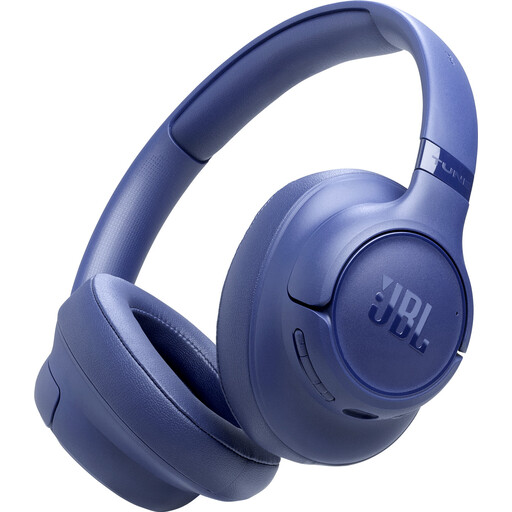 No image available
An over-ear option to consider if you’re looking for a noise-isolating style for language lessons.
The product description lists EQ presets and up to 76 hours of playback time.
 No image available
An over-ear model to consider if you want to switch between noise cancellation and ambient sound during longer lessons.
Sennheiser lists adaptive ANC, a transparency mode and up to 60 hours of use per full charge. The product description mentions touch controls and an included 3.5mm cable.
 No image available
A compact wireless in-ear option to consider if you’d rather not wear over-ear headphones.
The product description lists Bluetooth 5.4, touch controls and a Type-C charging case. Check that the fit and features meet your noise-reduction needs.
 No image available
An in-ear option to compare if you’re looking for a compact design with active noise cancellation.
The product description lists up to 6 hours of playback with ANC on and up to 26 hours in total with the charging case.
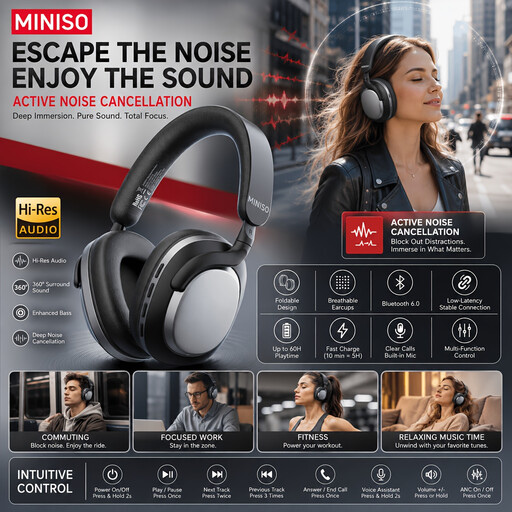 No image available
An over-ear model to consider if you want to compare a noise-isolating style with noise cancellation for language lessons.
The product information lists active noise cancellation and 24 hours of battery life.
Don’t count on it. The Dutch Consumers' Association says ANC is often most effective against low rumbles, and assesses speech separately. So try your own lesson excerpt and the distracting noise at home at a comfortable volume.
Check the fit and practise pausing and switching between ANC and ambient sound before the lesson. For wireless models, compare the stated battery life in the listening mode you plan to use. The Dutch Consumers' Association also takes controls and battery life into account in its assessment.
First, try a comfortable volume with well-fitting headphones and, if appropriate, ANC, rather than continually turning the volume up. The WHO advises keeping the volume low and highlights both sound levels and listening time as factors in safe listening; this is not a legal volume limit in the Netherlands.
For online consumer purchases, you generally have a 14-day cooling-off period from delivery, subject to legal exceptions, according to ACM ConsuWijzer. You’re also covered by the statutory guarantee: if a product breaks too soon under normal use, the seller is responsible for providing an appropriate solution. There is no single fixed guarantee period for every pair of headphones in the Netherlands.
Wireless equipment covered by EU radio equipment rules must meet the applicable requirements before it can be placed on the EU market. A CE mark is the manufacturer’s declaration, not an independent test of sound quality or suitability for language lessons. Check the product information for the specific model you’re considering.