
Detail-focused interview reviewer
You often rewind unclear passages and want to assess the recording at a comfortable volume. The Consumers’ Association lists sound quality as an important part of its headphone tests.


Start with a difficult passage from one of your own recordings and compare how clearly you can follow the speech at a comfortable volume. A specification or claim about clear sound doesn’t prove that your recording will be easy to understand. Wired over-ear headphones may suit a permanent workspace, while on-ear headphones take up less space but can put more pressure on your ears. Wireless listening with noise cancelling is worth considering if background noise is distracting, provided the connection, controls and fit work for your setup.
You often rewind unclear passages and want to assess the recording at a comfortable volume. The Consumers’ Association lists sound quality as an important part of its headphone tests.
You work through several interviews in a row and want the headphones to remain comfortable during longer listening sessions. The Consumers’ Association notes that over-ear models are often comfortable, while on-ear models are more compact.
You take your work kit with you or listen in different places. Consider the size, whether the connection works with your equipment, and how much background noise you encounter while reviewing.
| What to consider | What to look for | Who should pay particular attention? |
|---|---|---|
| Following the speech | Compare the same quiet or unclear passage using the same settings and at a comfortable volume. | If I’m unsure about a word, I want to be able to listen to the passage again without turning the volume up. Around 36% of consumers prioritise speech intelligibility. |
| Comfort during long sessions | Pay attention to pressure from the headband and ear cushions; try the fit during a longer listening session. | When reviewing several interviews in a row, I don’t want the fit to distract me. Around 29% of consumers prioritise long-lasting comfort. |
| Background noise | Assess the headphones where you work and compare the same passage with and without noise cancelling, if available. | If noise around me masks quiet passages, I want to listen without constantly turning up the volume. Around 21% of consumers prioritise a quiet workspace. |
| Size and connection | Check how the headphones can be stored and whether the cable, plug or wireless connection works with your laptop or recorder. | For a compact work kit, I want a model that’s easy to take with me and works with my equipment. Around 14% of consumers prioritise portability and connectivity. |
A stated frequency range or claim about clear vocals doesn’t show how well you’ll be able to assess your interview recording. The recording, your workspace and the fit all play a part too.
Compare a difficult passage from your own material on the same device and at a comfortable volume.
On-ear cushions rest on your ears and can put on more pressure. The Consumers’ Association points out this difference compared with over-ear models; Sennheiser describes the HD 25’s clamping force as firm.
Weigh the smaller size against how the headphones fit during a session that reflects your usual review work.
A wireless audio mode only works if both the headphones and the playback device support it. The Bluetooth label alone doesn’t mean Bluetooth LE Audio is available on both ends.
Test the connection with your own device and software, especially if you’re synchronising audio with video.
The ATH-M50x is a wired, closed-back over-ear headphone that folds up and has a replaceable cable.
The wired MDR-7506 is an option for reviewing recordings at a fixed workstation.
The wired HD 25 is a compact on-ear headphone; the MOMENTUM 4 Wireless is a separate over-ear option if you prefer wireless listening.
The K371 is a closed-back, foldable over-ear headphone to compare with other compact wired models.
The products below are wireless over-ear headphones for reviewing interviews; connections and features vary by model.
 No image available
Worth considering if you want to compare wireless listening with the option of a wired connection; try it with your own recording to see whether the noise cancelling suits your workspace.
The product information lists adaptive noise cancelling, an included 3.5 mm cable and up to 60 hours of playback. Wireless use requires charging; the stated features don’t prove that speech in your recording will be easier to understand.
 No image available
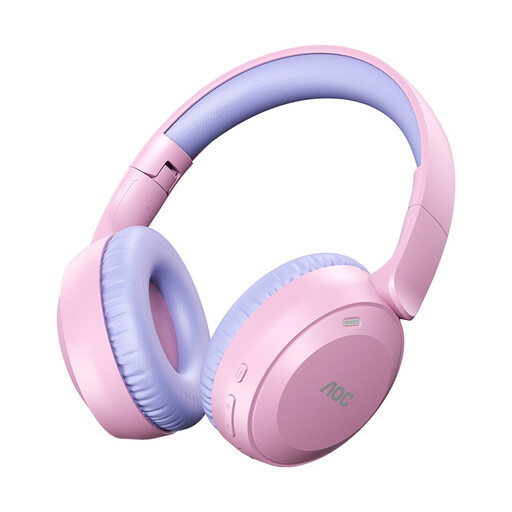
Could suit a compact kit for taking on the go if the foldable design and wireless listening work for you.
The product name lists Bluetooth 6.0, a weight of 182 g, a foldable design and up to 75 hours of playback. Check that the wireless connection is compatible with your equipment.
 No image available
An option to compare if background noise distracts you and you’d also like the option of wired listening.
The product information lists a closed-back over-ear design, active noise cancelling, Bluetooth and an audio cable for listening without battery power. Check that the connection works with your laptop or recorder.
 No image available
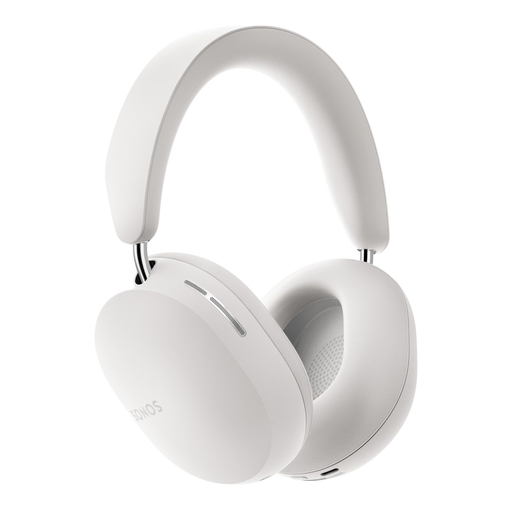
Consider this if you’d like to compare wireless over-ear headphones with noise cancelling against wired listening.
The product information lists active noise cancelling and wired audio via the included USB-C and 3.5 mm cables. Check which connection works with your playback device.
 No image available
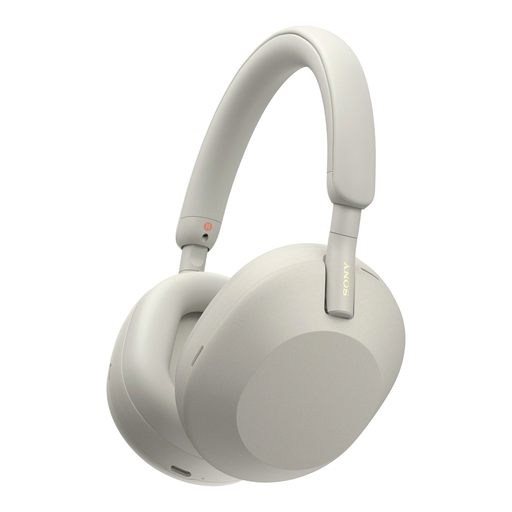
May be worth considering if you want to listen wirelessly and are looking for features suited to use with multiple devices.
The product information lists noise cancelling and pairing with two devices. Check the controls and connection with your own playback equipment.
Not necessarily. Wired headphones may suit you if you have a compatible output and want a direct connection. If you choose wireless, check the connection with your own device and software. Also test whether the audio and video stay in sync when you review them together.
Noise cancelling reduces background noise around the listener, but it doesn’t restore the original interview recording. Compare the same passage with and without the feature, and keep the volume comfortable.
Check the plug and cable length against your laptop or recorder. For a model with replaceable cables, check which cable is included; follow the instructions for your chosen model when maintaining the cable and ear cushions.
Keep the volume comfortable, take regular breaks and avoid letting background noise make you turn it up. The World Health Organization gives 80 dB for up to 40 hours a week as an example; this doesn’t guarantee a safe volume setting on any particular headphones.
When you buy online from a trader, you generally have a statutory cooling-off period of up to 14 days after delivery, subject to legal exceptions. A product must also meet what you can reasonably expect from it; any additional manufacturer’s guarantee doesn’t replace your statutory rights. ACM ConsuWijzer explains the cooling-off period and statutory guarantee.
Radio equipment placed on the European market must meet conformity requirements and carry CE marking. The Dutch Authority for Digital Infrastructure says that equipment must meet the applicable European requirements to be sold with CE marking. This doesn’t automatically establish that a specific product on offer is compliant.