
Quiet listener
You practise a part by replaying recordings at a shared study space and mainly want to make sure other people can’t hear them.


Start with a well-fitting pair of closed-back headphones and keep the volume low: in a shared library, it’s important that other people can’t hear your recording. Choose wired headphones if you want to hear your own voice with minimal delay through suitable recording equipment; opt for wireless ANC headphones if background noise is distracting you. ANC won’t automatically stop sound from escaping your headphones, and practising out loud isn’t appropriate in a silent study area.
You practise a part by replaying recordings at a shared study space and mainly want to make sure other people can’t hear them.
You want to follow vocal lines and details in a recording. So compare how the same familiar passage sounds through each pair, rather than focusing only on the audio terms on the packaging.
You want to hear your own voice while practising. For that, you’ll need both a space where singing is allowed and suitable equipment for direct monitoring.
First, check that your headphones won’t disturb anyone else. Then decide whether you’ll only be listening to recordings or also want to monitor your own voice.
| What to consider | What should you check? | Who is this important for? |
|---|---|---|
| No audible sound leakage | Check the fit and, at a moderate volume, test whether someone sitting next to you can hear the recording. | When I listen at a shared study space, I want to make sure others can’t hear the recording. Around 31% of consumers put avoiding audible sound leakage first. |
| Following the harmony line | If possible, listen to the same familiar, multi-part passage through the headphones you’re comparing. | I want to pick out the part I’m learning in an existing recording, rather than relying only on audio terminology. Around 31% of consumers prioritise distinguishing between vocal lines. |
| Hearing your own voice | Check whether your audio interface offers direct monitoring and whether the plug and any adapter will fit. | When I sing, I want to hear my voice through the recording equipment without distracting delay; I’ll also need a suitable interface. Around 19% of consumers put direct vocal monitoring first. |
| Comfort when listening repeatedly | Assess the fit during a longer listening session and keep the volume low. | When I replay passages often, I want a fit that stays comfortable. Around 19% of consumers prioritise comfort over longer periods. |
ANC reduces the noise you hear, but it doesn’t tell you whether other people can hear your recording. In a shared silent study area, that also depends on the fit and volume.
Check the fit, and ask someone sitting next to you to listen at the volume you actually use.
A cable alone won’t provide direct monitoring. The connected audio interface must also support this feature; practising out loud may also go against the rules of the space.
Check your microphone, interface and connections first. Only practise audibly somewhere it’s allowed.
Direct monitoring may require a suitable audio interface or other compatible connection equipment.
Sony Netherlands states that the WH-1000XM6 offers up to 30 hours of music playback with noise cancelling on and up to 40 hours with it off. These are manufacturer figures, and the setting makes a difference.
Compare the figure for the setting you plan to use, and don’t treat it as a guaranteed battery life.
The wired, closed-back ATH-M50x could suit listening at a shared table if you want a detachable cable.
The wired, closed-back SRH440A is worth comparing for listening or monitoring with equipment that has a compatible headphone output.
The wired, closed-back HD 280 PRO is worth considering if ease of maintenance matters to you.
The wireless, closed-back WH-1000XM6 is an option if you want to use ANC or an ambient sound mode while listening.
The wireless over-ear Tune 770NC is worth comparing if you want ANC and an adjustable equaliser.
These Joybuy products are wireless headphones and earbuds for listening to recordings. ANC can reduce background noise for the listener, but it doesn’t determine whether other people can hear the recording.
 No image available
For wireless listening to recordings; the product name specifies true wireless and active noise cancelling.
 No image available
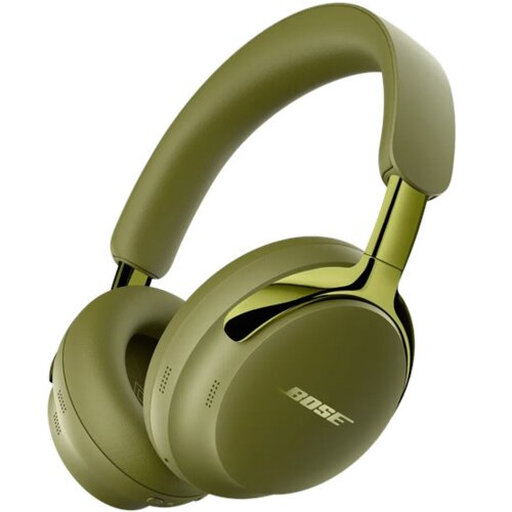
For listening to recordings repeatedly; the product description mentions a wireless over-ear design, active noise cancelling and a detachable cable.
The product name states a battery life of 24 hours.
 No image available
For listening to recordings with a wireless or wired connection; the product description mentions Bluetooth, active noise cancelling and a detachable cable.
The connections listed are USB-C and 3.5 mm.
 No image available
For wired listening to recordings; the product description mentions USB-C, active noise cancelling and no need to charge.
 No image available
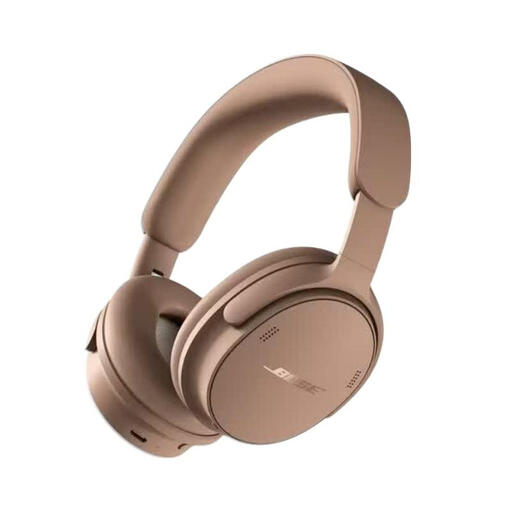
For wireless listening to recordings; the product description mentions Bluetooth and active noise cancelling.
A transparency mode is also listed.
No. Don’t assume that from the ANC label: also check the fit and whether someone sitting next to you can hear the recording at your listening volume. The Amsterdam Public Library allows headphones in its silent study areas only if nobody else can hear them; this rule applies at that location and isn’t a nationwide library rule.
No. You’ll also need a suitable microphone and audio setup. Focusrite describes direct monitoring as a feature that sends the input signal to the headphone output with virtually no delay through a compatible interface. Check your interface’s connections and features, and only practise audibly where it’s allowed.
Follow the cleaning instructions and check before buying whether parts are available for the exact model and will fit. Shure warns against using solvent-based cleaners on the SRH440A. Sennheiser lists an ear pad set for the HD 280 PRO that’s suitable only for the PRO version from 2016 onwards.
According to ACM ConsuWijzer, online purchases generally come with a statutory cooling-off period of up to 14 days after delivery; check the applicable exceptions and returns terms. The statutory guarantee is separate from any retailer’s or manufacturer’s guarantee. If a product doesn’t perform as you could reasonably expect under normal use, the seller must offer an appropriate solution.
That depends on the rules for the specific location and space. The Amsterdam Public Library doesn’t allow conversations in its silent study areas and asks that other people can’t hear your headphones; practising out loud isn’t suitable there. This is a local policy, not a nationwide rule for all libraries.