
Listener in a quiet reading room
You want to rewind a solo repeatedly without the people around you hearing the recording. A closed-back design is a sensible starting point, but check for sound leakage with your own fit and listening volume.


Start with a pair of closed-back headphones that fit well, then check at your usual, moderate listening volume whether the person next to you can hear your music. Next, choose based on your playback device and comfort: wired studio headphones mean you won’t rely on a battery, while closed-back wireless headphones with noise cancelling can help if background noise distracts you. Neither option makes playing your guitar audibly suitable for a quiet reading room.
You want to rewind a solo repeatedly without the people around you hearing the recording. A closed-back design is a sensible starting point, but check for sound leakage with your own fit and listening volume.
You want to compare short guitar phrases accurately and listen to a familiar recording at a moderate volume. Suitable playback software can slow a track down without changing its pitch; this isn’t a headphone feature.
You weigh up fit, freedom from cables or battery use when replaying the same passages often. Try the headphones for yourself, as a specification can’t predict how a particular model will feel on your head.
Good for: replaying short passages on a device with a suitable headphone socket.
Trade-off: you won’t rely on a battery, but the cable can get in the way, and how much sound the headphones block depends partly on the fit.
Good for: listening when chatter or ventilation disrupts your concentration, or if you also want to listen wirelessly.
Trade-off: wireless use requires a charged battery; noise cancelling alone tells you nothing about sound leakage or how easily you’ll be able to follow guitar notes.
| What to consider | What should you check? | Who should pay particular attention? |
|---|---|---|
| Sound leakage | Listen to your own recording at your usual volume; check whether the person next to you can hear your music. | If I want to rewind passages in a quiet reading room without disturbing anyone, I put sound leakage first. Around 36% of consumers say preventing others from hearing their music is their main concern. |
| Following guitar parts | Compare a familiar passage at a similar, moderate volume. Separately check whether your software can slow the tempo without changing the pitch. | If I want to work out short phrases, I need to be able to tell whether I can follow the notes in a familiar recording. Around 29% of consumers prioritise this listening goal. |
| Comfort | Try the fit for yourself and check whether the ear pads are replaceable. Also make sure the cable works with your seating position. | When listening repeatedly, I want my headphones to stay comfortable; the fit for me matters more than a general product description. Around 21% of consumers put comfort first. |
| Distractions and freedom of movement | Assess noise cancelling separately from sound leakage. For wireless use, check the battery life for your chosen setting and whether you can listen with a cable. | If background noise distracts me or I don’t want a cable, I focus on those features and battery life. Around 14% of consumers say this is their main purchasing concern. |
A closed-back design is a starting point for assessing sound leakage, not a guarantee that other people won’t hear your music. Audio-Technica describes the ATH-M40x, Sennheiser HD 280 PRO and beyerdynamic DT 770 PRO as closed-back models. Sony lists noise cancelling for its closed-back WH-1000XM6; check sound leakage separately with this model too.
For wired models, check that the plug and any adapter are compatible with your playback device. The manufacturer offers the DT 770 PRO in 32, 80 and 250 ohm versions, so check the full variant before ordering. A tempo feature in suitable software, such as Audacity Change Tempo, can adjust the tempo without changing the pitch. Keep the volume moderate; Thuisarts advises against turning the sound up unnecessarily.
Noise cancelling reduces background noise for the listener; it doesn’t answer the separate question of how much sound escapes from the ear cups.
Check for sound leakage at your usual listening volume, even with a noise-cancelling model.
beyerdynamic offers 32, 80 and 250 ohm versions for different audio sources. The name alone doesn’t make these variants interchangeable.
Before ordering, check the full variant name, impedance, plug and connection on your playback device.
Listening louder isn’t a substitute for a suitable recording or playback setting, and it can damage your hearing.
Start at a moderate volume and, if necessary, use a suitable software feature to slow down a tricky passage. Thuisarts advises against turning the sound up unnecessarily.
The ATH-M40x is a wired, closed-back monitoring option with detachable cables.
The wired, closed-back HD 280 PRO is foldable and has replaceable ear pads.
The wired, closed-back DT 770 PRO is available in different impedance versions.
The closed-back WH-1000XM6 is a wireless option with noise cancelling and the option to listen with a cable.
This selection includes wireless headphones, wireless earbuds and a wired headset. Check whether each model’s design, connection and listening features suit a quiet library session; the product type alone doesn’t tell you how much sound will leak out.
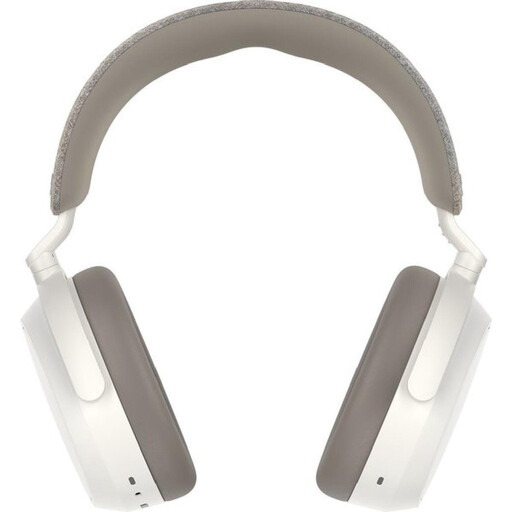 No image available
A wireless over-ear option to consider if you also want noise cancelling and the option to listen with a cable.
Noise cancelling, transparency mode and an included 3.5mm audio cable are listed. The product description states a battery life of up to 60 hours; check the operating mode when comparing.
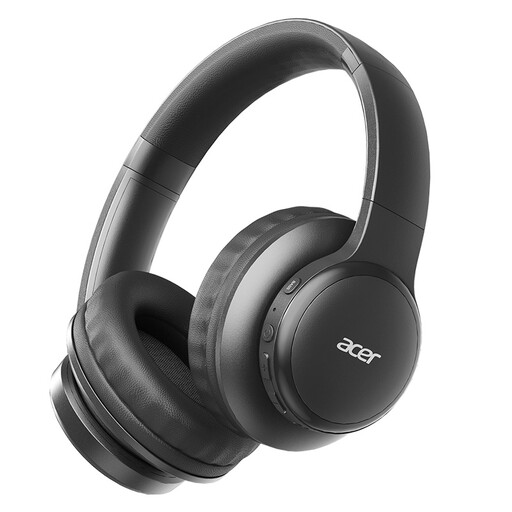 No image available
A wireless option if you don’t want to use a cable while listening; check the fit and sound leakage before using them in a quiet space.
The product information lists Bluetooth 5.3 and a foldable design.
 No image available
Wireless earbuds to consider if you’re looking for a compact listening option; check the fit and whether they’ll stay comfortable during longer sessions.
The product name lists True Wireless and Active Noise Cancelling. The product description mentions a 9-band adjustable equaliser.
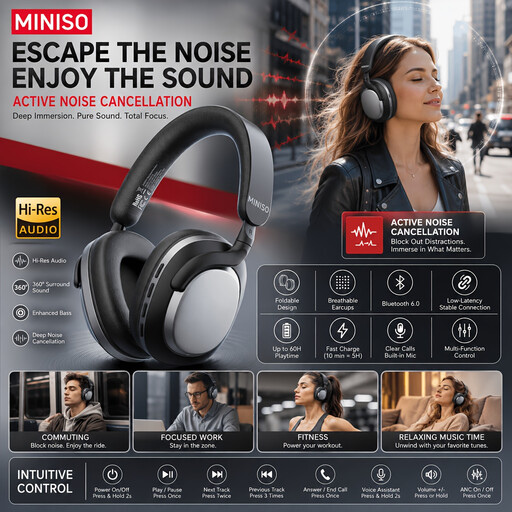 No image available
A wireless over-ear option if you’re considering noise cancelling; separately check whether the fit limits sound leakage enough for your library visit.
The product information lists a battery life of up to 24 hours and noise cancelling.
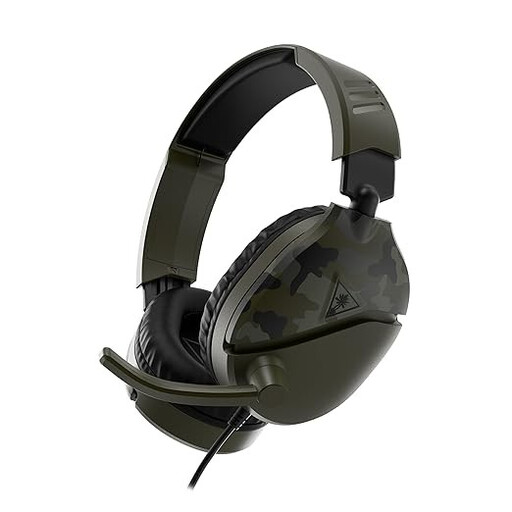 No image available
A wired headset to consider if the connection is compatible with your device; check whether the microphone and design suit where you’ll be listening.
The product information lists a 3.5mm connection, stereo sound, passive isolation and 40 mm speakers.
Don’t assume you can. In its 2026 rules, Bibliotheek Utrecht asks visitors not to disturb others with loud music; this is a rule for that library, not a nationwide statement covering every branch. Check the rules at your local library and ask permission if you want to do more than listen through headphones.
Use a playback or editing feature that changes the tempo without adjusting the pitch. Audacity describes Change Tempo as a feature that does this; according to Audacity Support, repeated rendering can affect sound quality. This is a software feature, not a headphone specification.
Don’t turn the sound up unnecessarily and, if possible, use the volume limiter. Thuisarts gives this advice for listening to music; closed-back headphones or noise cancelling aren’t a reason to turn up the volume.
For a faulty product, the seller must provide a solution under the rules set out by the Dutch Government; the Netherlands doesn’t have a fixed statutory warranty period. Many online consumer purchases come with a 14-day cooling-off period. This is different from a remedy for a faulty product, so check which terms apply to your purchase.