
Side sleeper who wants to keep listening
You listen lying down and want the fit, playback mode and controls to work while your head is on a pillow. soundcore describes the Sleep A20 as a sleep model with different ear wings and ear tips.


Choose based on your sleeping position and how much sound your roommate might hear. Compact in-ear headphones can avoid the pressure of large earcups when you sleep on your side, while closed-back over-ear headphones are worth considering mainly for listening upright. A sleep model such as the soundcore Sleep A20 plays audio from your phone in Bluetooth mode, rather than through its built-in sleep library. If there’s background noise, compare passive isolation with active noise cancellation, and keep the volume low.
You listen lying down and want the fit, playback mode and controls to work while your head is on a pillow. soundcore describes the Sleep A20 as a sleep model with different ear wings and ear tips.
You want to hear spoken audio clearly without turning the volume up so high that someone else can hear it too. RTINGS.com discusses sound leakage from open and closed-back designs, while the World Health Organization advises keeping the volume low.
You want to follow a travel story while still noticing when someone says something in the bedroom. Sony and JBL describe a mode on certain models that lets in ambient sound.
First decide whether comfort in your usual sleeping position, reduced sound leakage or staying in touch with your roommate matters most.
Choose these if: you sleep on your side and want to avoid the pressure of a regular earcup against your pillow.
Trade-off: according to soundcore, the soundcore Sleep A20 doesn’t have active noise cancellation. You’ll need to use Bluetooth mode to play audio from your phone.
Choose these if: you’re looking for a compact model for listening in bed and background noise might drown out your story.
Trade-off: noise cancellation doesn’t automatically make an in-ear model comfortable under a pillow. Fit and ambient mode are still important considerations.
Choose these if: you mainly listen sitting upright and would rather not wear anything in your ear canal.
Trade-off: an earcup may press against your pillow. Closed-back designs generally leak less sound than open-back designs, but they don’t block out sound completely.
| Consideration | What to check before buying | Who should prioritise this? |
|---|---|---|
| Reducing sound leakage | Compare a snug fit or closed-back earcups. RTINGS.com explains that open-back designs generally leak more sound than closed-back ones; results vary by model. | I want to hear my story without my roommate hearing it too; around 36% of consumers make low sound leakage their top buying priority. |
| Comfort when sleeping on your side | Check which ear tip sizes are available and assess the pressure in your usual sleeping position. | When I listen on my side, I want to know whether the earbud or earcup will press against my pillow; around 29% of consumers give side-sleeping comfort top priority. |
| Hearing spoken audio clearly | Check whether the exact model has active noise cancellation or only passive isolation, and whether it fits securely. | When noise in the room drowns out the narrator, I want to keep listening without constantly turning up the volume; around 21% of consumers prioritise clarity in background noise. |
| Staying aware of others | Check whether the model has an ambient mode and how to switch it on while listening. | I want to notice when my roommate says something, even if it interrupts the story; around 14% of consumers make staying aware of others their top priority. |
According to soundcore, the soundcore Sleep A20 uses passive noise isolation and doesn’t have active noise cancellation.
Check the exact model to see whether it has active noise cancellation or relies solely on the fit for isolation.
soundcore lists different playback times for the Sleep A20’s sleep mode and Bluetooth mode. If you’re listening to a story from your phone, Bluetooth mode is the relevant one.
Compare the stated playback time for the mode you’ll actually use.
Active noise cancellation alone won’t tell you whether a model will feel comfortable when your ear is resting on a pillow. Fit and pressure are separate considerations.
First choose the type of headphones that suits your usual position, then compare isolation, active noise cancellation and ambient mode.
The Sleep A20 is a dedicated sleep model to consider if you sleep on your side and listen to audio from your phone via Bluetooth.
The WF-C710N is an in-ear option, while the closed-back over-ear WH-CH720N is another choice if you’d rather not wear anything in your ears.
The Tune Buds 2 are an in-ear option to compare if you’re looking for active noise cancellation and adjustable awareness of your surroundings.
These Joybuy headphones and earbuds are worth comparing for listening to travel stories. Check that each model’s design and connection suit your sleeping position and playback device.
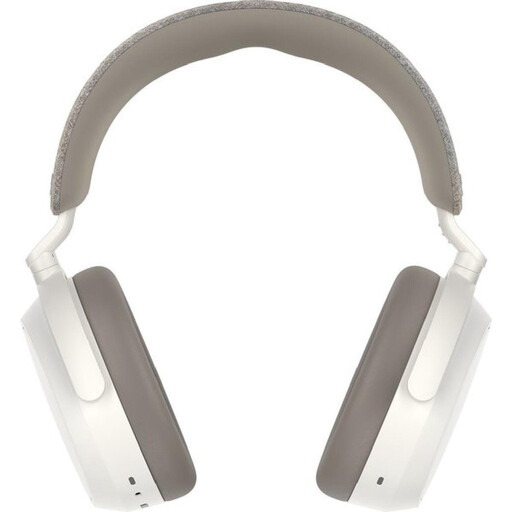 No image available
Wireless over-ear headphones with noise cancellation, according to the product name. When you sleep on your side, the earcups may press against your pillow.
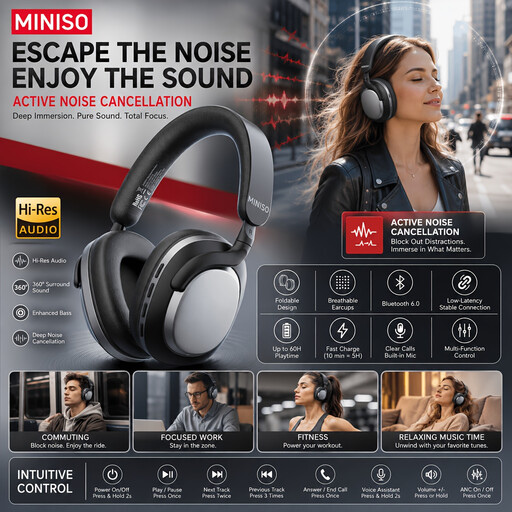 No image available
Wireless over-ear headphones with noise cancellation; the product name states a 24-hour battery life. If you sleep on your side, check whether the earcups press against your pillow.
 No image available
Wired in-ear headphones with noise cancellation, according to the product name. Check that the connection is compatible with the device you’ll be listening on.
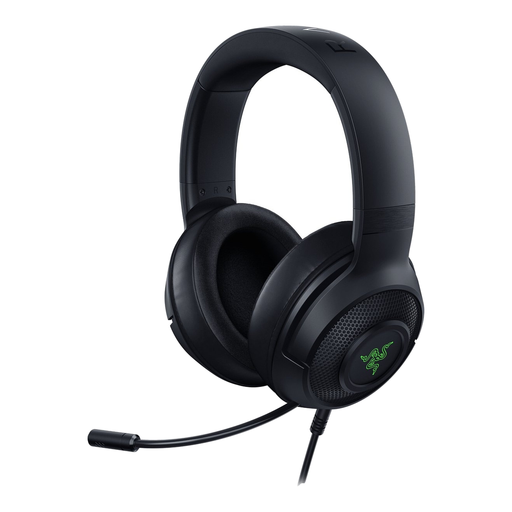 No image available
A headset to compare if you prefer a headband-style model. Before buying, check that the connection and playback device are compatible.
 No image available
Bluetooth headphones with noise cancellation, according to the product name. If you listen on your side, check whether the earcups press against your pillow.
No. According to soundcore, you can’t add your own audio to the sleep-mode library; use Bluetooth mode to play audio from your phone. If you want to keep listening, also check the automatic switching setting.
soundcore recommends trying different sizes of ear tips or ear wings, and possibly using a softer pillow. The breathable ear tips may feel less sealed, but according to soundcore, they reduce noise isolation.
Not as a first solution: the World Health Organization advises keeping the volume low. It gives a maximum of 60% of your device’s volume as a practical guideline; this percentage isn’t an exact measurement of sound levels in decibels.
ACM ConsuWijzer generally states that you have a statutory 14-day cooling-off period after delivery for an online purchase, with exceptions including certain unsealed hygiene products. The general information doesn’t automatically determine whether a specific earbud product falls under such an exception. For a statutory warranty claim, contact the seller if a product doesn’t perform as you could reasonably expect under normal use.