Who are these options for?

Student with limited bag space

Follows conversations in different places and mainly wants a small listening option. Look for a comfortable in-ear fit and a storage case; the Consumers’ Association notes that over-ear models take up more room in your bag.

Active participant

Often speaks during an online lesson. The connection, microphone position and an easily accessible mute control are all important things to check; Logitech describes these features on the H390.

Student in a shared space

Wants to follow conversations despite background noise, or during longer sessions. Fit and noise isolation are worth considering; VeiligheidNL explains that a good fit helps prevent sound from leaking out.

What should you look for when choosing?

What to consider What to look for when buying Who is this important for?
Easy to carry Compare in-ear earbuds with a storage case against on-ear and over-ear models; check the fit and connection with your lesson device. If I have lessons in different places, I want to keep my bag light and take as few separate items as possible. Around 33% of consumers give top priority to portability.
Be clearly heard when speaking Check the microphone, mute control and connection with your lesson device; don’t confuse microphone noise reduction with noise cancellation for the listener. When I often answer during lessons, I want a microphone and connection that work with my device. Around 27% of consumers prioritise being clearly heard when speaking.
Follow speech in noisy surroundings Consider how well the headphones fit around your ears or in your ear canals; then check whether active noise cancellation or an ambient sound mode suits your lessons. In a shared space, I want to hear the teacher without constantly turning up the volume. Around 20% of consumers give reducing ambient noise top priority.
Comfort during longer lessons Consider the fit and clamping pressure; for wireless models, compare talk time with music playback time and keep the volume moderate. For a longer lesson, I want a comfortable fit that lasts and a volume I can keep at a sensible level. Around 20% of consumers prioritise lasting comfort.

Avoid common buying mistakes

  • Assuming ‘noise-cancelling’ means the same thing for listening and speaking

    Noise reduction for the microphone is different from active noise cancellation for sounds you hear. So, a headset with a noise-reducing microphone doesn’t necessarily block out background noise for you.

    Check the microphone features, noise isolation and any active noise cancellation separately.

  • Mistaking music playback time for lesson time

    Sony states that the WF-C710N offers up to 8.5 hours of music listening with noise cancellation on, but up to 4.5 hours of continuous communication. These figures are for different conditions of use.

    For interactive wireless lessons, compare the stated talk time and noise cancellation setting, rather than looking only at the maximum music playback time.

  • Choosing a small model without checking the fit or returns policy

    In-ear earbuds only seal well if the tips fit properly. ACM ConsuWijzer states that online purchases generally come with a 14-day statutory cancellation period; exceptions may apply to opened hygiene products.

    Before ordering, check which ear-tip sizes are included and what returns conditions apply. Don’t assume you can try them out without limit.

Brands to consider for different needs

Logitech

The H390 is an example of a wired computer headset for lessons where you speak regularly. Choose the version that suits your computer’s connection.

  • Logitech describes an adjustable microphone boom and in-line controls. According to Logitech, the USB-A version has a 1.9 m cable.
  • A description of a noise-reducing microphone doesn’t mean that the headset actively blocks out ambient noise for the listener.

Sony

The WF-C710N is a compact in-ear option; the WH-CH720N is an over-ear alternative for those who have more room in their bag.

  • Sony states that the WF-C710N supports multipoint and offers up to 4.5 hours of continuous communication. For the WH-CH720N, Sony states a weight of around 192 g and up to 35 hours of music playback with noise cancellation on.
  • These figures relate to different models and conditions of use; they aren’t an independent comparison of how clearly you’ll be heard during conversations.

JBL

The Tune 770NC is an example of foldable over-ear headphones for anyone who wants to take headphones with them.

  • JBL states that they feature active noise cancellation, an ambient sound mode and a connection to two Bluetooth devices.
  • The maximum battery life quoted by JBL applies with Bluetooth on and noise cancellation off. Don’t use it to estimate lesson or talk time with noise cancellation switched on.

Sennheiser

The ACCENTUM True Wireless is a compact in-ear option to consider if you’re looking at different fit options and a storage case.

  • Sennheiser lists four sizes of ear tips, a transparency mode and USB-C or Qi charging.
  • The features listed don’t tell you whether the fit is right or how well the microphone will work for your lessons.

Joybuy products

These Joybuy products are compact in-ear options for lessons where you want to listen and may also want to respond. For each model, check that the connection and microphone work with your lesson device.
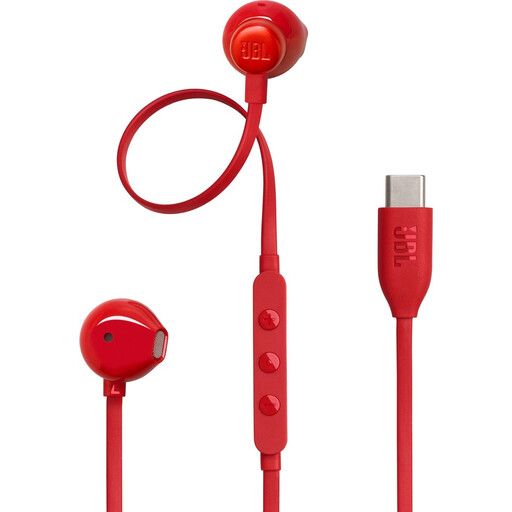
JBL Tune 305C wired USB-C earbuds, red

JBL Tune 305C wired USB-C earbuds, red

A compact wired option if your lesson device supports USB-C. The product name specifies a USB-C connection; check that it works with your device.

View at Joybuy
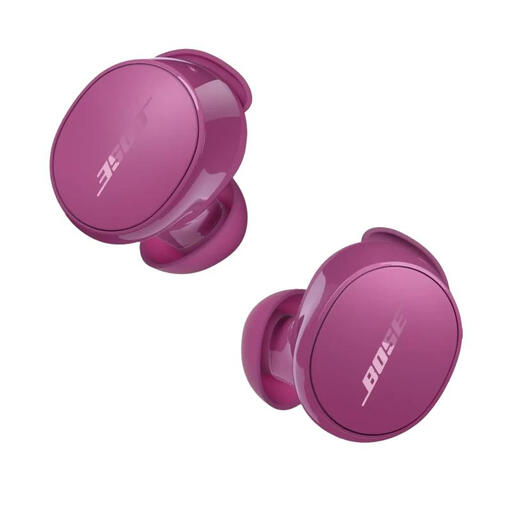
Bose QuietComfort Earbuds, Rosewood Mauve

Bose QuietComfort Earbuds, Rosewood Mauve

A compact in-ear option if you’re short on bag space. Check the product information to make sure the microphone and connectivity features work with your lesson device.

View at Joybuy
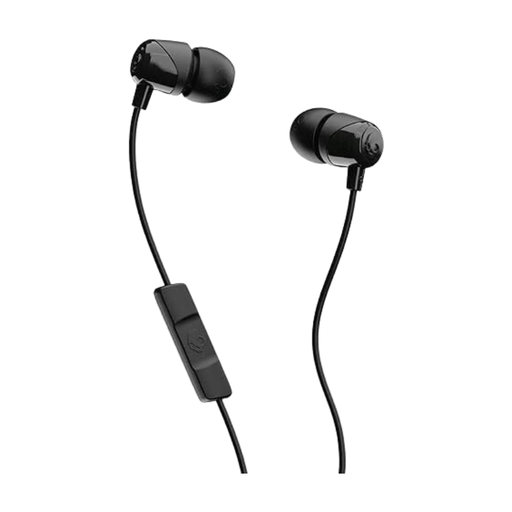
Skullcandy Jib In Ear W/Mic 1, black

Skullcandy Jib In Ear W/Mic 1, black

A compact wired option if your lesson device has a compatible 3.5 mm connection. Check your device’s connection before ordering.

View at Joybuy
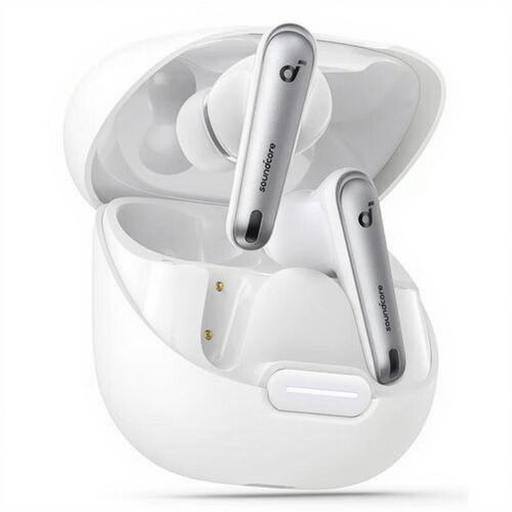
soundcore Liberty 4 NC wireless in-ear earbuds, white

soundcore Liberty 4 NC wireless in-ear earbuds, white

A compact wireless in-ear option. Check that the connectivity and microphone features suit the way you take your lessons.

View at Joybuy
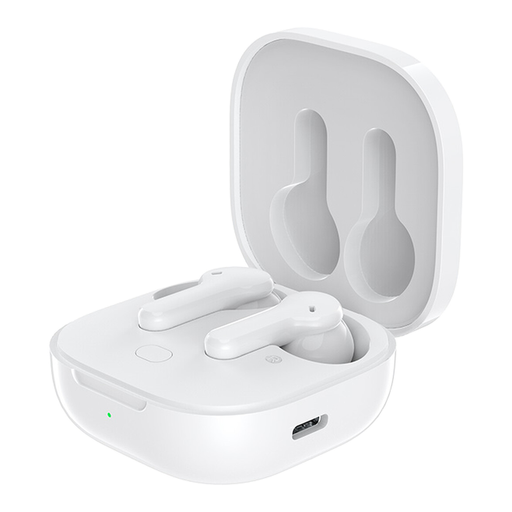
QCY-QT13-White earbuds

QCY-QT13-White

A compact in-ear option for anyone looking for a small listening solution. Check that the connection and microphone work with your lesson device.

View at Joybuy

Frequently asked questions

Do I need noise cancellation to hear a teacher clearly?

No, noise cancellation isn’t always necessary. Start with a good fit and a decent seal; active noise cancellation can help if background noise is distracting, but it won’t block every sound equally well. Check the microphone separately if you speak during lessons.

How do I connect a wired headset for an online lesson?

Choose a plug that fits the port on your lesson device. According to Logitech, you connect the USB-A version of the Logitech H390 to an available USB-A port on a computer; you can control the microphone and volume using the in-line controls.

How can I listen safely during regular lessons?

Keep the volume moderate and take breaks. The World Health Organization gives 80 dB for up to 40 hours per week as an example of safe exposure for adults; at higher levels, the safe listening time is shorter. This is guidance on sound exposure, not a legal product limit or a guarantee that a particular volume setting is safe on every device.

What rights do I have in the Netherlands when buying online or if a product is faulty?

Online purchases generally come with a 14-day statutory cancellation period after delivery, with possible exceptions for opened hygiene products, as explained by ACM ConsuWijzer. You also have statutory rights if a product is faulty: the seller must offer a solution under the applicable conditions. ACM ConsuWijzer points out that the statutory guarantee doesn’t have a standard fixed duration of two years.

Does a CE mark prove that headphones sound good?

No. For products covered by the relevant EU rules, the manufacturer uses the CE marking to declare that the product meets those rules. According to the European Union, the mark isn’t a centrally issued quality certificate and doesn’t tell you how well voices or noise cancellation sound.
