Who is this relevant for?

Editor working on existing live recordings

You’re working in a quiet room, focusing mainly on the balance and detail of a session that’s already been recorded. If no microphone is live, isolation doesn’t have to be your top priority. SoundGuys discusses open-back models for mixing, while beyerdynamic describes the DT 900 PRO X as open-back headphones for mixing.

Editor who also records

You sometimes use a microphone at the same time, or share the room, and want to avoid monitoring sound becoming a distraction or making its way into a recording. SoundGuys and Headphones.com explain why leakage can matter when using an open microphone.

Editor working on long sessions

You listen repeatedly and for long periods, so fit, cable routing and replaceable parts all help determine whether a model is practical. Sennheiser lists interchangeable ear pads for the HD 490 PRO, while Audio-Technica specifies detachable cables for the ATH-M40x.

What should you look for when choosing?

Open-back, wired

Choose this when: you mainly listen back to existing tracks in a quiet room, with no open microphone and no concern about audible leakage.

Bear in mind: sound can escape and ambient noise can get in. Also check that the connection is compatible with your audio source.

Closed-back, wired

Choose this when: you’re working with a microphone at the same time, want to minimise distractions or share the room.

Bear in mind: fit affects isolation. Closed-back doesn’t automatically mean a neutral sound or complete silence for others.

Semi-open, wired

Choose this when: you specifically want to compare a semi-open model and sound leakage in your room is acceptable.

Bear in mind: the term semi-open doesn’t guarantee suitable isolation while recording. Assess the exact model in your own setup.

What to consider What should you check? Who is this important for?
Critical listening Compare the exact model with familiar source material and consider whether leakage would be a problem where you work. If I’m mainly assessing the balance and detail of existing recordings, I want to know how the model sounds with material I know. Around 36% of consumers put critical listening first.
Leakage and isolation Check whether you record at the same time, and test with your own microphone and listening volume. If I sometimes record with the microphone live, I want to know whether monitoring sound will make its way into my recording. Around 29% of consumers give limiting leakage their top priority.
Comfort Assess the fit for yourself and check whether the ear pads can be replaced. When listening repeatedly or for long periods, I want the fit to remain comfortable for me; specifications on paper can’t replace my own judgement. Around 21% of consumers put comfort first.
Connection and maintenance Compare the plug, adapter and cable length with your laptop or audio interface. If compatibility with my existing equipment and the ability to replace parts are deciding factors, I check these details in advance. Around 14% of consumers name connection and ease of maintenance as their top priority.

Common mistakes

  • Assuming ‘open’ automatically means better mixing decisions

    An open-back design lets sound through. A manufacturer’s description of spacious or accurate sound doesn’t prove that your mixing decisions will be better.

    Compare the exact model with material you know well, and bear in mind the room you’re working in.

  • Assuming a semi-open model is a guaranteed, leak-free compromise

    ‘Semi-open’ describes the design, but it doesn’t tell you how much sound your microphone will pick up in practice.

    Test for leakage in your own setup. Compare a closed-back model if you’re recording at the same time.

  • Comparing only the plug

    Cable length, the adapter and how they work with the output all help determine whether a pair of headphones will be practical to use.

    Before buying, check the full connection setup and cable routing. Depending on your equipment, you may need a suitable adapter or replacement cable.

Brands to compare

beyerdynamic

The open-back DT 900 PRO X is a useful model to compare if you don’t need isolation when editing.

  • For this model, beyerdynamic specifies a detachable cable, a nominal impedance of 48 ohms and connection options via 3.5 mm and a 6.35 mm adapter.
  • The open-back design doesn’t prevent sound leakage. beyerdynamic’s descriptions of its sound are manufacturer claims.

Audio-Technica

The closed-back ATH-M40x is a useful model to compare if you want to edit as well as monitor while recording.

  • Audio-Technica specifies a nominal impedance of 35 ohms and detachable cables for the ATH-M40x.
  • The description ‘flat tuning’ comes from the manufacturer and isn’t independent proof of a neutral mix.

Sennheiser

The open-back HD 490 PRO is designed for production and mixing; the HD 600 is another open-back model to compare.

  • Sennheiser lists two interchangeable types of ear pads for the HD 490 PRO. For the HD 600, Sennheiser specifies an impedance of 300 ohms.
  • Neither open-back model prevents sound leakage. Check whether your audio source can provide a suitably usable volume for the HD 600.

AKG

The semi-open K240 Studio is a model to compare for mixing and listening back; the closed-back K371 is a separate option if you’re looking for isolation.

  • AKG specifies a self-adjusting headband, a mini-XLR connection and a 3 m cable for the K240 Studio.
  • Semi-open doesn’t guarantee suitable isolation while recording. Assess the fit and leakage of the exact model; AKG’s claims about comfort and sound are from the manufacturer.

Sony

Sony positions the wired MDR-7506 for recording and studio use.

  • Sony lists a 3 m cable and a weight of 230 g for the MDR-7506.
  • Sony’s claim that they’re suitable for longer periods of use comes from the manufacturer; assess the fit for yourself.

Headphones and headsets at Joybuy

The selection below includes headphones and headsets from Sennheiser and Jabra. The connections listed can help with an initial compatibility check, but they don’t in themselves show that a model is suitable for studio work or mixing decisions.

Sennheiser MOMENTUM 4 Wireless, black

Sennheiser MOMENTUM 4 Wireless, black

Suited to anyone looking for wireless headphones with a stated wired listening option; check that the connection works with your studio equipment.

The product name mentions ANC, a 60-hour battery life, fast charging and four microphones. The description lists a 3.5 mm audio cable and wired passive use.

Joybuy
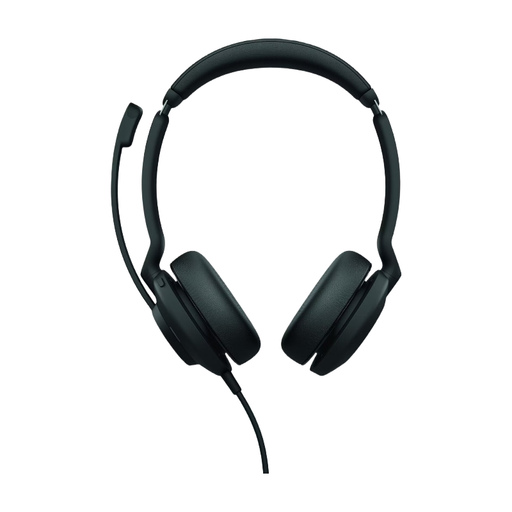
Jabra Evolve2 30 SE

Jabra Evolve2 30 SE

Suited to anyone looking for a headset with a USB-A connection and stereo sound; check that it’s compatible with your computer or audio setup.

The product information lists USB-A, stereo speakers, an adjustable headband and memory foam ear cushions.

Joybuy
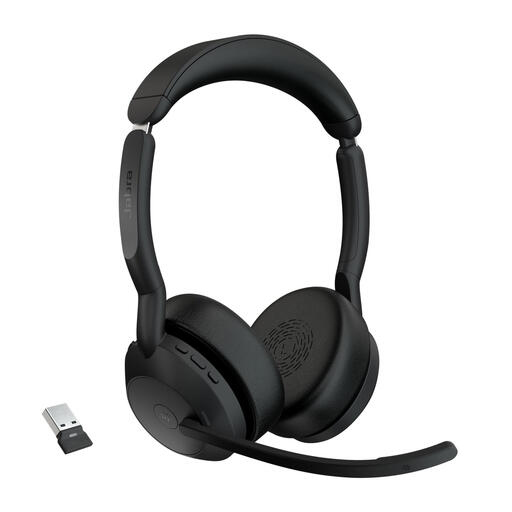
Jabra Evolve2 55, Link380a MS Stereo

Jabra Evolve2 55, Link380a MS Stereo

Suited to anyone looking for a wireless stereo headset; check which connection and adapter you’ll need for your workspace.

The product information lists Bluetooth 5.2, ANC and a Link 380a adapter.

Joybuy
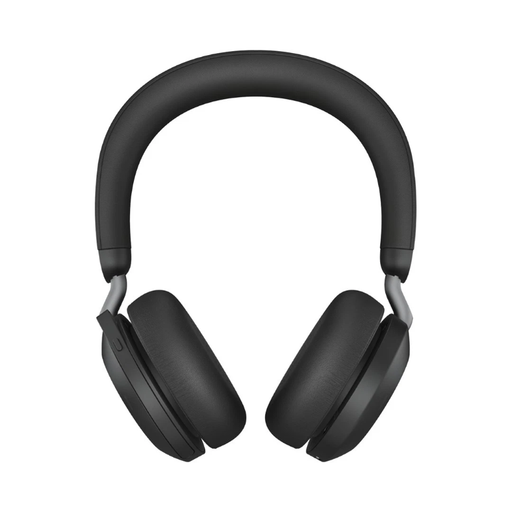
Jabra Evolve2 75 headset

Jabra Evolve2 75 Headset

Suited to anyone looking for an over-ear headset with a stated wired connection option; check that it’s compatible with your audio output.

The product information lists Bluetooth and a USB-C cable for a wired connection, along with an adjustable headband and soft ear cushions.

Joybuy
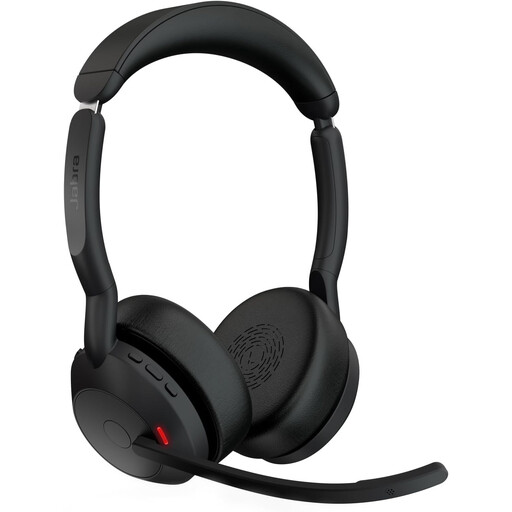
Jabra Evolve2 55 Wireless Stereo Headset

Jabra Evolve2 55 Wireless Stereo Headset

Suited to anyone looking for a wireless stereo headset who wants to check the listed connections across multiple devices.

The product information lists ANC, Bluetooth 5.2, connection to two devices at once, a padded headband and rotating ear cups.

Joybuy

Frequently asked questions

Can I use open-back headphones while recording an extra track?

If the microphone is live at the same time, compare a closed-back model first and test whether monitoring sound leaks back into your recording in your setup. If you only use the headphones afterwards for editing, that particular microphone-related consideration doesn’t apply.

What should I check when connecting to my audio interface?

Check the output, the required plug size, whether you need an adapter and the cable length. The DT 900 PRO X is specified with a 3.5 mm plug and a 6.35 mm adapter; Sennheiser lists a nominal impedance of 300 ohms for the HD 600. That figure alone doesn’t prove whether your interface is suitable.

How can I reduce the strain on my hearing during long editing sessions?

Keep the volume low and pay attention to your total listening time, too. The World Health Organization gives 80 dB for up to 40 hours a week as an example of safe listening; at 90 dB, it recommends four hours a week. This is health guidance, not a product specification or a Dutch legal volume limit.

What are my rights when buying online in the Netherlands?

According to the Dutch government, a 14-day cooling-off period applies in many cases when buying at a distance. There are exceptions; the guidance notes, for example, that the rules described don’t apply to an online purchase from a private individual. Check who the seller is and which terms and conditions apply to your order.
