First, choose headphones that can play audio from the device where your practice files are stored. Then consider the fit and background noise. Wired headphones don’t need charging, while Bluetooth models give you more freedom to move around but require a compatible connection and a charged battery. Product specifications don’t prove that one model is better than another at helping you recognise differences between Dutch vowels.
Who is this choice relevant to?
Second-language learner comparing sounds
Listens repeatedly to short vowel contrasts and wants to play practice files without unnecessary distractions. The Language Centre at the University of Groningen describes exercises for distinguishing Dutch sounds.
Learner with one regular playback device
Wants to check before buying that the headphones connect to the phone or computer storing their files. The models reviewed use connections including 3.5mm, USB-C and Bluetooth.
Learner practising in a shared space
Wants to reduce background noise while practising at a responsible volume. The World Health Organization offers advice on safe listening.
Which buying considerations matter?
First, check how your practice device outputs audio. Then choose between a wired connection, wireless listening or a compact USB-C option, and consider the fit for where you practise.
Wired with a 3.5mm connection
A good fit if: your device has a suitable 3.5mm audio output and you want to listen without charging. Audio-Technica specifies a fixed 3-metre cable for the ATH-M20x; Sony lists a 1.2-metre cable for the MDR-ZX110.
Bear in mind: the cable limits how far you can move; also check its reach and how the headphones fit where you practise.
Wireless over-ear, optionally with noise cancelling
A good fit if: your device supports Bluetooth and freedom to move or distracting background noise is a consideration. Sony specifies Bluetooth, noise cancelling and passive operation via the audio cable for the WH-CH720N.
Bear in mind: wireless listening requires a charged battery; check for each model whether you can also use it with a cable when the battery is flat.
Wired USB-C earbuds
A good fit if: your device supports audio over USB-C and you prefer a compact in-ear design. Sony describes the IER-EX15C as USB-C earbuds that don’t need charging.
Bear in mind: a USB-C connection alone doesn’t confirm that a device can output audio to wired earbuds; fit also varies from person to person.
| Buying consideration |
What should you look for? |
Who does this matter most to? |
| Listening closely to vowel contrasts |
Check the fit and seal; a stated frequency range doesn’t prove better recognition of Dutch vowels. |
If I want to compare short contrasts repeatedly, I want as few distractions as possible while listening. Around 33% of consumers give focused listening to contrasts top priority. |
| Playing local files |
Check your device’s audio output: 3.5mm, USB-C audio or Bluetooth, depending on the model. |
I want to know in advance whether my phone or computer can play the files through the connection I choose. Around 27% of consumers prioritise compatibility with their own device. |
| Reducing background noise |
Compare the fit and passive isolation with active noise cancelling. The World Health Organization recommends well-fitting or noise-cancelling headphones to reduce the tendency to turn the volume up in noisy environments. |
If background noise interrupts my practice, I want to be able to reduce it without continually turning up the volume. Around 20% of consumers give reducing background noise top priority. |
| Comfort during repeated listening |
Consider the pressure from the headband or earbuds, adjustability and volume settings. |
I want to be comfortable during several practice sessions, so I pay attention to fit and listening volume. For around 20% of consumers, comfortable and responsible repeat listening comes first. |
Common buying mistakes
-
Assuming a wide frequency range means better vowel recognition
A stated frequency range is a technical specification, not a comparative result for Dutch contrast exercises.
First check the connection, fit and quality of your practice files; don’t treat frequency ranges as proof of better practice results.
-
Assuming any wireless headphones work via cable when the battery is flat
This varies by model. Sony lists passive operation for the WH-CH720N; JBL says the Tune 680NC and Tune 780NC won’t play audio through the 3.5mm cable without battery power.
Check whether you can listen via cable on the exact model when its battery is flat.
If the model doesn’t play audio in this situation, you’ll have to wait for the battery to charge before listening again.
-
Assuming USB-C guarantees audio output
A USB-C connection on earbuds doesn’t confirm that your phone or computer supports audio over USB-C.
Check your device specifications for support for audio through wired USB-C earbuds.
Brands to consider
Audio-Technica
The ATH-M20x is a wired, closed-back monitor headphone for listening in a regular practice spot.
- Audio-Technica specifies a fixed 3-metre cable with a 3.5mm plug and a 6.3mm adapter.
- The cable length can be practical at home but awkward on the go; fit and isolation are still personal considerations.
Sony
The models reviewed range from wired 3.5mm headphones and USB-C earbuds to wireless over-ear headphones.
- Sony specifies a 1.2-metre cable for the MDR-ZX110, USB-C earbuds that don’t need charging for the IER-EX15C, and Bluetooth with passive cable operation for the WH-CH720N.
- These differences are specific to each model; check the connection and functionality of the version you’re considering.
Sennheiser
The HD 450BT is a wireless over-ear option with active noise cancelling.
- Sennheiser lists Bluetooth 5.0, up to 30 hours of playback and a podcast mode in the app.
- There’s no evidence that podcast mode helps you distinguish Dutch vowels.
JBL
For wireless JBL models, check separately how audio works over a cable when the battery is flat.
- JBL explicitly states that the Tune 680NC and Tune 780NC won’t play audio through the 3.5mm cable without battery power.
- Don’t assume this limitation applies to other JBL headphones without checking the model-specific information.
Joybuy product picks
These product picks include wired USB-C and 3.5mm models, as well as wireless headphones for listening to local files, depending on your device’s audio output.
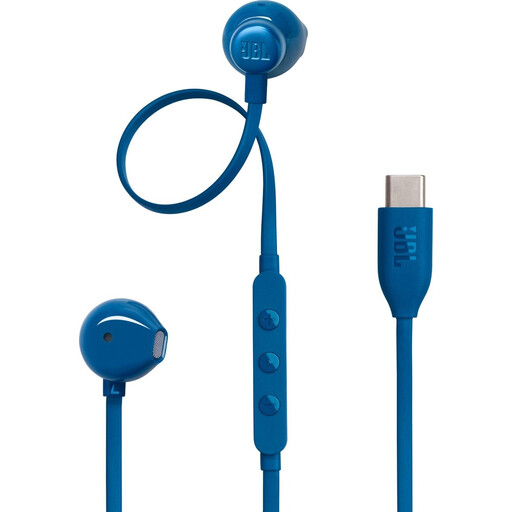 Image unavailable
JBL Tune 305C USB-C earbuds, blue
Suitable for listening to local files from a device that outputs audio over USB-C; the connection alone doesn’t confirm that it’s supported.
The product description lists 12.5mm drivers, in-line controls with a microphone and three EQ presets.
View on Joybuy
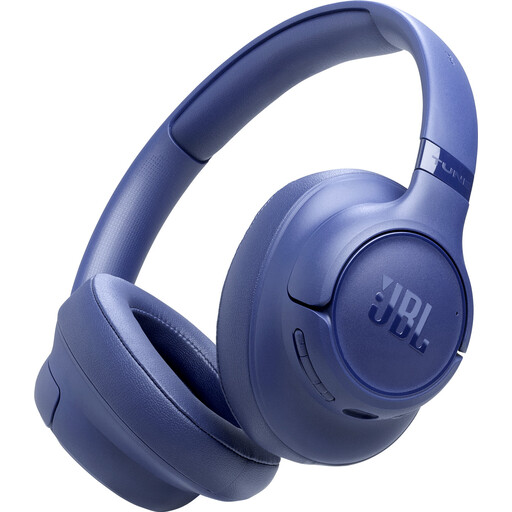 Image unavailable
JBL Tune 730BT wireless headphones, blue
A wireless over-ear option for playing local files from a Bluetooth-enabled device.
The product description lists soft ear cushions and up to 76 hours of playback; check whether the stated noise cancelling suits your needs.
View on Joybuy
 Image unavailable
Sennheiser MOMENTUM 4 Wireless
Suitable for listening via Bluetooth or a compatible 3.5mm connection; the product description states that they can be used passively without battery power.
The product name lists active noise cancelling and 60 hours of battery life. The description also mentions a padded headband and ear cushions.
View on Joybuy
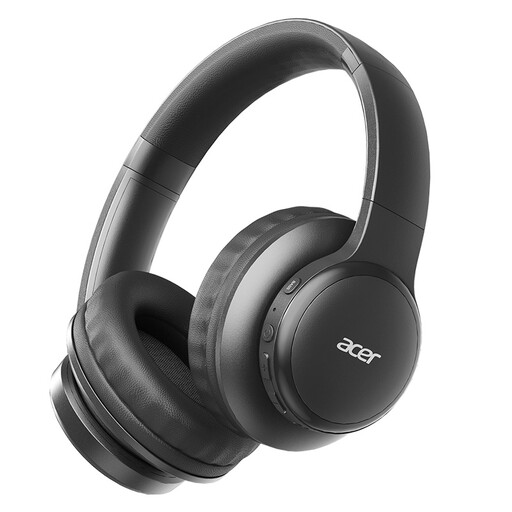 Image unavailable
Acer OHR559 wireless headphones
A wireless listening option if your playback device supports Bluetooth.
The product title lists Bluetooth 5.3; the description mentions a foldable design and a USB-C charging port.
View on Joybuy
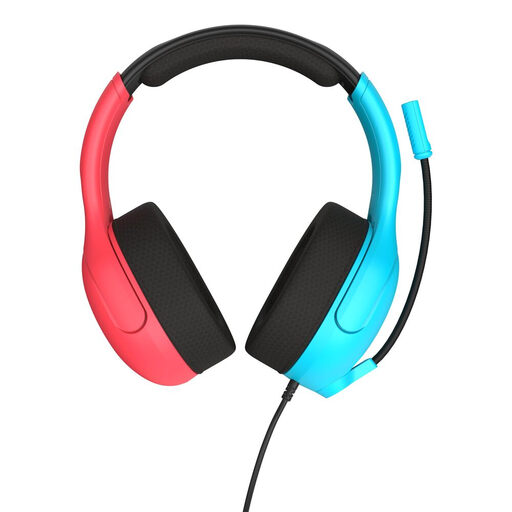 Image unavailable
Turtle Beach Airlite Fit wired gaming headset, blue/red
Suitable for a device with a compatible 3.5mm audio output; the product description lists compatibility with PCs, mobile devices and Nintendo Switch models.
The description lists ear cushions with passive sound isolation, 40mm drivers and a weight of 0.228 kg.
View on Joybuy
Frequently asked questions
Will headphones automatically play my local audio files?
No, you also need a suitable playback device with a compatible audio output. Check that your chosen headphones work with your device’s 3.5mm connection, USB-C audio or Bluetooth.
Can you use USB-C earbuds with any phone or computer?
Not necessarily: the device must be able to output audio over USB-C to wired earbuds. Check this support in the device specifications before choosing a model such as the Sony IER-EX15C or JBL Tune 305C.
Will wireless headphones work via cable when the battery is flat?
It depends on the exact model. Sony lists passive operation for the WH-CH720N, while JBL says the Tune 680NC and Tune 780NC won’t play audio through their 3.5mm cable without battery power. Check the details for the version you’re considering.
How can you avoid continually turning up the volume while practising?
Start at a low volume, take breaks and, if noise is distracting, choose well-fitting headphones or a quieter spot. The World Health Organization gives 80 dB for up to 40 hours a week as an example of safe sound exposure; this is not the measured output volume of the headphones mentioned here.
Do you need noise cancelling to practise vowel contrasts?
Not necessarily: it depends on the amount of background noise and whether you need to be able to hear it while practising. Compare active noise cancelling with fit and passive isolation, and don’t turn up the volume to drown out noise.


