For repeatedly comparing Dutch vowels, choose headphones that let you listen comfortably to your own practice recordings at a low volume. Go for closed-back ear cups or ANC if background noise is distracting; an open-back, wired model is better suited to a quiet place. There’s no evidence that any of the models mentioned is more effective for vowel recognition. Above all, check the fit, connection and controls with your own device and recordings.
Who is this buying guide for?
Comparing vowels at home
You repeatedly listen to the same recordings in a quiet place and want to assess subtle differences without making unproven claims about learning outcomes. Research into the perception of Dutch vowels has been published in Frontiers in Psychology, among other journals.
Practising with background noise
You practise somewhere that background noise could drown out your recordings, so you want to consider fit, isolation and any noise-cancelling features. VeiligheidNL recommends a good fit to reduce sound leakage, so you don’t need to turn the volume up unnecessarily.
Listening often and for long periods
You repeat short recordings in longer sessions and want your headphones to stay comfortable. Fit, listening volume and listening time all deserve attention; the World Health Organization stresses that both sound level and duration of exposure matter.
What should you look for when practising vowels?
Start with the conditions you practise in, then check that the headphones suit your device and the controls in your playback app.
| What to consider |
What should you look for? |
Who is this most important for? |
| Comparing vowels |
Listen to the same recordings at a comfortable, consistent volume; a manufacturer’s claim about sound quality isn’t a language test. |
If I want to assess subtle differences between recordings of the same vowels, I compare them using my own source; around 33% of consumers put vowel comparison first. |
| Background noise |
Assess the fit and noise isolation somewhere similar to your practice environment; test speech playback separately from ANC. |
When outside noise drowns out my recordings, I want to tackle that without continually turning up the volume; around 27% of consumers prioritise noise management. |
| Comfort and listening time |
Check for pressure from the headband and ear cushions during a longer session. Keep the volume low and take breaks; a volume control doesn’t measure the sound level at your ear. |
If I repeat recordings often and for a long time, the fit and my listening habits need to work for me; around 20% of consumers prioritise comfort and responsible listening. |
| Connection and controls |
Check your device’s audio output and test pausing and replaying in your own app; don’t assume there’s a dedicated repeat button. |
When practising with my phone or computer, I want to know straight away whether the connection and controls are suitable; around 20% of consumers prioritise compatibility and easy playback. |
Common buying mistakes
-
Taking a claim about accurate sound as proof of better learning
A manufacturer’s description of sound reproduction doesn’t prove that you’ll learn to recognise Dutch vowels better. Research into passive training with a Dutch vowel contrast, published in the Proceedings of the International Congress of Phonetic Sciences, reported varying results among listeners.
Compare your own practice recordings and treat the headphones as a tool, not a language-learning method.
-
Assuming the maximum battery life applies with ANC switched on
JBL lists up to 70 hours for the Tune 770NC with Bluetooth on and ANC off. Sony gives separate maximum figures for the WH-CH720N with ANC on and off.
Only compare battery figures when the stated usage settings match.
-
Choosing open-back headphones for a noisy place to practise
Open-back ear cups don’t block out background noise and let the sound you’re playing leak out.
First consider how quiet and shared your practice space is; if noise is distracting, compare closed-back models too.
-
Assuming a manufacturer’s warranty covers all your warranty rights
According to ACM, your statutory guarantee applies alongside any guarantee offered by the retailer or manufacturer.
Compare any additional warranty services with the rights you have when buying from the retailer.
Brands to compare
Audio-Technica
The wired, closed-back ATH-M40x is an option for practising in one place, provided it has a suitable connection.
- Audio-Technica lists closed-back ear cups and two detachable cables included.
- The manufacturer describes the tuning as flat; this isn’t an independent test for Dutch vowel practice. This model has no ANC.
Sony
The WH-CH720N combines wireless listening and ANC with a wired connection.
- Sony also lists an ambient sound mode and passive wired operation. Sony gives a maximum music playback time of 35 hours with ANC on and 50 hours with ANC off.
- These are Sony’s figures, not a guarantee of battery life or of how clearly you’ll hear vowels during your practice.
JBL
The Tune 770NC offers a closed-back wireless option with ANC and adjustable EQ.
- JBL lists Smart Ambient and up to 70 hours of battery life with Bluetooth on and ANC off.
- The brand’s ‘Pure Bass’ description isn’t proof of an advantage for vowel training; the stated maximum battery life doesn’t apply with ANC switched on.
Sennheiser
The wired, open-back HD 560S is worth considering for a quiet listening space.
- Sennheiser lists open-back ear cups and a 120-ohm transducer.
- The manufacturer’s claim about accurate A/B comparisons relates to audio material, not proven results with Dutch vowels. An open-back model doesn’t block out your surroundings.
beyerdynamic
The closed-back, wired DT 770 PRO is available in different impedance versions.
- beyerdynamic offers 32, 80 and 250-ohm versions, and recommends the 32-ohm version for mobile devices.
- Check the impedance version and connection rather than choosing by series name alone. The DT 770 PRO has no ANC.
Joybuy product picks
This selection includes wired headphones and earbuds, as well as wireless models for repeated playback. Check that the connection, fit and controls suit your device and practice space.
 No image available
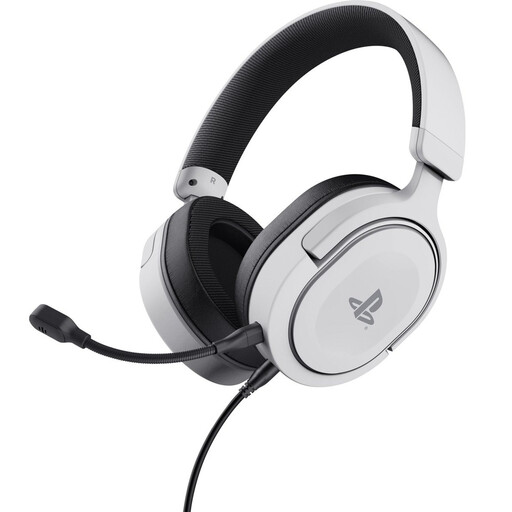
Trust GXT 498W Forta wired gaming headset, white
A wired option for practising in one place; check that your device has a suitable 3.5 mm audio output.
Over-ear; 50 mm drivers; officially licensed for PS5.
View at Joybuy
 No image available
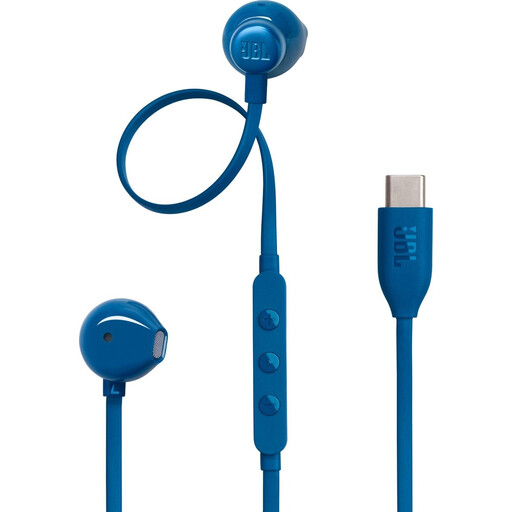
JBL Tune 305C wired USB-C earbuds, blue
Suitable for practising with a device that has a compatible USB-C audio output.
Wired USB-C connection.
View at Joybuy
 No image available
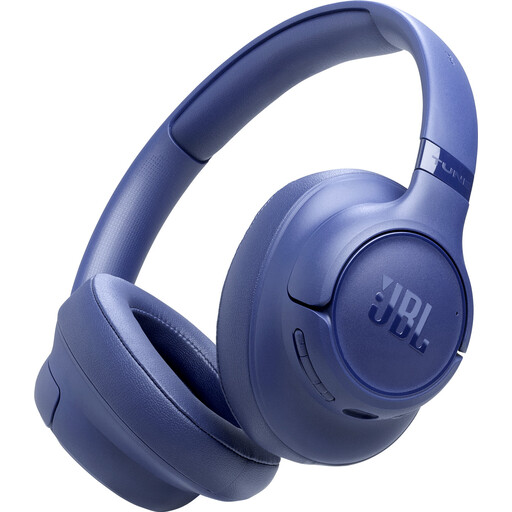
JBL Tune 730BT wireless headphones, blue
A wireless option if you don’t want to use a cable while practising; check that the controls work with your playback app.
Wireless; noise cancellation listed in the product name.
View at Joybuy
 No image available
Sennheiser MOMENTUM 4 Wireless, black
A wireless over-ear option for repeated listening; check beforehand that the controls work with your practice app.
Wireless; over-ear; noise cancellation listed in the product name.
View at Joybuy
 No image available
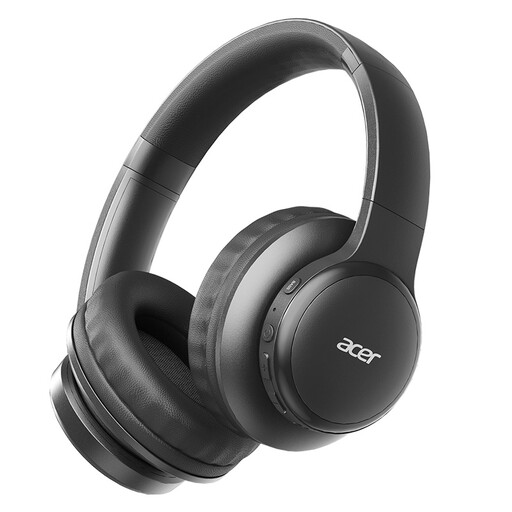
Acer OHR559 OWS wireless headphones
A wireless option for practising without a cable; check the connection and controls with the device you use.
Bluetooth 5.3; foldable design.
View at Joybuy
Frequently asked questions
Do you need ANC to practise Dutch vowels?
No, ANC isn’t necessary if you’re practising somewhere quiet. It may help with a steady hum, but also assess the fit and how your own recordings sound; ANC doesn’t prove better vowel recognition.
Can you plug wired headphones straight into your phone?
Only if the plug fits your phone’s audio output or a suitable adapter. Also check how to restart a recording in your playback app: a detachable cable isn’t a repeat function.
How can you listen responsibly when replaying a recording often?
Keep the volume low, take regular breaks and don’t turn it up to drown out background noise. The World Health Organization gives an average of 80 dB and a maximum of 40 hours per week as a guideline; actual exposure depends on both sound level and duration.
What cancellation period and warranty apply to an online purchase in the Netherlands?
For an online purchase, there is generally a statutory cancellation period of up to 14 days after delivery, according to ACM; exceptions apply to certain unsealed hygiene products. The statutory guarantee is separate from a manufacturer’s warranty. If in doubt, check how the returns policy applies to the exact product before opening it.
Do EU rules apply to Bluetooth headphones?
Yes. Bluetooth headphones placed on the EU market are covered by the Radio Equipment Directive (2014/53/EU), as described by the European Commission. According to Your Europe, CE marking is required for products covered by harmonised EU rules that require it; a product listing alone doesn’t show that an individual item meets the requirements.


