Start with headphones that make spoken Dutch sound natural and feel comfortable during your practice sessions. Then test pausing and replaying with your own learning app and device. If background noise is distracting, a more closed design may suit you better. An open design or ambient mode may be more suitable if you need to stay available to talk. Wired listening means you don’t have to rely on a battery, provided the connection is compatible with your device.
Who is this for?
Repeat listener
You replay short Dutch clips to pick out individual words. Listen to spoken text and try the pause and repeat functions with your own learning materials. A music specification alone won’t tell you whether speech sounds clear and comfortable to you. The Consumentenbond includes speech clips in its headphone tests.
Listener in a busy place
You practise somewhere where other people at home or background noise might interrupt your concentration. Think about how much noise isolation you need and whether you want to stay available to talk. The Consumentenbond highlights factors such as fit and noise cancelling when choosing headphones.
Listener during long sessions
You wear headphones for longer practice sessions. Comfort, pressure on your ears, whether you wear glasses and, for wireless headphones, battery life are all worth considering. The Consumentenbond notes that over-ear headphones can be comfortable for long listening sessions, but take up more room in a bag.
What should you consider when choosing?
First compare how speech sounds and how the headphones fit. Then consider noise isolation, controls and the connection or battery life that suits where you practise.
| Factor to consider |
What to look for when buying |
Who is this important for? |
| Distinguishing spoken Dutch |
Listen to spoken clips and assess speech separately from music or bass. Where possible, compare the same clip. |
If I want to recognise words in short clips by listening to them repeatedly, I focus most on how speech sounds. Around 28% of consumers give this the highest priority. |
| Background noise and isolation |
Compare the level of isolation where you practise. If there’s an ambient mode, check whether it’s easy to use on the model you’ve chosen. |
In a place where noise could interrupt my practice, I want to weigh up whether I’d prefer more isolation or to keep hearing the people around me. Around 22% of consumers put this consideration first. |
| Wearing comfort |
Try the fit during a longer listening session and, if you wear glasses, try them on with your glasses. Bear in mind how much room the headphones take up. |
During longer practice sessions, I want to avoid the headphones pinching, so they need to fit my ears and any glasses comfortably. For around 22% of consumers, wearing comfort comes first. |
| Pausing and repeating |
Try playing and pausing in your own learning app. Separately check whether your device and app support any repeat or skip-back function. |
If I want to pause between sentences and go back often, I want the controls to work with my learning app. Around 17% of consumers choose controls as their main consideration. |
| Connection and battery life |
Check which audio connection your device has and whether a cable is included. Compare battery life only when the ANC settings are the same. |
For practice in one place or longer wireless sessions, I want the connection or battery life to suit my device and how I use it. Around 11% of consumers give this practical consideration the highest priority. |
Common buying mistakes
-
Assuming noise cancelling will automatically make speech clearer
Noise reduction and the natural reproduction of spoken text are two different things to consider. According to the Consumentenbond, noise cancelling works particularly well against low, constant sounds. That doesn’t automatically tell you how clear a practice clip will sound.
Compare a spoken clip and the level of noise isolation somewhere similar to where you’ll be practising.
-
Comparing battery life without checking the settings
Claimed maximum battery life can vary depending on whether noise cancelling is on or off. That means battery life claims aren’t necessarily directly comparable.
Compare the stated battery life using the same settings, and don’t assume you’ll necessarily get the maximum claimed listening time.
-
Expecting wired listening to work straight away in every case
According to Philips, the Philips TAH5800BK/00 supports listening via a 3.5 mm cable, but the cable isn’t included. The connection also needs to be compatible with your learning device.
Before buying, check what’s included and which connection your device needs. You may need to buy an audio cable or suitable adapter separately.
-
Confusing an extra warranty with your statutory rights
An additional warranty doesn’t replace your statutory rights if a product is faulty. The Dutch government advises comparing the terms and conditions.
Check what the extra cover includes, and contact the seller if a product is faulty.
Brands and models to consider
Sony
The WH-CH720N is a wireless over-ear headphone with an ambient sound mode. Sony says you can also listen passively using the detachable cable supplied.
- Sony lists the WH-CH720N at around 192 g, with a maximum battery life of 35 hours with noise cancelling on or 50 hours with it off.
- These manufacturer specifications don’t tell you whether spoken Dutch will sound natural or the fit will feel comfortable; try them yourself with your learning materials.
JBL
The Tune 770NC is a wireless over-ear option with features that let in ambient sound.
- JBL lists multipoint, Ambient Aware and TalkThru. The brand states a maximum battery life of 70 hours with Bluetooth on and ANC off.
- That maximum battery life applies to the stated settings. Ambient sound features don’t guarantee that speech will remain clear in every place you practise.
Sennheiser
The ACCENTUM Wireless is a wireless over-ear option. The wired HD 560S has an open-back design and is another option for a quiet, fixed study space.
- Sennheiser lists hybrid ANC, a transparency mode and up to 50 hours of battery life with ANC on for the ACCENTUM Wireless. The HD 560S comes with a cable with a 3.5 mm plug.
- The HD 560S’s open-back design isn’t intended to block out background noise. Manufacturer information about sound modes isn’t a test using Dutch listening exercises.
Philips
The TAH5800BK/00 is an over-ear option for anyone considering wired and wireless listening and replaceable parts.
- Philips lists ANC, an ambient mode, and replaceable ear cushions and battery.
- According to Philips, you can listen via a 3.5 mm audio cable, but the cable isn’t included. Check which cable or connection your learning device needs.
Joybuy products
The models below are over-ear headphones for repeated listening. Depending on the model, the product information mentions play and pause controls, noise cancelling or a mode that lets in ambient sound.
 No image available
Sennheiser MOMENTUM 4 Wireless, black
The product information lists play and pause controls, which may be useful if you often pause between clips.
The product name states a battery life of 60 hours; check which usage settings this figure applies to.
Joybuy
 No image available
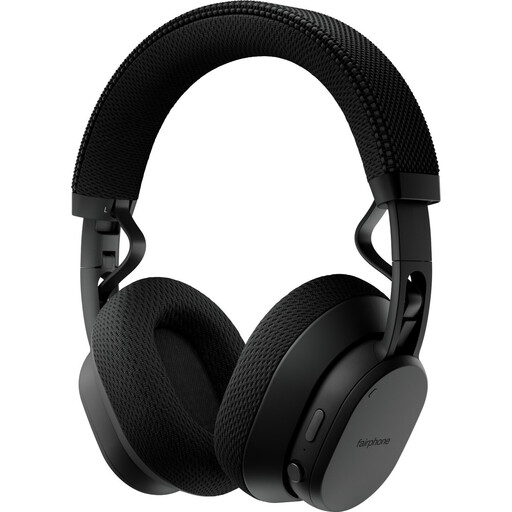
Fairphone Fairbuds XL 2025, black
The product information lists joystick controls for playing and pausing, as well as an Ambient Sound mode. Try the controls with your own learning app.
The stated maximum battery life is 26 hours with ANC on and 30 hours with ANC off.
Joybuy
 No image available
Sonos ACE Over-Ear Bluetooth Headset, black
The product information lists tactile controls and automatic pausing when you take the headphones off. Check whether the controls suit the way you practise.
The stated maximum listening time is 30 hours with ANC. The product information lists USB-C and 3.5 mm cables as included.
Joybuy
 No image available
Sony WH-CH720N, black
The product information lists play and pause controls and the ability to connect to two devices, which may be useful if you switch between your phone and laptop.
Sony lists the weight at around 192 g and a maximum battery life of 35 hours with noise cancelling on or 50 hours with it off.
Joybuy
 No image available
Bose QuietComfort Ultra Headphones (2nd Gen), black
The product information lists active noise cancelling and Conversation Awareness. Consider whether you want to be able to hear background noise while practising.
The product information lists Bluetooth 5.4 and a detachable cable with 3.5 mm and 2.5 mm connectors. A charger isn’t included.
Joybuy
Frequently asked questions
Should I choose ANC to hear spoken Dutch more clearly?
Not necessarily. First compare how speech sounds and how the headphones fit. Noise cancelling can reduce background noise, but according to Dutch buying advice, it works best against low, constant sounds. Try a speech clip somewhere similar to where you practise.
How can I check that replay works?
Try pausing, playing and going back in the learning app on your own phone or computer. The Consumentenbond assesses controls and pairing as separate aspects of usability. A headphone specification alone won’t tell you how your learning app handles a repeat command.
How can I listen safely when I replay a clip often?
Keep the volume low and take regular breaks. The World Health Organization explains that sound level, listening time and repeated exposure all matter. As an example, it cites an average of 80 dB for up to 40 hours a week. Don’t turn up the volume to drown out background noise.
Am I always entitled to exactly two years’ statutory warranty on headphones in the Netherlands?
No. According to the Dutch government, the Netherlands has no fixed statutory warranty period. What you can expect from a product depends, among other things, on the product, its price and the information provided at the time of sale. If a product is faulty, contact the seller. Normal wear and tear or damage caused by you doesn’t automatically entitle you to a free repair.
What should I check if I want to listen using a cable?
Check that the headphone connection is compatible with your learning device and that the required cable is included. Philips says you can listen via a 3.5 mm cable with the Philips TAH5800BK/00, but the cable isn’t included.
Can I play a listening exercise through headphones while cycling?
The Dutch government allows hands-free listening while driving, but prohibits holding a mobile device while driving. The advice is to keep listening out for background noise and keep the volume low. So don’t use your phone to rewind clips while cycling.


