
Listener of quiet dialogue
You miss words in quieter passages and want to assess how clear they sound at a comfortable volume, rather than relying on an ANC label alone.


Start with headphones that fit well and let you follow a familiar lesson recording at a comfortable volume. Then compare whether noise cancellation helps in your listening environment: ANC can be useful if background noise is distracting, while an easily accessible ambient mode is handy if you need to hear someone nearby from time to time.
You miss words in quieter passages and want to assess how clear they sound at a comfortable volume, rather than relying on an ANC label alone.
You take lessons where background noise is distracting and want to compare fit and noise reduction, without assuming that ANC will block out every voice.
You sometimes need to hear someone nearby while practising, so you want ambient mode to be easy to use.
| What to consider | What should you check? | Who is this important for? |
|---|---|---|
| Following soft speech | Fit, volume control and the same lesson recording with ANC on and off. | If quiet words need to remain clear at a comfortable volume, focus on how your own lesson recording sounds; around 36% of consumers prioritise speech clarity. |
| Reducing background noise | Compare the fit and ANC in the room where you practise. | If noise at home or in another practice space drowns out your lesson, you’ll want to know whether noise reduction helps there; around 29% of consumers make noise reduction their top priority. |
| Comfort during lessons | Assess the pressure and fit, including when wearing glasses. | If you wear your headphones for a whole lesson, you’ll want them to stay comfortable; around 21% of consumers prioritise long-lasting comfort. |
| Awareness of your surroundings and controls | Check pause controls, compatibility with your lesson device and the switch to ambient sound. | If you need to hear someone while practising or pause your lesson quickly, simple controls are important; around 14% of consumers make staying aware of their surroundings and ease of use their top priorities. |
Reducing background noise and how the lesson itself sounds are two different things to assess. Fit and the recording also play a part.
Try a familiar lesson recording with both quiet and normal passages in your own listening environment, with ANC on and off.
A microphone for phone calls is designed to pick up your voice; it doesn’t tell you how lesson audio will sound when played back.
Assess playback quality separately. Test the microphone only if you speak during live lessons.
The Sony WH-1000XM6 lists a stereo mini-jack for audio and USB for charging; Fairphone says the Fairbuds XL supports listening via USB-C.
Check the audio connections on the exact model and your lesson device, and see which cables or adapters are included.
You may need a compatible extra cable or adapter, so check before ordering.
Different generations of a product can vary. An extended warranty does not automatically give you more rights than the statutory guarantee.
Check the full model name and read what additional rights, if any, an extended warranty actually provides.
The WH-1000XM6 is a closed-back over-ear model with ANC, ambient mode, multipoint connectivity and a wired input.
JBL lists the Live 780NC as an over-ear model with ANC and the Live 680NC as a smaller on-ear option.
The Fairbuds XL is worth considering if you value an ambient mode and replaceable parts as well as ANC.
According to its EU product page, the ACCENTUM Wireless has hybrid ANC, a transparency mode and an adjustable equaliser, including a podcast mode.
Bose describes a Quiet mode, an Aware mode and an audio cable for the QuietComfort Headphones.
These Joybuy products are over-ear models with ANC and features for comparing sound and how much background noise comes through. Check which controls and connections on each model work with your lesson device.
 No image available
For comparing ANC with transparency mode and adjusting lesson audio with the adjustable equaliser.
The product description lists volume controls, an included 3.5mm cable and up to 60 hours of battery life. This model is not water-resistant.
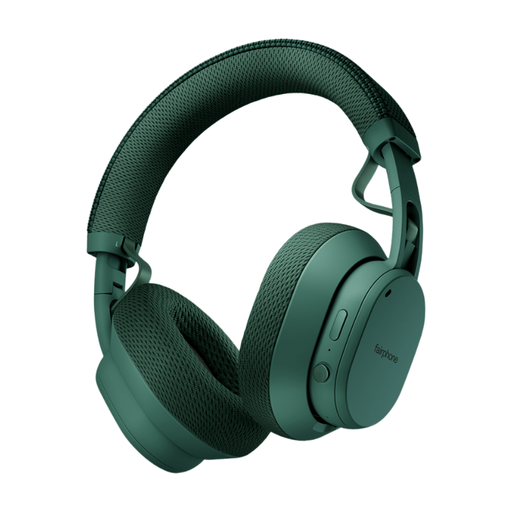 No image available
Suitable for comparing ANC and ambient mode if you sometimes want to hear background sounds during a lesson.
The description lists up to 26 hours of playback with ANC on, a replaceable battery and breathable mesh fabric on the headband and ear cushions. EQ settings are available through the optional app.
 No image available
An over-ear model for comparing active noise cancellation when background noise distracts you from your lesson.
The description lists a closed-back design, leather ear cushions and an included audio cable.
 No image available
Well suited to lessons where you want to switch between ANC and Aware mode.
The description lists automatic pausing when you take the headphones off, EQ settings through the Sonos app and connectivity with two devices. It also mentions an adjustable headband and memory foam ear cushions.
 No image available
An over-ear model with ANC for comparing noise reduction in your own listening environment; you can also listen using a cable.
The description lists Bluetooth and a detachable cable with USB-C and 3.5mm connectors. No charger is included; the description recommends a compatible 1,8–2,5 W charger and says PD fast charging is not supported.
No. Compare the same recording at a comfortable volume with ANC on and off. A good fit matters too; ANC can help when background noise is distracting, but it doesn’t guarantee that every recording will be clear.
Before your lesson, try pausing, adjusting the volume and switching to ambient sound. Check the controls on the model you choose, as modes and connections vary between versions.
Don’t automatically turn up the volume for a single quiet clip; pause and check the recording and fit first. The World Health Organization points out that both sound level and listening time matter, and recommends well-fitting headphones. If you have persistent tinnitus or difficulty following conversations, it advises contacting a health professional.
According to the Dutch government, the seller must ensure the product is fit for purpose and provide a solution if something goes wrong. The Netherlands does not have a fixed two-year statutory guarantee period; what you can reasonably expect depends, among other things, on the product and how it is used. An extended warranty does not replace your statutory rights.
For many applicable distance purchases from a business, you have a 14-day statutory cooling-off period. Check the terms and any exceptions before ordering; the Dutch government does not describe this as an unconditional right for every purchase.