
Careful listener
You play words and phrases several times and want to judge how natural voices sound. The Consumers’ Association uses speech clips in its headphone tests.


If you mainly listen at home using a device with a 3.5mm output, wired over-ear headphones are a practical option. If you often listen in noisy places, you could compare wireless over-ear headphones with active noise cancellation. In either case, consider how naturally speech sounds, whether the fit stays comfortable and whether the connection suits your playback device. The Consumers’ Association includes speech clips in its headphone tests; noise cancellation mainly reduces low, continuous humming and won’t automatically block out voices.
You play words and phrases several times and want to judge how natural voices sound. The Consumers’ Association uses speech clips in its headphone tests.
You often listen somewhere other than a quiet room and want to reduce background noise without constantly turning up the volume. How much noise cancellation helps depends on the type of sound.
You’re mainly concerned with comfort, size and connecting to the device your recordings are stored on. Over-ear, on-ear and in-ear models each involve different trade-offs. For example, the Consumers’ Association notes that over-ear headphones can be comfortable for long sessions, but take up more room in a bag.
Suitable for: listening mainly at home in one place, with a compatible device and a suitable audio output.
Trade-off: the fixed cable limits your freedom of movement. According to Audio-Technica, the ATH-M20x has a 3-metre cable and no active noise cancellation.
Suitable for: listening back regularly on, for example, a bus or train, when you want to move around without a cable.
Trade-off: noise cancellation doesn’t work equally well against every type of sound, and wireless listening means you’ll need to charge the headphones.
Suitable for: you want something small to carry and consider that more important than the feel of over-ear headphones.
Trade-off: fit is personal and it can be harder to try earbuds before buying; an open design lets in more ambient sound.
| What to consider | What to check before buying | Who should pay extra attention? |
|---|---|---|
| Speech clarity | Where possible, compare reviews that use speech clips and play one of your own recordings at a normal listening volume. | If I listen to words and phrases repeatedly, I want to judge how natural voices sound. Around 33% of consumers put speech clarity first. |
| Reducing background noise | Compare the fit and noise cancellation with the sounds where you listen; check the battery life with noise cancellation on. | When I listen somewhere noisy, I want to follow the recording without continually turning up the volume. Around 27% of consumers prioritise reducing ambient noise. |
| Comfort | If possible, try the fit with your own glasses and during a longer listening session; check the ear cushions too. | For long listening sessions, I want a fit that stays comfortable, even when I replay words often. Around 20% of consumers prioritise long-term comfort. |
| Size and connection | Check the port or Bluetooth capability of your playback device, the cable or adaptor included and the size you want to carry. | If I listen to recordings on different devices, I want to know whether the headphones will connect to them and are easy to take with me. Around 20% of consumers start by considering size or connection. |
Manufacturers may quote different maximum battery lives with noise cancellation switched on and off. For example, JBL’s maximum of 70 hours for the Tune 770NC is with Bluetooth on and noise cancellation off; Sony quotes different figures for the WH-CH720N depending on the mode.
Compare battery life only when the headphones are in the same mode, and don’t treat manufacturers’ maximum figures as guaranteed real-world performance.
Listening with noise cancellation on may mean charging more often than the maximum battery life suggests.
According to the Consumers’ Association, noise cancellation often works well against the deep rumble of an engine, but that doesn’t mean it will make people’s voices disappear.
Consider the type of sound where you listen, and compare the fit and passive noise isolation too.
The ATH-M20x has a 3.5mm plug; Fairphone says the Fairbuds XL can be used for listening via USB-C. These connections aren’t the same.
Before buying, check your device’s output, as well as the connection and included accessories for the model you’ve chosen.
Fairphone says the edition introduced in December 2025 has different speakers and cushions from the original version.
When comparing models or ordering parts, check which version you have.
The wired ATH-M20x is an option for listening on a device with a compatible 3.5mm audio output.
The WH-CH720N combines wireless listening with active noise cancellation for anyone who listens back to recordings outside a quiet room too.
The Tune 770NC is a foldable wireless over-ear model with noise cancellation and ambient sound modes.
The Fairbuds XL is worth considering if replaceable parts and the model’s construction are important to you.
These models are for anyone looking for compact earbuds or wireless over-ear headphones with noise cancellation for listening back to recordings.
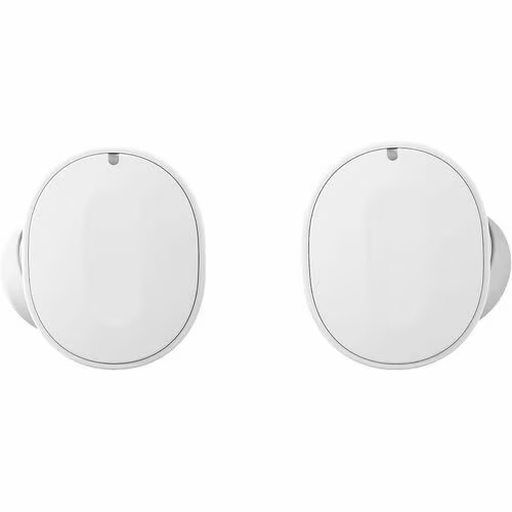 No image available
A compact listening option for anyone looking for earbuds; check that the fit stays comfortable when listening repeatedly.
 No image available
A wireless over-ear option for listening back to recordings somewhere with background noise; also check that the fit stays comfortable during long sessions.
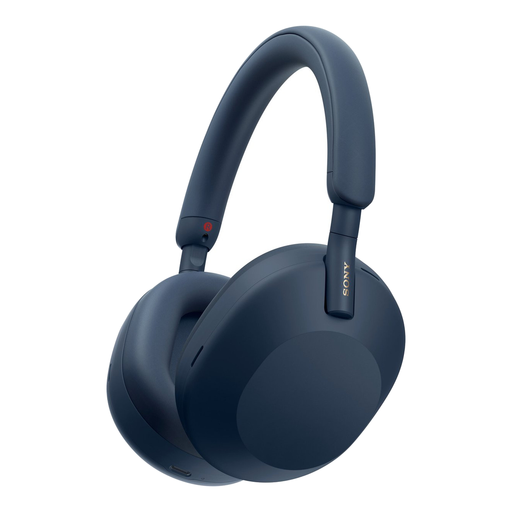 No image available
Wireless over-ear headphones with noise cancellation for listening back outside a quiet room; check that the connection suits your playback device.
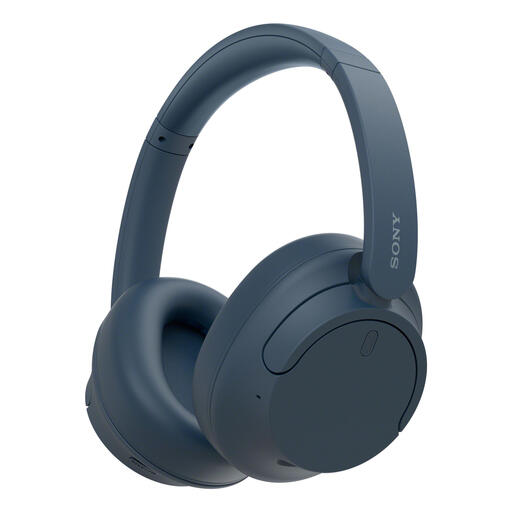 No image available
Wireless over-ear headphones with noise cancellation for listening back in noisy places. Sony lists a maximum battery life of 35 hours with noise cancellation on for this model.
 No image available
A wireless over-ear option for comparing noise cancellation when listening back; check which connections and accessories suit your playback device.
No, not if you’re only playing recordings. If you also want to use the same headphones for live language exchanges or your own recordings, assess the microphone separately; the Consumers’ Association treats playback sound and microphone sound as different features.
Don’t automatically turn up the volume. The World Health Organization recommends, among other things, using suitable headphones, noise cancellation when needed in noisy places, and taking listening breaks. It gives examples of an average of 80 dB for up to 40 hours a week and 90 dB for four hours; these are recommendations about sound exposure, not performance claims for headphones.
Check whether parts such as the cushions or battery can be replaced on the model you’re considering. Fairphone describes replaceable parts for the Fairbuds XL; check which version you have before ordering parts.
According to ACM ConsuWijzer, online purchases usually come with a statutory 14-day cooling-off period after delivery. There are exceptions, including certain hygiene products whose seal has been broken, so check which rules apply to the specific headphones or earbuds.
Not necessarily. ACM ConsuWijzer explains that the retailer must offer an appropriate solution if a product doesn’t perform as you could reasonably expect under normal use. Paid additional cover is separate from your statutory rights.