
Listening somewhere noisy
You want to follow spoken Dutch while background noise distracts you. Compare the seal and speech clarity, not just the ANC label; the Consumentenbond includes speech clips in its testing method.


For Dutch conversation lessons, the right choice depends on where you listen and whether you want to join in: noise-isolating in-ear earbuds may suit a noisy environment, while open-ear earbuds let in more ambient sound. Compact on-ear headphones are an alternative if you’d rather not wear earbuds. Also compare speech clarity, fit and listening time per charge. ANC or a long total battery life alone doesn’t prove that you’ll hear conversations more clearly or be able to listen without interruption.
You want to follow spoken Dutch while background noise distracts you. Compare the seal and speech clarity, not just the ANC label; the Consumentenbond includes speech clips in its testing method.
You take your lessons with you and want a compact set that feels comfortable during class. Check the size of both the earbuds and the case; according to the Consumentenbond, total playback time can depend in part on the charging case.
You join in yourself or switch between your phone and laptop. Check microphone reviews and multipoint support for the exact model; Sony lists multipoint for the WF-C510.
Start by thinking about where you’ll listen and whether you’ll be speaking or switching between lesson devices. Then compare fit and speech clarity with listening time per charge.
Choose this option if: you’ll mostly listen somewhere with distracting background noise and find silicone tips comfortable.
Bear in mind: a close-fitting design may feel uncomfortable during longer lessons and lets in less ambient sound.
Choose this option if: you want to stay more aware of your surroundings while listening, or don’t want silicone tips in your ear canal.
Bear in mind: in a noisy place, soft speech may be harder to follow because background noise can get in.
Choose this option if: you’d rather not wear earbuds, but over-ear headphones take up too much space.
Bear in mind: on-ear headphones rest on your ears and may feel tight; they also take up more space than earbuds and a case.
| What to consider | What to check before buying | Who is this important for? |
|---|---|---|
| Understanding spoken Dutch | Compare reviews of speech clarity and consider the seal and, where available, how ANC performs in a similar listening environment. | If I’m taking a lesson somewhere noisy, I want to understand spoken Dutch clearly without relying on the ANC label alone. Around 33% of consumers say speech clarity is their main reason for buying. |
| Easy to carry and comfortable to wear | Check the size of the case, how the earbuds sit in or on your ears, and which eartips are included. Check the returns policy in advance if you want to try the fit at home. | When I take my lessons in a small bag, I want a compact set that feels comfortable during class. Around 27% of consumers prioritise compact size and wearing comfort. |
| Joining in and switching between devices | Look for reviews of recorded microphone audio and check whether the exact model supports multipoint with your devices. | For interactive lessons, I want to be able to join in and switch between my laptop and phone. Around 20% of consumers give this combination of calls and device switching top priority. |
| Taking a lesson without charging part-way through | Compare the stated hours per charge in the listening mode you use; check the total time including the case separately, and look for any differences when using ANC or making calls. | If I want to take a whole lesson without putting my earbuds in the case, listening time per charge matters to me. Around 20% of consumers prioritise uninterrupted listening time. |
The case can recharge your earbuds several times, but you can’t use them while they’re charging. So total battery life doesn’t tell you how long you can listen without interruption.
First compare the stated hours per charge in the listening mode you use, then look at the total including the case.
A microphone feature that processes your voice during calls doesn’t mean that background noise is reduced while you’re listening to a lesson.
Check the exact feature and model variant. Huawei lists call noise reduction for the FreeBuds SE 3 and active noise cancellation for the separate FreeBuds SE 4 ANC.
In-ear earbuds may feel uncomfortable, while a more open design lets in more background noise.
Choose a close-fitting or more open design to suit where you’ll listen, and check the terms if you may want to return them because of the fit.
The WF-C510 is worth considering if you’re looking for compact in-ear earbuds and want to switch between two lesson devices.
The FreeBuds SE 3 are worth comparing if compact size matters; the FreeBuds SE 4 ANC are a separate option if you’re looking for active noise cancellation.
The P40i is worth including in your comparison if ANC and stated listening time are high priorities.
The Live Pro 2 shows which in-ear features you can compare if you’ll be listening as well as speaking.
With the AirPods 4, the version makes a difference if you’re looking for active noise cancellation.
This Joybuy selection includes noise-isolating in-ear earbuds and open-ear earbuds for conversations and lessons, with options for carrying them compactly, switching between devices and listening while staying more aware of ambient sound.
 No image available
An option to compare if you want to use ANC during a lesson and join in yourself.
The product information lists six microphones and a weight of 5,1 g per earbud. Stated playback time: 6 hours with ANC on and 7 hours with ANC off.
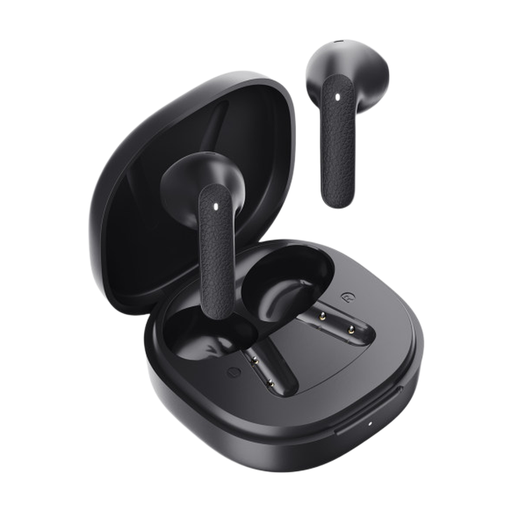 No image available
An option if you’re looking for close-fitting earbuds for lessons on the go and want to compare listening time per charge.
Stated playback time: 7 hours per charge and 35 hours in total, including the case. The case measures 53 × 53 × 28,65 mm.
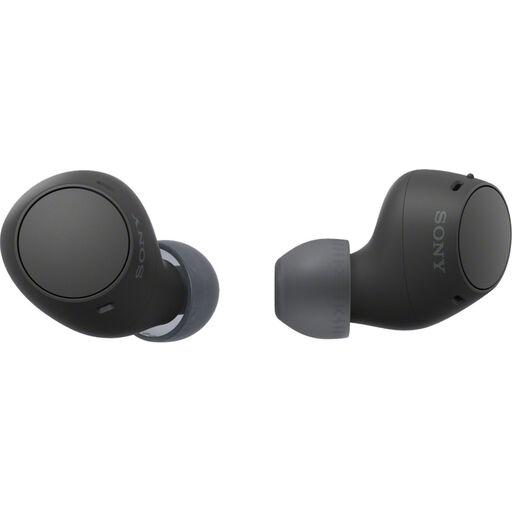 No image available
An option if you want to switch between your phone and laptop or hear ambient sound from time to time.
The product information lists multipoint, an ambient sound mode and a weight of 4,6 g per earbud. The stated battery life of 22 hours includes the case.
 No image available
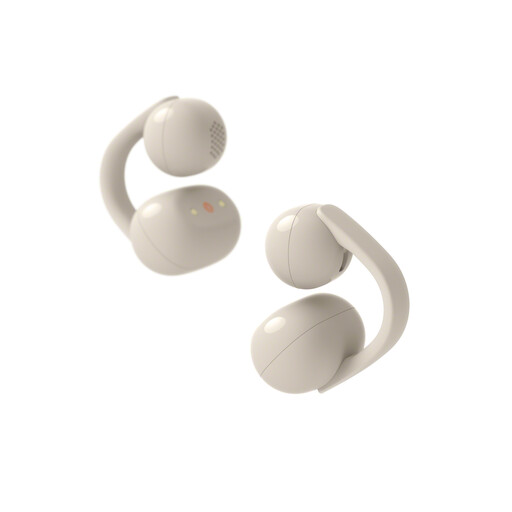
An open-ear option if you want to stay more aware of your surroundings while listening; in noisy places, soft speech may be harder to follow.
The product information lists a clip-on design, three listening modes, Voice Focus and 9 hours of playback per charge.
 No image available
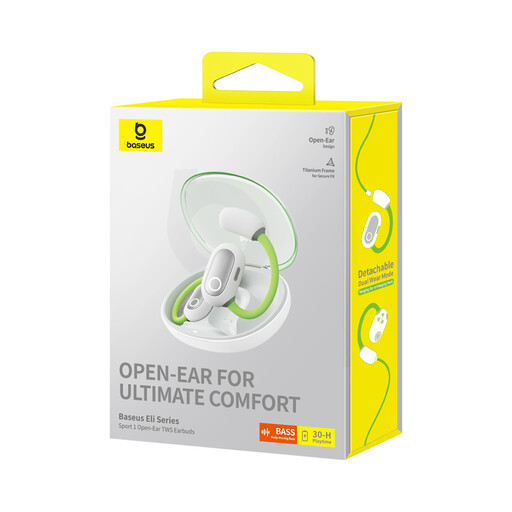
An open-ear option if you want to stay aware of ambient sound while listening; in a noisy place, this can make soft speech harder to follow.
Stated playback time: around 7–8 hours per charge at 70% volume and approximately 30 hours with the case.
Compare the stated playback time per charge for the earbuds in the listening mode you use. Hours including the case account for extra charges; call time and listening time may also differ.
Pair them with your lesson device beforehand, then check both the audio output and microphone input in the lesson app. If you use two devices, check whether the exact model supports multipoint; Sony lists this feature for the WF-C510.
Store the earbuds in their case and follow the instructions for the model you bought when cleaning and charging them. Don’t charge the case in a damp environment if the manufacturer advises against it; Huawei says this for the FreeBuds SE 3 and states that the case isn’t water-resistant.
According to the Dutch government, when you buy remotely you usually have a 14-day cooling-off period. Check the applicable terms before assuming you can return opened earbuds. You also have a statutory guarantee; if there’s a problem, contact the seller.
No, don’t turn the volume up without thinking just to drown out background noise. If speech is difficult to hear, first check the fit and your listening environment. According to the European Commission’s summary of the SCENIHR opinion, the risk of hearing damage depends on both the sound level and the duration of exposure.