
Listeners who want to make out every word
You listen carefully to conversation recordings and want to follow voices without constantly turning up the volume. Consumentenbond assesses speech clips separately in its headphone test.


Start with headphones that let you follow voices clearly in your lesson recordings and feel comfortable throughout a full lesson. If you often listen somewhere noisy, compare the fit and noise cancellation. For quiet listening at home without charging, a wired model may suit you, provided its connection matches your device. Noise cancellation will not block out every sound, and stated battery life depends on the settings you use.
You listen carefully to conversation recordings and want to follow voices without constantly turning up the volume. Consumentenbond assesses speech clips separately in its headphone test.
You often listen to a whole lesson in one sitting. Pay attention to how the ear cups and headband feel, including when you wear glasses.
You switch between quiet places and noisy surroundings. In that case, consider how much sound is blocked out, whether you can still hear what is going on around you, and how your lesson device connects.
Best suited to: listening regularly in places with persistent background noise, without wanting to turn up the volume.
Bear in mind: according to Consumentenbond, active noise cancellation can be particularly effective against low engine noise. Don’t assume it will block out conversations.
Best suited to: listening to longer recordings at home, where comfort matters more to you than extra electronic features.
Bear in mind: over-ear models take up room in your bag. Check how clear speech sounds using one of your own lesson recordings.
Best suited to: avoiding Bluetooth pairing and battery management, provided your device has a compatible connection.
Bear in mind: a cable limits how freely you can move. The Sennheiser HD 400S comes with a 3.5mm cable; the HD 400 U comes with a USB-C cable and requires a compatible device.
| What to consider | What to look for | Who should consider this? |
|---|---|---|
| Understanding spoken Dutch | If possible, listen to one of your own lesson clips at a normal volume and pay attention to different voices and quiet consonants. | I want to follow the words in my recording without constantly turning up the volume. Around 36% of consumers put speech clarity first. |
| Comfort throughout a lesson | If possible, try the headphones during a lesson-length session, including while wearing your glasses. | When I listen for a long time, I want the ear cups and headband to feel comfortable. Wearing comfort is the main concern for around 29% of consumers. |
| Background noise | Think about which sounds you want to block out and whether you need to be able to hear people during your lesson. Try any available modes in the surroundings where you’ll use them. | In a noisy place, I want to reduce distracting sounds without assuming conversations will disappear. Around 21% of consumers prioritise noise reduction. |
| Connection, controls and battery | Check your device’s connection, the controls for pausing and replaying, and, for wireless models, battery life with the settings you use. | I want to start my recording easily and listen to the whole lesson without the hassle of an incompatible connection or a flat battery. Around 14% of consumers prioritise connection, controls or charging. |
According to Consumentenbond, ANC is particularly effective against low engine noise. You may still hear people talking.
Consider whether voices would still distract you in your usual listening spot, and pay attention to passive noise isolation and speech reproduction too.
Sony and Philips state different maximum battery lives with noise cancellation switched on and off.
Compare battery life using the same settings, and remember that you’ll need to charge the headphones if you listen wirelessly.
The Sennheiser HD 400S comes with a 3.5mm cable. The HD 400 U comes with a USB-C cable; according to Sennheiser, an analogue cable is optional.
Check the port on your lesson device and what’s included with the model you’re considering.
The WH-CH720N is a closed-back wireless over-ear model with ANC, an ambient sound mode and an included audio cable. It may suit you if you switch between noisy and quiet listening spots.
According to JBL, the Tune 770NC offers wireless listening with ANC, plus Ambient Aware and TalkThru modes. These may be useful if you want to hear your surroundings between lessons.
The closed-back HD 400S with a 3.5mm cable and the HD 400 U with a USB-C cable offer wired connections for devices with the corresponding port.
According to Philips, the wireless over-ear TAH6529BK/00 has adaptive ANC, an awareness mode and a ‘Voice’ sound preset that the manufacturer describes as suitable for podcasts.
This selection includes wireless over-ear models, a wired gaming headset and wired in-ear earphones. Check that the style and connection suit your listening environment and the device your lessons are stored on.
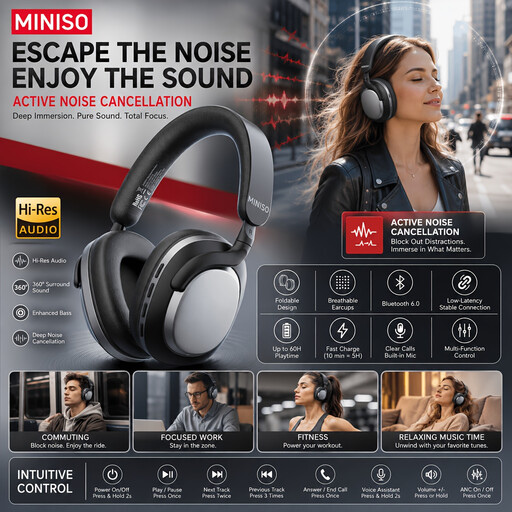 No image available
An option if you want wireless listening and noise cancellation. Try them with one of your own recordings to see if voices remain clear.
The product name states a 24-hour battery life and a comfortable fit.
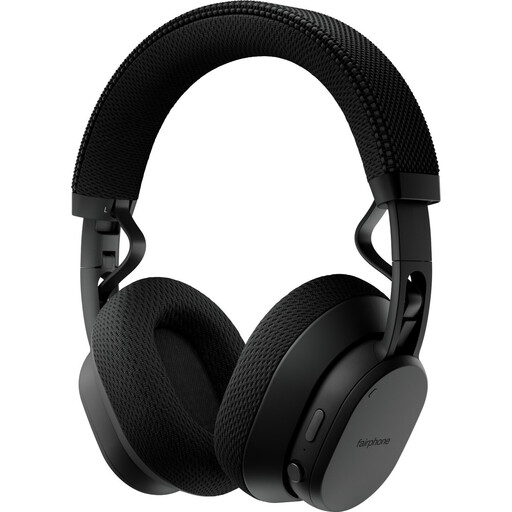 No image available
Check whether this model’s connection and fit suit your lesson device and the length of your listening sessions.
 No image available
If you’re looking for Bluetooth headphones, check the connection with your playback device and test how speech sounds using one of your own lesson recordings.
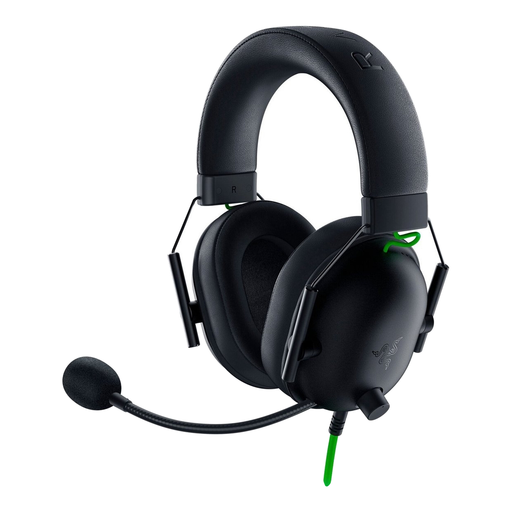 No image available
A wired option. Check that the connection suits your playback device and that the headset feels comfortable throughout a full lesson.
The model name includes 7.1.
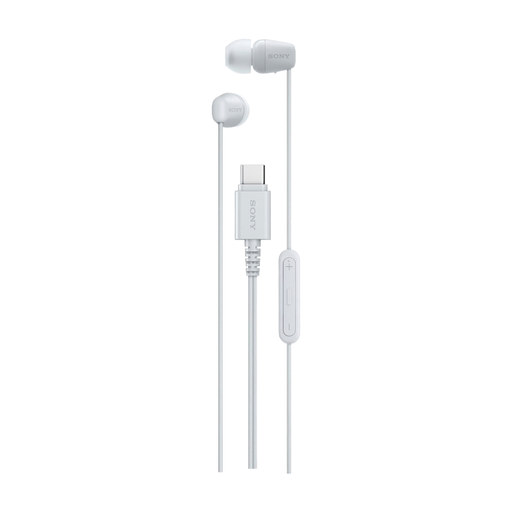 No image available
If you’re looking for wired in-ear earphones, check that your playback device has a compatible USB-C connection.
Your headphones need to connect to the device storing the recording. Check that the device supports Bluetooth or the required cable connection. To find out whether your lesson app can play downloads offline, check the app itself.
Connect the headphones to the device with the recording, then test playback, pause and volume beforehand. If your model has an EQ or ambient mode, try it with one of your own recordings. A preset doesn’t guarantee clearer speech.
The WHO recommends well-fitting or noise-cancelling headphones to reduce the temptation to turn up the volume in noisy surroundings. So check the fit and noise reduction in the place where you’ll listen.
For an online purchase in the Netherlands, you generally have a statutory 14-day cooling-off period after delivery. ACM ConsuWijzer lists some exceptions, so check which terms apply to the specific product.
Extra cover isn’t a condition of your statutory rights. According to ACM ConsuWijzer, if a product breaks too soon under normal use and doesn’t meet what you could reasonably expect, the seller must provide an appropriate remedy free of charge under the law. What lifespan you can reasonably expect depends on the circumstances.