
Listeners in a noisy home
If conversations or other household sounds distract you while you’re listening back to drum recordings, first consider how well a closed-back model seals around your ears.


Start with a well-fitting pair of closed-back headphones if you want to listen back to drum recordings while it’s noisy at home. If you also play alongside a loud drum kit, a more isolating drummer-focused model may be a better fit. Beyerdynamic describes the DT 770 M as providing more isolation than the DT 770 PRO, but notes a trade-off in sound quality and long-term comfort. Check the fit and connection, and keep the volume low: isolation isn’t a reason to listen louder.
If conversations or other household sounds distract you while you’re listening back to drum recordings, first consider how well a closed-back model seals around your ears.
If you want to follow a recorded groove while playing at a drum kit, compare models designed specifically for drummers in louder environments, too.
When listening repeatedly to timing and accents, a comfortable fit, suitable sound and a connection that works with your equipment all matter.
Best for: mainly listening back to recorded grooves and weighing up noise isolation, sound and comfort together.
Trade-off: the seal varies by model and fit; a closed-back design doesn’t guarantee that every household sound will disappear.
Best for: listening or playing along beside a loud drum kit, when noise isolation is the priority.
Trade-off: Beyerdynamic says the DT 770 M provides more isolation than the DT 770 PRO, but at the expense of sound quality and long-term comfort. Manufacturer claims for different models aren’t directly comparable real-world tests.
| What to consider | What to look for | Who should consider this? |
|---|---|---|
| Blocking out household noise | Try a closed-back model on your own head and assess the seal against the kinds of sounds you hear at home. | If conversations or other household sounds distract you, you won’t want to turn up the volume just to hear the recording. Around 36% of consumers put blocking out household noise first. |
| Following timing and accents | Listen to a familiar recording and check whether you can clearly distinguish the kick drum, snare and hi-hat. | When breaking down timing and accents, detail in the recording comes first; around 29% of consumers say this is their main priority. |
| Comfort during repeated listening | Try the headband and ear pads, and check whether replacement pads are available for the exact model. | If you listen to the same groove often, you’ll want a fit you can comfortably wear. Around 21% of consumers put comfort first. |
| Connecting to your equipment | Compare your device’s output with the plug and any supplied adapter; for wired models, check the cable length, too. | If you want to connect your headphones to a specific phone, computer, interface or drum module, you’ll need a compatible connection. Around 14% of consumers put this first. |
Noise-reduction claims from different manufacturers aren’t necessarily measured under the same conditions. Fit and the balance between isolation, comfort and sound still matter.
Don’t compare figures alone. Try the exact model and listen to your own material in an environment similar to where you’ll practise.
Beyerdynamic says closed-back models block out ambient noise more effectively, while open-back models can let sound escape. That makes open-back models a less obvious choice when isolation is your main priority.
Start with a well-fitting closed-back model for a noisy home. Consider an open-back design only if you find you don’t need the isolation.
A sales ranking doesn’t tell you how well a model reveals the details in your drumming or blocks out household noise.
At most, use rankings to find models, then assess the fit, connection and suitability for your listening needs yourself.
The closed-back DT 770 PRO 80 Ohm is a monitoring option; Beyerdynamic says the DT 770 M is specifically designed for percussionists in louder environments.
The wired Stereo Isolation Headphones, model SIH3, are designed for uses including practising with recorded tracks.
The closed-back HD 280 PRO is a wired monitoring model where isolation, foldability and replaceable ear pads are all worth considering.
The wired, closed-back ATH-M50x is a monitoring option with passive noise isolation.
The PRO 4000 is a closed-back, wired over-ear model to compare with other options.
The closed-back MDR-7506 is a foldable monitoring option.
The products below are headphones and a headset included as options for listening with noise cancellation. Check each version to make sure the connection and sound reproduction suit analysing drum recordings.
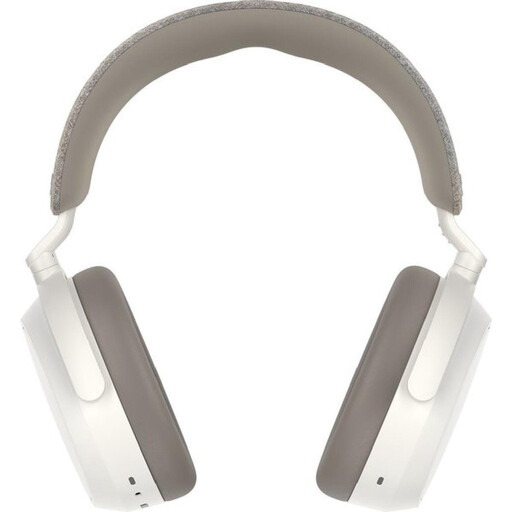 No image available
Consider these wireless headphones if you want to factor noise cancellation into your choice; check that the connection works with your playback device.
The product name describes a wireless over-ear headphone.
 No image available
Add these over-ear headphones to your comparison if you’re looking for noise cancellation; if possible, listen to a familiar drum recording before you decide.
The product name specifies Bluetooth.
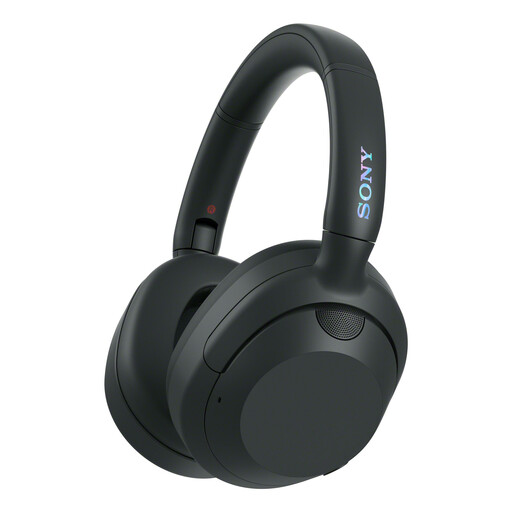 No image available
These over-ear headphones are an option to compare for noise cancellation against ambient sounds; check that the connection works with your equipment.
The product name specifies noise cancellation and an over-ear design.
 No image available
Only compare this headset if its design and connection suit your listening setup; check how drum recordings sound through it.
The product name specifies a wireless noise-cancelling headset.
 No image available
Consider this model if you want to compare noise cancellation with other options; check that the connection suits your drum practice setup.
The product name specifies the second generation.
According to the product information, it’s supplied without a charger.
No. A closed-back design can provide passive isolation, but the seal and the type of ambient noise both make a difference. If possible, compare models with sounds similar to those you hear at home.
That depends on your device’s output and the plug on the exact version. The Vic Firth SIH3 and Sennheiser HD 280 PRO list a 3.5mm plug with a 6.3mm adapter; check which connection you need before buying.
Don’t turn up the volume to drown out background noise. The World Health Organization recommends well-fitting headphones and gives 80 dB for up to 40 hours a week as a safe-listening reference. This is health advice, not a legal limit for home use.
According to the Dutch government, when you buy from a business at a distance, you generally have 14 days to change your mind; check the applicable terms. If a product is faulty, you’re entitled to a product that works properly in the Netherlands, and the retailer is your point of contact. The Dutch government states that the Netherlands has no fixed statutory warranty period covering all products.