
Listening with a roommate
You want to follow the commentary while someone else is resting in the same room. According to VeiligheidNL, a good fit can help reduce sound leakage and the temptation to turn up the volume.


Start with headphones or well-fitting in-ear headphones that create a good seal, and listen at a moderate volume. This matters more to your roommate than a high ANC specification alone. VeiligheidNL stresses the importance of a good fit, while the Consumentenbond and Sony explain that noise cancelling is most effective against low, constant noise and is not guaranteed to block out voices.
You want to follow the commentary while someone else is resting in the same room. According to VeiligheidNL, a good fit can help reduce sound leakage and the temptation to turn up the volume.
You want to keep following the commentary despite, for example, a constant hum or conversations. The Consumentenbond explains that noise cancelling mainly tackles low-frequency hums; Sony warns that it is less effective at reducing voices.
You’re looking for a comfortable fit for longer listening sessions, with a connection and battery life suited to your playback device. The Consumentenbond notes that over-ear headphones are often comfortable for long listening sessions.
If you want to disturb your roommate as little as possible, start with the fit and volume. Then consider the type of background noise, how clearly voices come through and the comfort you’ll need during a long broadcast.
| What to consider | What should you check? | Who should pay particular attention? |
|---|---|---|
| Fit and sound leakage | Check how the ear cushions or in-ear tips fit, and try listening at a moderate volume. | If I’m listening late while someone else is resting, I want to hear the commentary without turning up the volume. Around 33% of consumers prioritise limiting noise for their roommate. |
| Reducing room noise | Compare ANC with passive noise isolation, and don’t expect voices to disappear completely. | If a constant hum distracts me, I want to reduce it without expecting conversations to become completely silent. Around 27% of consumers prioritise reducing background noise. |
| Commentary clarity | Listen to a speech sample at your usual volume and pay attention to how clearly the words come through. | If I mainly listen to spoken commentary, I want to be able to follow voices clearly before choosing my sound settings. Around 20% of consumers prioritise speech clarity. |
| Comfort and connectivity | Try the fit, including with glasses if you wear them, and check that the connection works with your playback device. | If a broadcast lasts a long time, I want to listen in comfort without interruptions from an unsuitable connection or a flat battery. Around 20% of consumers prioritise comfort and ease of connection. |
ANC affects the sound you hear; a good fit and playback volume are what matter when it comes to sound leaking out.
Try the fit and sound next to someone else, at the volume you actually plan to use.
Claimed battery life can vary depending on whether ANC is on or off. A manufacturer’s figure doesn’t guarantee how long your cricket stream will play.
Only compare battery life under the same conditions, and check which features are switched on.
According to ACM ConsuWijzer, your statutory right to a product that meets reasonable expectations is separate from any additional guarantee.
Before deciding, read what is covered by your statutory rights and the terms of any extra cover.
The WH-1000XM6 is an over-ear option worth considering if you want an ambient sound mode, multipoint connectivity and the option to use a cable.
The Tune 770NC is an over-ear option with features worth comparing if controls and switching between playback devices are important to you.
The MOMENTUM 4 Wireless is an over-ear alternative with adaptive ANC and a transparency mode.
The QuietComfort Headphones are an option if you want to switch between a quiet mode and one that lets in more ambient sound.
These headphones are suited to wireless commentary listening with noise cancelling. For each model, consider comfort, the features you want and compatibility with your playback device.
 Image unavailable
The transparency mode is worth considering if you want to hear your roommate while listening.
Sennheiser states up to 60 hours of playback per charge; this is a manufacturer’s claim.
The product name mentions noise cancelling, fast charging and 4 microphones.
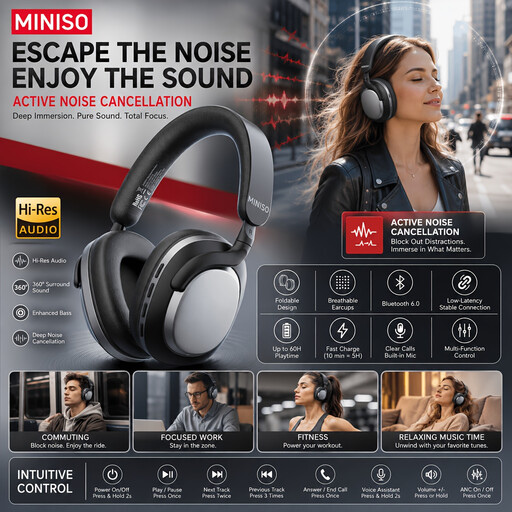 Image unavailable
A wireless over-ear option to consider if you want to use noise cancelling for cricket commentary.
The product name mentions noise cancelling and 24-hour battery life.
 Image unavailable
Bluetooth headphones to consider if you want to listen to commentary wirelessly.
Before buying, check that the noise reduction and connection options you want are compatible with your playback device.
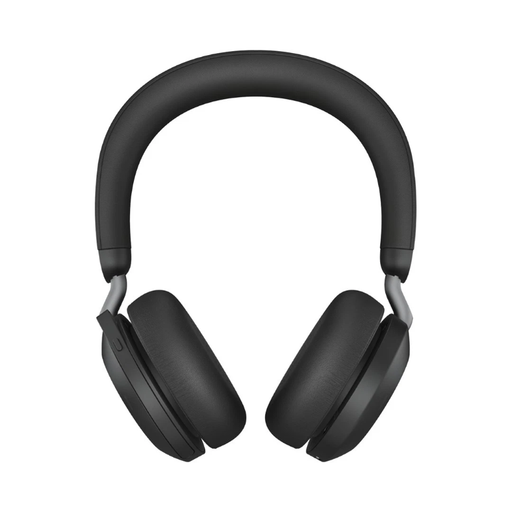 Image unavailable
A headset to consider if you want to use noise cancelling. When choosing, also check that the fit will stay comfortable throughout a long broadcast.
Check that the controls and connection you want work with the device you’ll use to play the commentary.
 Image unavailable
These wireless noise-cancelling headphones are worth considering for cricket commentary. Check the fit and how clearly speech comes through to you.
The product name mentions Bluetooth and a stated battery life of up to 35 hours.
No, you shouldn’t count on that. Sony says the WH-1000XM5’s noise cancelling works mainly at low frequencies and is less effective against voices. Also check the fit and try listening to the broadcast at a moderate volume.
Start with a low volume and check that ANC is switched on if you want to use it. If your chosen model has an ambient sound mode, you can use it when you want to hear your roommate; check the controls for your model.
The World Health Organization advises keeping the volume low and suggests a maximum of 60% of your device’s volume as a practical setting. This is listening advice, not a legal product limit.
According to ACM ConsuWijzer, for a standard online product purchase you generally have a statutory cooling-off period of up to 14 days after delivery, with some exceptions. You also have statutory rights if a product used normally does not meet the expectations you were entitled to have; paid-for extra cover does not replace those rights. Before buying, check the applicable returns and delivery terms.