
Listening beside a sleeping roommate
Your main concern is keeping music from being heard outside the ear cups, so you’ll want to consider a closed-back design, fit and sound leakage.


If you listen while your roommate is resting, start with a well-fitting pair of closed-back headphones and check for sound leakage at your usual listening volume. Open-back headphones are best suited to situations where audible music won’t bother the other person. Active noise cancellation can reduce the noise you hear, but it doesn’t tell you how much music your roommate will hear.
Your main concern is keeping music from being heard outside the ear cups, so you’ll want to consider a closed-back design, fit and sound leakage.
You want to follow instruments and quieter passages comfortably, while weighing an open-back design against your roommate’s need for peace and quiet.
You want to be less bothered by background noise without constantly turning up the volume, so you’ll compare passive isolation with any active noise cancellation.
Best when: your roommate is resting and you’re listening through a suitable headphone socket.
Bear in mind: the fit affects how well the headphones seal; also check that your playback device can drive them comfortably.
Best when: you want to hear less background noise in the room as well as listen wirelessly beside your roommate.
Bear in mind: Bluetooth headphones need charging; noise cancellation for you doesn’t replace checking for sound leakage.
Best when: your roommate is away, doesn’t mind hearing your music or you can listen separately.
Bear in mind: an open-back design is more likely to let music out and room noise in; also check your playback device’s connection.
| What to consider | What to look for | Who is it important for? |
|---|---|---|
| Sound leakage | If your roommate is asleep, start with a closed-back design and check for leakage at your usual listening volume and from the distance between your beds. | If I listen while someone is sleeping beside me, I want to know whether they can hear my music. Around 36% of consumers prioritise preventing sound leakage. |
| Sound and instruments | Compare the sound while listening at a comfortable volume; don’t judge it solely by the design type or product specifications. | If I want to follow instruments and quieter passages closely, I want a sound I enjoy without overlooking my roommate’s need for peace and quiet. Around 29% of consumers make sound quality their top priority. |
| Comfort | For longer listening sessions, look out for pressure on your ears and head; you could also check the fit while wearing glasses. | If I listen to chamber music for longer periods, I want the ear cups to feel comfortable. Around 21% of consumers prioritise comfort. |
| Noise in the room | Compare passive isolation and any active noise cancellation for the sounds that bother you; don’t keep turning up the volume to drown out room noise. | When noise in the bedroom drowns out quieter passages, I want to reduce background noise without having to listen at a higher volume. Around 14% of consumers make noise reduction their top priority. |
Noise cancellation targets the sound you hear; sound leakage is a separate consideration.
Assess the two separately and check whether your roommate can hear your music at your usual volume.
An open-back design is more likely to let music out, so it’s not an obvious choice when someone beside you wants to sleep.
Choose this option only if audible music won’t bother the other person or you can listen separately.
In the Netherlands, statutory consumer rights are separate from any additional manufacturer’s warranty. The Dutch Government says there is no fixed statutory warranty period that applies to every product.
Keep your proof of purchase and contact the seller if a product is faulty.
Philips says production of the Fidelio X2HR/00 has ended, so an older recommendation doesn’t necessarily tell you whether it’s currently available.
Check the current product listing before relying on an older recommendation.
Offers both the closed-back, wired HD 620S and the open-back, wired HD 600 as options for this choice.
The WH-1000XM5 is a closed-back, wireless over-ear headphone with active noise cancellation and a wired input.
The wired ATH-M50x is a closed-back, over-ear studio model with detachable cables.
The wired K371 is a closed-back, over-ear studio model.
This selection of Joybuy products focuses on closed-back, wireless over-ear headphones with active noise cancellation for listening in a shared bedroom.
 No image available
The closed-back over-ear design and active noise cancellation may suit you if you listen in a shared room; check separately how much sound leaks out.
Bluetooth and an audio cable are listed.
 No image available
The closed-back design and active noise cancellation are relevant if you listen to music while your roommate is resting; test for sound leakage separately.
The product information lists Bluetooth and wired audio via USB-C and 3.5 mm cables, as well as adjustable ear cups and memory foam ear cushions.
 No image available
This closed-back model may suit you if you want to listen wirelessly in a shared bedroom; active noise cancellation for you doesn’t show how much music the other person will hear.
Sony’s Dutch specifications list Bluetooth and a stereo mini-jack input.
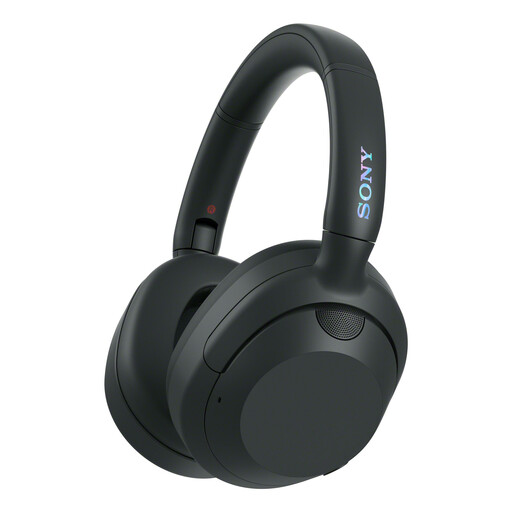 No image available
The closed-back over-ear design suits the aim of limiting sound leakage; check how it performs in practice at your usual volume.
Active noise cancellation and a detachable cable are listed.
 No image available
Active noise cancellation and a wired option may be useful if you want to hear less room noise; check sound leakage to your roommate separately.
The product information lists Bluetooth 5.4 and a detachable cable with a 3.5 mm connection. No charger is included; the stated compatible charger is 1.8–2.5 W, and PD fast charging isn’t supported.
Check sound leakage and the outside noise you can hear separately. If possible, ask the other person to listen from the usual distance while you play music at your normal volume; the design alone can’t predict what will be audible in your room.
Not as a way to deal with distracting room noise. First, check the fit and seal, or consider noise cancellation if you need it. The World Health Organization gives an average of 80 dB for up to 40 hours a week as an example of safe listening; this isn’t a guarantee for every listening situation.
Check the output on your playback device and the connection on the exact model. Sennheiser lists a cable with a 3.5 mm plug and a 6.3 mm adapter for the HD 620S; for another model, check its own connection and whether your device can drive it suitably.
When you buy online from a business, you’ll often have a 14-day cooling-off period; check the applicable terms and exceptions. If a product is faulty, contact the seller about your statutory rights. The Dutch Government says there is no fixed statutory two-year warranty period for every product in the Netherlands.
Yes. Radio equipment placed on the EU market must meet requirements under the Radio Equipment Directive, including those relating to safety, electromagnetic compatibility and spectrum use. According to the European Union, CE marking is required only for products covered by the relevant EU rules; a product listing alone doesn’t establish whether a specific version meets all the requirements.