A well-fitting, noise-isolating pair of headphones can help you follow interview voices when there’s campsite noise around you. Choose open-ear headphones if you mainly want to stay approachable and hear what’s going on around you while listening. Also compare how clearly voices come through, the fit and listening time per charge. Pause the recording when you need to give your surroundings your full attention: an ambient mode is no substitute.
Who is this choice relevant to?
Listeners at a lively campsite
They want to follow interviews amid conversations and other campsite noise, so they look for natural-sounding voices, a comfortable fit and the right level of noise isolation. The Consumers’ Association includes speech samples in its headphone tests.
Listeners who want to stay approachable
They want to follow a recording while still being able to hear people and sounds around them. They compare open designs with models that have an ambient mode. VeiligheidNL explains that an open ear canal allows you to hear your surroundings.
Campers with limited charging options
They listen for longer periods and compare the stated listening time per charge at the same settings, as well as comfort. The stated maximum battery life of different models cannot automatically be compared like for like.
What should you look for when choosing?
Noise-isolating over-ear headphones with active noise cancellation
A good choice if: you usually listen while sitting down and want to follow voices despite other sounds at the campsite.
Bear in mind: the headband takes up space, and the noise isolation can be inconvenient if you need to keep an eye on other people.
Noise-isolating wireless in-ear headphones
A good choice if: portability matters and you find the earbuds comfortable and a good fit.
Bear in mind: the fit and listening time of the earbuds themselves; a charging case’s battery life is not the same as continuous listening time.
Open-ear or bone-conduction headphones
A good choice if: staying approachable or hearing your surroundings is the priority, for example when walking around the campsite.
Bear in mind: irritating campsite noise will still be audible and may drown out quiet interview speech. VeiligheidNL does not claim that bone conduction is safer for your hearing.
| What to consider |
What to look for when buying |
Who is this important for? |
| How clearly voices come through |
Assess how voices sound using speech samples, and consider the fit and noise-cancellation controls. |
If I want to follow quiet interview voices at a lively campsite, I look for natural-sounding voices and a good seal. Around 33% of consumers put speech clarity first. |
| Hearing your surroundings |
Decide whether you want to leave one ear open or switch to an ambient mode from time to time; check the pause controls too. |
If I want to be able to notice people around me while listening, staying approachable matters more than complete noise isolation. Around 27% of consumers give awareness of their surroundings top priority. |
| Fit and portability |
Check that the fit is comfortable and look up the moisture-resistance rating for the exact model. |
If I have limited luggage space, I want a compact design that feels comfortable and is suitable for the weather. Around 20% of consumers put portability and fit first. |
| Listening time per charge |
Compare models at the same setting, for example with active noise cancellation on. Don’t add charging-case top-ups to the listening time per charge. |
If I want to listen to several recordings or long recordings between charges, I check the battery life of the device itself. Around 20% of consumers give uninterrupted listening time top priority. |
Buying pitfalls
-
Looking only at the longest stated battery life
Stated battery life can vary depending on the settings. Sony lists separate maximum figures for the WH-1000XM6 with noise cancellation on and off. For earbuds, listening time per charge is different from the extra use you get from a charging case.
Compare models at the same setting, such as with active noise cancellation on, and treat manufacturers’ figures as maximums.
-
Expecting open-ear headphones to block noise while letting in your surroundings
An open design also lets in sounds that can make an interview harder to hear clearly.
Choose open-ear headphones if hearing your surroundings is the priority. If it’s noisy, find a quieter place to listen rather than continually turning up the volume.
-
Confusing moisture resistance with being safe to charge when wet
A moisture-resistance rating doesn’t mean it’s safe to use wet charging contacts.
Check the rating for the exact model and don’t charge it if the contacts are damp or dirty. Sony advises removing water, moisture or dirt with a soft, dry cloth, then letting everything dry completely at room temperature before charging.
Brands to consider
The features listed apply to specific product ranges and models; on their own, they don’t tell you how well a pair of headphones will reproduce your interview recording.
Sony
The WF-C710N is a compact in-ear option, while the WH-1000XM6 is a noise-isolating over-ear model. According to Sony, both have an ambient mode.
- Sony Netherlands lists an IPX4 rating and up to 8.5 hours of music playback with NC on for the WF-C710N; for the WH-1000XM6, it lists up to 30 hours with NC on.
- These are stated maximums for different models, not a direct comparison of how clearly they reproduce voices.
JBL
The Tune 770NC is a foldable over-ear model with active noise cancellation. JBL describes Ambient Aware and TalkThru as features that let you hear your surroundings.
- JBL quotes a maximum battery life of 70 hours for this model.
- That maximum isn’t a like-for-like comparison at the same settings, and it doesn’t tell you how your interview recording will sound.
Sennheiser
According to Sennheiser, the MOMENTUM 4 Wireless combines an over-ear design with adaptive noise cancellation and a transparency mode.
- Sennheiser lists up to 60 hours of playback time.
- Check the testing conditions and fit; don’t take the manufacturer’s maximum as a guarantee of battery life at the campsite.
Shokz
The OpenRun Pro 2 is an open-ear option for anyone who wants to stay aware of their surroundings while listening.
- Shokz lists an IP55 rating and up to 12 hours per charge for this model.
- An open design won’t reduce campsite noise in the same way as a noise-isolating model. VeiligheidNL does not claim that bone conduction is safer for your hearing.
Joybuy products
This selection includes noise-isolating over-ear models, noise-isolating in-ear earbuds and an open-ear model for listening at the campsite.
 No image available
Sennheiser MOMENTUM 4 Wireless, black
An over-ear option for anyone who wants to switch between active noise cancellation and ambient sound while listening.
Sennheiser lists up to 60 hours of playback time; check the testing conditions before comparing this maximum with other models.
Not water-resistant; keep the headphones away from water and moisture.
View at Joybuy
 No image available
Sony WH-CH720N, blue
Wireless over-ear headphones with active noise cancellation, for listening to interviews in places with background noise.
The stated maximum battery life is 35 hours with noise cancellation on.
View at Joybuy
 No image available
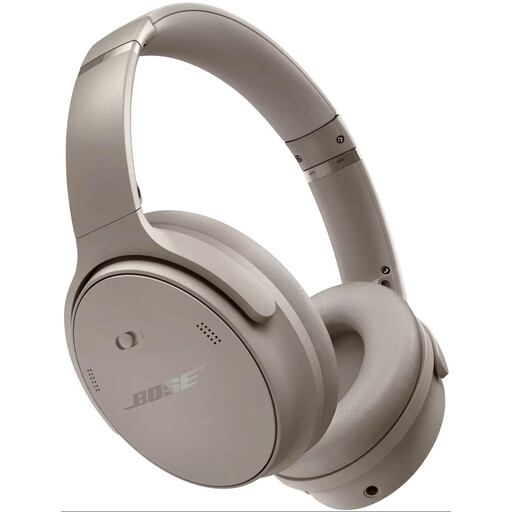
Bose QuietComfort Headphones, Sandstone
An over-ear option for anyone who wants to switch between noise cancellation and transparency mode while listening.
The product information describes on-earcup controls and Bluetooth.
View at Joybuy
 No image available
Sony WF-C710N, black
A compact in-ear option with noise cancellation and an ambient sound mode for switching between listening and hearing your surroundings.
Sony Netherlands lists up to 8.5 hours of music playback with NC on and an IPX4 rating. Let the earbuds and charging contacts dry completely before charging.
View at Joybuy
 No image available
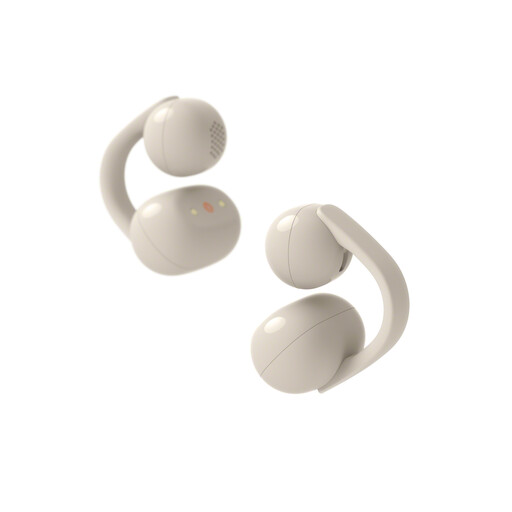
Sony WFLC900C.CE7
An open-ear model for anyone who wants to stay approachable while listening; bear in mind that irritating campsite noise will still come through.
The product information lists a clip-on design, a Voice Focus mode and IPX4.
View at Joybuy
Frequently asked questions
Do I need noise cancellation to hear interview voices clearly?
Not always. Start with natural-sounding voices and a good fit; active noise cancellation can help with background noise, but assess the sound using speech samples and in a setting similar to where you’ll be listening.
How can I prevent moisture problems while charging?
Check the headphones, case, cable and charging port for moisture or dirt, and let everything dry completely before charging. Sony recommends this for moisture-resistant models too: an IPX4 or IP55 rating doesn’t mean you can use wet charging contacts.
What are my rights if I buy headphones online in the Netherlands and they aren’t right for me?
For an online distance purchase from a business, you usually have 14 days to change your mind, according to the Dutch government. The product must also be of satisfactory quality, and if there’s a fault, the retailer is your point of contact. The Netherlands does not have a fixed statutory two-year guarantee period for all products.
Will open-ear headphones protect my hearing better?
This has not been proven for bone conduction. Open-ear headphones let you hear your surroundings, but you should still watch the volume and listening time, and pause the recording when your surroundings need your full attention.


