
Vandaag of morgen in huis

Kwaliteit gegarandeerd

Welkomstaanbiedingen ontgrendelen: GRATIS bezorging | Tot 80% korting | Gratis 30 dagen JoyPlus-proefperiode
Download de app
Choosing a new pair of headphones seems straightforward until you have to compare wireless headphones, in-ear earbuds, over-ear headphones and gaming headsets. Marketing copy often focuses on features such as noise cancelling, AI microphones or long battery life. However, these terms do not always tell you enough about everyday use.
Pay particular attention to these three common pitfalls:
An over-ear pair of headphones surrounds the ear and can be comfortable during travel, working from home or long listening sessions. This type is generally larger and warmer than an in-ear model. An on-ear headset rests on the ear and is often lighter, but may cause pressure after extended use.
In-ear earbuds and wireless earbuds are compact and suitable for use on the go. The fit varies considerably from one ear to another. Check whether several ear-tip sizes or an ear hook are included. For sports, a secure fit is more important than simply keeping the weight low.
An open-ear model lets in ambient sound. This can be useful when walking or cycling, but it provides less isolation on a busy train.
A Bluetooth pair of headphones is practical for smartphones and laptops. Do not just look at the Bluetooth version number; also check features such as multipoint, low latency and supported audio codecs. Multipoint can be useful if you want to stay connected to a laptop and phone at the same time.
A wired model does not need a battery and can provide a consistent connection. A USB-C pair of headphones only works with devices that support audio via USB-C. A USB-C port therefore does not automatically mean that every device can transmit sound.
A 3.5mm connection is still useful for laptops, games consoles and older smartphones. With headphones with a microphone, check whether the device uses a combined connection or separate microphone and headphone ports.
For wireless models, compare the earbuds’ own playback time with the total playback time including the charging case. A model with a long total battery life may still need to be put back in the case after just a few hours.
For calls, working from home and livestreaming, the microphone is at least as important as the speakers. The number of microphones is only an indication. Their positioning, the software and the surroundings all affect how clearly your voice is heard.
For sports earbuds, check the IP rating. IPX4 provides protection against splashes and sweat, while IPX5 indicates protection against water jets. Neither rating means that you can swim while wearing them. According to the manufacturer’s product information, you should respect the limits of the stated classification.
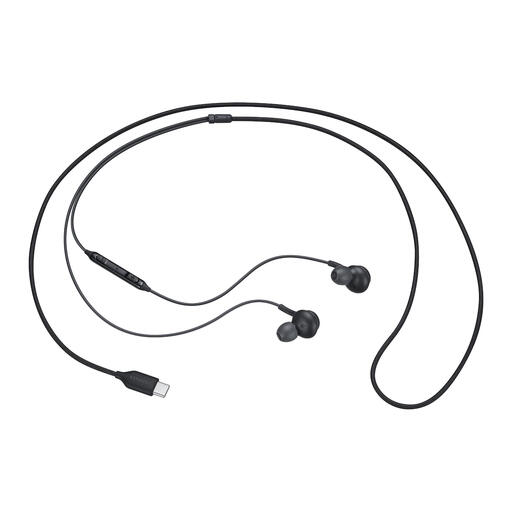
Why it suits this profile: These wired USB-C earbuds are suitable for everyday listening and calls without charging or pairing via Bluetooth. The cable is 1.2 metres long and, according to the product specification, they weigh 18.35 grams.
There is no battery-life claim to interpret, and you avoid Bluetooth connection issues. However, check that your USB-C device supports audio.
USB-C connection, built-in microphone, control buttons and several ear-tip sizes included.

Why it suits this profile: These wireless over-ear headphones are designed for listening to music, travelling and extended use. According to the product information, the model features adaptive noise cancelling, a transparency mode and a stated battery life of up to 60 hours.
The stated playback time is clearly specified together with the usage conditions. You can also use the model wired with the supplied 3.5mm cable.
42mm transducers according to the product specification, four microphones, app settings and support for wired listening.
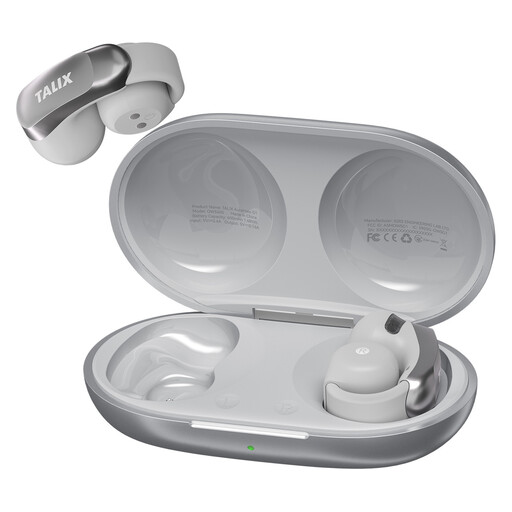
Why it suits this profile: The clip-on design with silicone ear hook is aimed at sports, commuting and online meetings. According to the product information, each earbud weighs 5.2 grams.
The IPX4 rating is not presented as waterproofing: the model is intended for sweat and light rain, not immersion. Battery life is listed separately for the earbuds and charging case.
Bluetooth 5.3, four microphones, up to 28 hours with the charging case and a fast-charging function according to the product listing.
We have put together a complete, up-to-date list of products that fully meet these strict selection criteria and the applicable European safety regulations.
Yes, provided the model has a reliable Bluetooth connection and a useful microphone. For meetings, multipoint is practical when switching between a laptop and phone. If you do not want to plan charging breaks, consider a USB or 3.5mm headset.
Their lifespan depends on the battery, hinges, cable, ear cushions and maintenance. A wired model does not have a built-in battery that loses capacity. With wireless models, it helps to store the headphones somewhere dry and clean and avoid exposing them to heat for long periods.
That depends on your surroundings. ANC can be useful on trains, aeroplanes and in busy offices. At home or in a quiet environment, a well-fitting pair of headphones without ANC may be sufficient. When comparing models, do not look only at a stated decibel value; also consider the wearing style, transparency mode and battery life. Noise-cancellation claims come from the brand’s product information and may be experienced differently depending on the environment.
