
Listening to chords beside someone who’s asleep
You want to replay a passage without letting much sound into the bedroom. A closed-back design is a useful point of comparison, but it can’t guarantee that nobody will hear it.


If you’re listening in a shared bedroom, start with closed-back studio headphones: open-back models let sound escape and do little to block out ambient noise. In a quiet room, you could also compare an open-back model if a spacious presentation matters to you; semi-open headphones aren’t a proven quiet middle ground. Check the fit and connection on every model, and listen at a comfortable, low volume. None of these designs can identify chords automatically.
You want to replay a passage without letting much sound into the bedroom. A closed-back design is a useful point of comparison, but it can’t guarantee that nobody will hear it.
You don’t mind sound leakage and want to compare open-back and closed-back models for their presentation and fit.
You want headphones that are easy to connect and comfortable to wear while you listen to short clips at a low volume.
Choose these if: you’re listening beside someone or want to limit sound leakage.
Bear in mind: fit and sound vary between models, and the cable can get in the way beside the bed.
Choose these if: you’re listening alone in a quiet room and don’t mind sound leakage.
Bear in mind: open-back earcups let sound escape and do little to block out ambient noise.
Choose these if: you specifically want to compare a semi-open model and sound leakage is acceptable in your room.
Bear in mind: semi-open doesn’t automatically mean you won’t disturb someone sharing your room.
| What to consider | What should you look for? | Who should give this more weight? |
|---|---|---|
| Following chords | Compare them using a familiar track, and consider fit and listening volume. | If you want to listen back to musical passages closely and judge the sound for yourself, this need comes first; around 33% of consumers reportedly consider musical passages their main concern when buying. |
| Not disturbing someone else | Check the design and test for sound leakage at your usual volume. | If you’re listening beside someone who’s asleep, keeping leakage to a minimum matters even more; around 27% of consumers reportedly say their main concern is not disturbing someone else. |
| Comfort | Look at the ear cushions and headband, and assess the fit with your glasses on and in your usual listening position. | For a short session just before bed, pressure or an uncomfortable fit could be the deciding factor; around 20% of consumers reportedly put comfort first. |
| Connection and ease of use | Check that the plug matches your device’s output, and consider how the cable will run. | If you want to replay a passage without any fuss, check in advance that the connection is compatible; around 20% of consumers reportedly prioritise connection and ease of use. |
If you listen repeatedly, keep an eye on both volume and listening time. The World Health Organization recommends limiting exposure to loud sounds and taking breaks.
A studio or monitor label doesn’t prove that headphones can identify chords or make them easier for you to recognise.
Listen to a familiar track at a comfortable, low volume and judge the sound and fit for yourself.
Open-back designs let sound escape and do little to block out ambient noise.
In a shared room, compare closed-back models first, and check those for leakage too at your usual volume.
beyerdynamic lists 32-, 80- and 250-ohm versions, and recommends them for different source categories.
Check the full variant name and connection, and make sure it’s suitable for your playback device.
The closed-back DT 770 PRO is worth considering if you want to limit sound leakage; choose the impedance variant that suits your source.
The closed-back ATH-M40x is a wired option to compare for use in a shared room.
The open-back HD 560S is an option for analytical listening in a quiet room where sound leakage isn’t a concern.
The semi-open K240 Studio is a third design to compare if you don’t automatically want to choose closed-back headphones.
The closed-back MDR-7506 is another wired monitor option.
The Joybuy headphones below are options for listening back to musical passages. For each model, check that its listed listening and connection options suit your bedroom and device.
 No image available
An option if you want to listen back to musical passages wirelessly and would also like a wired option; the product name also lists a 60-hour battery life.
 No image available
An option if you’re looking for a closed-back model to listen back to music beside someone; the product information lists an included audio cable for wired use.
 No image available
An option if you also want to listen back using a wired connection; the product information lists USB-C and 3.5mm cables for wired audio sources.
 No image available
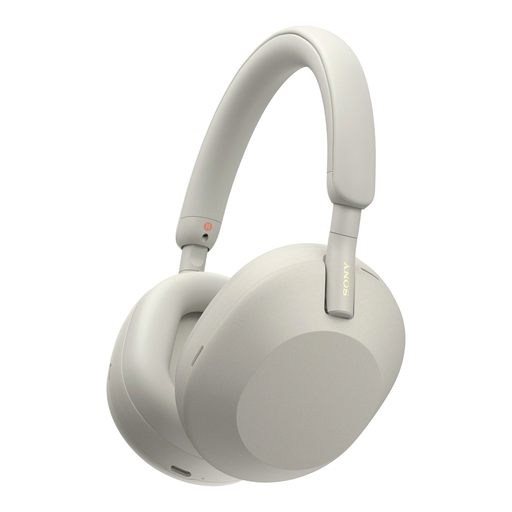
A wireless option for listening to passages repeatedly; the product information lists up to 30 hours of battery life with noise cancelling switched on.
 No image available
An option if you want to listen both wirelessly and with a cable; the product information lists Bluetooth and a detachable cable with USB-C and 3.5mm connections.
Start with closed-back models and check for sound leakage at your usual volume. According to RTINGS, open-back designs let sound escape; no design can guarantee silence.
Check that the output on your playback device matches the plug on the exact version you’ve chosen. According to beyerdynamic, the 80-ohm DT 770 PRO has a 3.5mm plug and a 6.35mm adapter; Audio-Technica lists a detachable cable with a 3.5mm plug for the ATH-M40x.
The World Health Organization recommends limiting volume and listening time, and taking regular breaks. A tricky chord isn’t a reason to listen at a higher volume for a long time; this advice isn’t a specific Dutch volume regulation for this type of use.
According to the Dutch government, when you buy online from a business, you’re often entitled to a 14-day cooling-off period; check which terms apply to your purchase. If a product is faulty, the seller is your point of contact for the statutory guarantee, even if an additional manufacturer’s warranty has expired.
Not automatically. According to the European Commission, CE marking is required when the applicable harmonised EU rules specify it for the product. Check which rules apply to the specific model you’re considering.