
Picking out bass notes
You want to distinguish neighbouring bass notes and note attacks in your own recording. So listen to how the excerpt itself sounds, rather than relying only on a stated frequency range.


Choose closed-back wired studio headphones if you want to listen directly without relying on a battery. If train noise is your biggest distraction, consider headphones with active noise cancellation (ANC) too. Compare bass notes using your own recording, check the fit and connection, and don’t assume that a frequency range or ANC feature alone proves a model is suitable for transcribing music.
You want to distinguish neighbouring bass notes and note attacks in your own recording. So listen to how the excerpt itself sounds, rather than relying only on a stated frequency range.
If background noise masks the bass line, a well-fitting pair of closed-back headphones may help; you can also compare a model with ANC. The Dutch Consumers’ Association notes that over-ear headphones can be comfortable for long listening sessions, but they also take up space in your bag.
You want to listen on the go without relying on your headphones’ battery. Check that the cable and plug are compatible with the output on your phone, laptop or audio interface.
Choose this option: if you want to listen directly from a device with a compatible audio output and don’t want to rely on a headphone battery.
Trade-off: isolation is passive and depends partly on the fit, so check the cable and connection.
Choose this option: if background noise makes it difficult to listen during your train journey.
Trade-off: ANC on the Sony WH-1000XM6 requires a charged battery. Less background noise doesn’t automatically mean the bass response is suitable for transcription.
| What to consider | What to look for | Who this matters to |
|---|---|---|
| Train noise | Compare how well the headphones seal around your ears and, if you want ANC, how well it works with your own recording at a sensible volume. Also consider sound that might leak out to other passengers. | If train noise masks my recording, I want to follow the bass without constantly turning up the volume; that’s why around 29% of consumers prioritise reducing background noise. |
| Distinguishing bass notes | Listen to the same tricky excerpt and see whether you can follow consecutive notes and note attacks. The stated frequency range alone won’t answer that question. | If I want to transcribe notes accurately from my own recording, I compare how the excerpt itself sounds; around 29% of consumers prioritise distinguishing bass notes above all else. |
| Connection on the go | Check your device’s audio output, the plug and whether you need a suitable adapter. For an ANC model, also check what wired listening involves when the battery is flat. | If I want to play my recording directly while I’m out, the cable and connection need to work with my device; around 24% of consumers prioritise a connection that works on the go. |
| Comfort | If possible, try the fit for a longer period, including with glasses on, and pay attention to pressure, the seal and how easy the headphones are to put away. | For a long listening session, I want to avoid too much pressure on my head or ears; around 18% of consumers consider comfort the most important factor. |
A frequency range alone doesn’t tell you how clearly consecutive notes will sound in your recording. The Dutch Consumers’ Association assesses sound partly by listening and measuring the balance between high, mid and low frequencies.
Compare the same excerpt at a moderate volume and listen for individual notes and note attacks, not just the amount of bass.
A closed-back fit provides passive isolation; ANC is a separate feature. One doesn’t prove that the other is present or works in the same way.
Choose based on what bothers you during your journey, and compare fit and ANC separately where possible.
A cable that isn’t compatible with your playback device can interrupt your listening. With ANC headphones, listening over a cable also doesn’t automatically work the same way as listening with ANC switched on.
For the exact version, check the plug, the cable supplied and how the headphones work with the power off.
The ATH-M50x is a pair of closed-back wired studio headphones that Audio-Technica also positions for use on the go.
The DT 770 PRO 32 ohm is a pair of closed-back wired studio headphones that the manufacturer offers for mobile monitoring.
The HD 280 PRO is a pair of closed-back wired monitoring headphones with a foldable design.
The WH-1000XM6 is a pair of closed-back wireless ANC headphones that can also be used for wired listening.
The first-generation QuietComfort Ultra Headphones offer wireless ANC and come with an audio cable.
These Joybuy products are closed-back headphones with ANC for anyone who wants to reduce background noise during a train journey. Check the connection for each model and compare the sound with your own recording; the product category alone doesn’t tell you how easy it is to distinguish bass notes.
 Image unavailable
An option if you want to reduce train noise and listen over a cable too; compare them with your own recording to see whether you can still follow the bass notes.
The product information lists ANC and an included audio cable for listening without battery power.
 Image unavailable
An option if you want to compare ANC with your own recording and use a wired audio source on the go too.
The product information lists ANC and included USB-C and 3.5 mm cables.
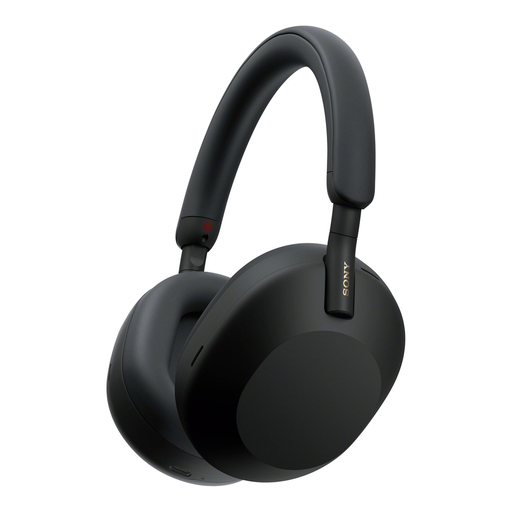 Image unavailable
An option if you want to tackle background noise with ANC and need a wired connection too; test the sound with your own bass line.
The product information lists a detachable cable.
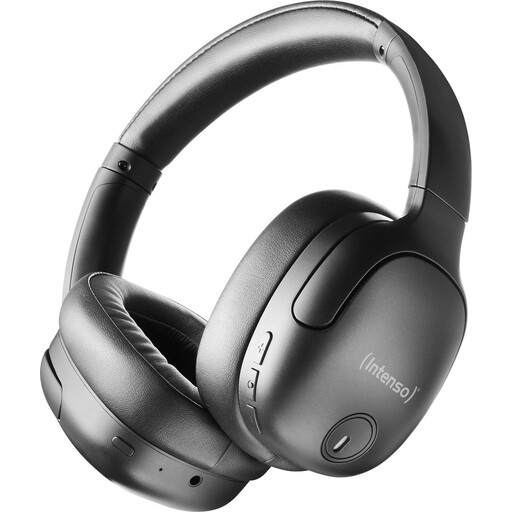 Image unavailable
An option if you want to compare ANC with your own recording and listen over a cable without a charged battery too.
The product information lists hybrid ANC and passive listening via the 3.5 mm connection.
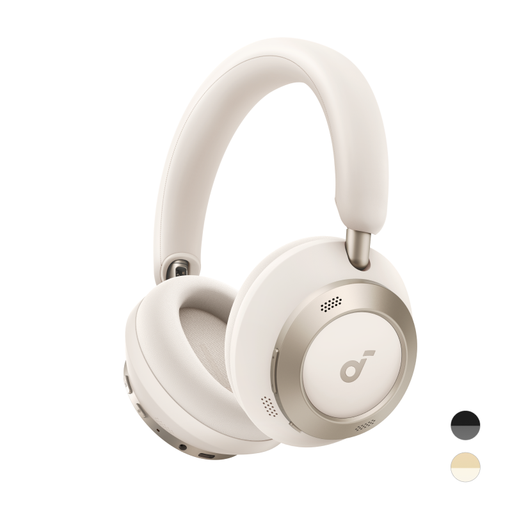 Image unavailable
An option for comparing ANC on train journeys; listen to your own recording to see whether you can follow the bass notes.
The product information lists ANC and a design that folds down compactly.
Compare the same tricky excerpt from your own recording at a similar, moderate volume, and listen for individual notes and note attacks. The Dutch Consumers’ Association assesses sound partly by listening and measuring the balance between frequency ranges.
Only if the plug fits your phone’s output, or if you use a suitable adapter. According to the product information, the beyerdynamic DT 770 PRO 32 ohm has a 3.5 mm mini-jack plug with a 6.35 mm adapter; check the connection on your own device too.
Try not to keep drowning out train noise by increasing the volume. The World Health Organization recommends well-fitting headphones and identifies noise cancelling as a way to reduce the need to turn the volume up; exposure depends on both sound level and listening time.
NS asks passengers to be considerate of others and to use headphones or earbuds. The quiet zone should be silent, so make sure other passengers can’t hear your recording. This describes NS guidance, not the rules of every operator.
According to ACM ConsuWijzer, when you buy as a consumer online you generally have up to 14 days after delivery to change your mind, subject to legal exceptions. Your statutory rights are separate from any manufacturer’s warranty: if a product is faulty, the seller is responsible for providing an appropriate solution. Before ordering, check the specific returns policy and who the seller is.