What should you look for when choosing?
First, consider how much sound might reach your roommate. Then listen to the bass reproduction, and check the fit and connection options.
| What to consider |
What should you check? |
Who should pay particular attention? |
| Not disturbing your roommate |
Compare closed-back and open-back ear cups, and consider the fit. A closed-back design limits sound leakage, but doesn’t guarantee silence for others. |
If I’m repeating passages next to someone who’s resting or working, I want to disturb them as little as possible; around 36% of consumers in this situation prioritise limiting sound leakage. |
| Distinguishing bass notes |
If possible, listen to a familiar passage and focus on individual notes, not just the lowest stated frequency. |
When I’m working out bass lines, I want to distinguish between notes rather than hear bass that simply stands out; around 29% of consumers prioritise bass definition. |
| Comfort when listening repeatedly |
Check how the headband and ear pads feel, and whether there’s enough room for your ears. |
For longer or repeated listening sessions, I want my headphones to feel comfortable; around 21% of consumers prioritise wearing comfort. |
| Connections and parts |
Check the plug, any adapter and the cable type. Also see whether parts can be replaced for the exact version. |
If I’m using my own listening device and wearing the headphones regularly, I want compatible connections and replaceable parts; around 14% of consumers prioritise connectivity and maintenance. |
Joybuy products
The Joybuy products shown range from wireless headphones with ANC to wired headsets. Check each model to make sure its connection and isolation suit your listening device and shared room; ANC alone doesn’t tell you how much sound your roommate can hear.
 No image available
Bose QuietComfort Ultra Bluetooth headphones, black
The closed-back over-ear design may suit personal listening in a shared room; ANC doesn’t determine how much sound reaches others.
The product description lists an audio cable as included.
View at Joybuy
 No image available
Sonos ACE over-ear Bluetooth headset, black
These over-ear headphones may suit anyone who wants to listen wirelessly but also have a wired listening option.
The product description mentions USB-C and 3.5mm cables. ANC alone doesn’t establish how much sound reaches a roommate.
View at Joybuy
 No image available
Sony WH-CH720N wireless Bluetooth headphones, blue
The closed-back over-ear design is a wireless option; ANC doesn’t indicate how much sound a roommate can hear.
The listed specifications include a weight of 192 g and multipoint connectivity.
View at Joybuy
 No image available
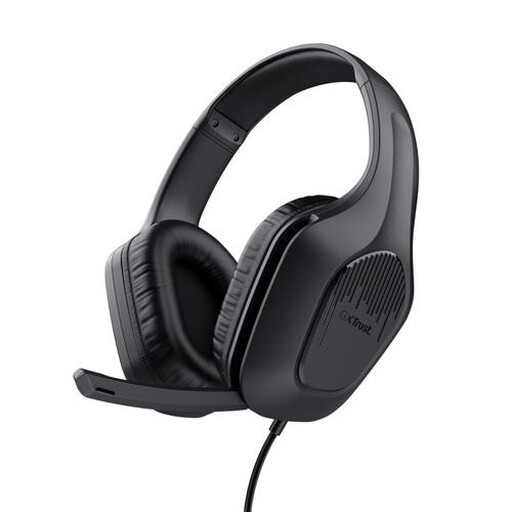
Trust GXT 415 Zirox wired gaming headset, black
A wired option for a listening device with a compatible 3.5mm connection; check that the fixed cable suits your setup.
The product description lists a fixed 2 m cable, soft ear pads and an adjustable headband.
View at Joybuy
 No image available
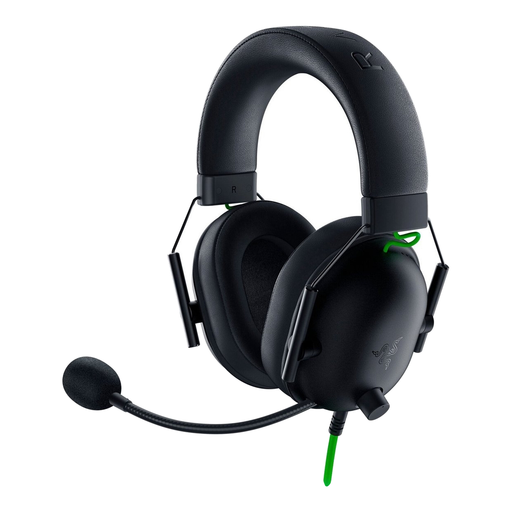
Razer Blackshark V2 X 7.1 wired gaming headset, black
This wired headset may suit a listening device with a 3.5mm connection; the stated passive isolation doesn’t indicate how much sound reaches a roommate.
The product description mentions memory foam ear pads and a lightweight design.
View at Joybuy
Frequently asked questions
Are open-back headphones suitable if someone is sleeping next to you?
Usually, open-back headphones are less suitable in this situation because their ear cups let sound through. An open-back model may work in a separate, quiet room if you prefer a more spacious sound.
How do I connect wired studio headphones?
First, check which output your playback device has. The manufacturers list a 3.5mm plug with a 6.3mm adapter for the Sennheiser HD 280 PRO and the 80-ohm beyerdynamic DT 770 PRO; check the exact version before buying.
How can I listen safely when I repeat a passage often?
Keep the volume low and take breaks. The World Health Organization gives 80 dB for up to 40 hours per week as an example of safe listening; at higher sound levels, safe listening time decreases significantly. This is listening advice, not a legal volume limit for this purchase.
What if the ear pads wear out or the headphones develop a fault?
Check which parts can be replaced for your exact model. For a consumer purchase in the Netherlands, the product must be of satisfactory quality; according to the Dutch government, there is no fixed statutory guarantee period. If there’s a fault, contact the seller.
What rules apply to online returns and CE marking?
For an online purchase from a business, you’ll often have a 14-day cooling-off period; check the relevant terms and exceptions. CE marking is only required when applicable EU product rules specify it for the product in question, so don’t assume it applies based on the product category alone.


