
Learners who want to hear the speaker clearly
You listen to spoken lessons during your journey and want to follow the recording without constantly turning up the volume.


Choose headphones that fit well and let you follow the speaker at a comfortable volume. Try them with a recording from your own course, as noise cancelling cannot guarantee that conversations will disappear. Also consider whether you can let in ambient sound, how comfortable they are to wear and how long the battery lasts with noise cancelling switched on. The Consumers’ Association highlights speech and fit as useful points of comparison.
You listen to spoken lessons during your journey and want to follow the recording without constantly turning up the volume.
You work through several lessons in a row and want a comfortable fit that stays pleasant over time, even if you wear glasses.
You want to be able to pause your lesson quickly or let in more ambient sound for a moment when the driver says something.
A good fit if: you’re mainly concerned with comfort and following the speaker during longer listening sessions.
Bear in mind: fit varies from person to person, and the headband takes up space in your luggage.
A good fit if: you want to pack your headphones away between parts of your journey and the exact storage size matters to you.
Bear in mind: being foldable says nothing in itself about speech clarity or comfort.
A good fit if: luggage space is at a premium and you find silicone ear tips comfortable and secure.
Bear in mind: the seal and feel vary from ear to ear. Try the fit before relying on the noise reduction.
| What to consider | What should you check? | Who is this important for? |
|---|---|---|
| Speech clarity | Listen to quiet and quickly spoken sections of your own course recording at a comfortable volume; compare ANC with the fit and seal. | I want to follow the speaker without constantly turning up the volume; around 31% of consumers prioritise speech clarity. |
| Comfort | Try the headphones for a while and, if you wear glasses, try them on with your glasses too. | When listening to several lessons in a row, I don’t want uncomfortable pressure or a poor fit; around 25% of consumers prioritise long-term comfort. |
| Ambient sound | Before you travel, try the pause button and the switch to ambient mode on the exact model. | I want to stop listening quickly and hear what’s going on around me when there’s an announcement; around 19% of consumers prioritise awareness of their surroundings. |
| Battery life with ANC | Compare the stated listening time with noise cancelling switched on, not with ANC switched off. | For a journey without access to charging, I want to know how long the headphones will last in the mode I use; around 13% of consumers prioritise uninterrupted use. |
| Value for this use | Assess the recording, fit and features you’ll actually use before comparing models. | I don’t want to pay for features that add little to my course; around 12% of consumers prioritise the cost for this use. |
Noise cancelling works together with the headphones’ fit and seal, but effective reduction of steady background noise doesn’t prove that every voice will disappear.
Listen to a recording from your own course before you set off, and check how to let in ambient sound temporarily.
Stated listening time with noise cancelling switched off isn’t directly comparable to listening time with ANC on. Sony Netherlands states that the WH-1000XM6 offers up to 30 hours with NC on and up to 40 hours with NC off; these are manufacturer figures.
Always compare battery life in the same mode, and consider which mode you’ll use during your journey.
The standard JBL Tour One M3 and the Tour One M3 Smart Tx are separate versions. JBL says that the Smart Tx comes with an audio transmitter.
Check the full model name and what’s included in the box before comparing versions.
The WH-1000XM6 is an over-ear option to consider if you want to compare ambient mode, multipoint connectivity and wired use.
The Space One Pro could suit you if you want to fold your headphones away for travel. The Space One is a different model.
The Tour One M3 is an over-ear model featuring JBL’s True Adaptive Noise Cancelling 2.0, as described by the brand.
The QuietComfort Ultra Headphones (2nd Gen) are worth considering if you want to compare adjustable listening modes.
The MOMENTUM 4 Wireless is an over-ear option to consider if long use between charges matters to you.
These product picks focus on over-ear noise-cancelling headphones for listening while travelling.
 No image available
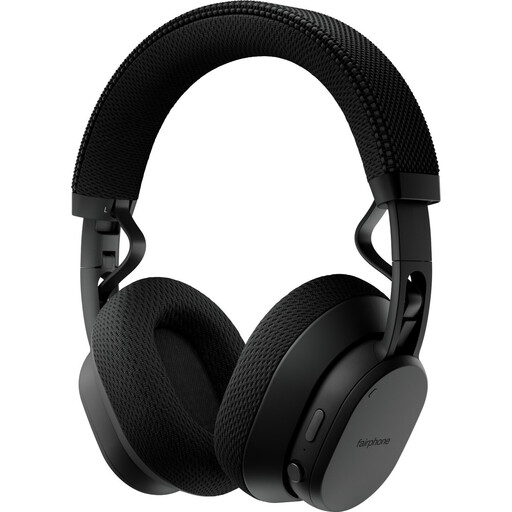
Transparency Mode may be useful if you want to switch between your lesson and ambient sound during your journey.
Over-ear headphones with Adaptive Noise Cancellation and Transparency Mode.
 No image available
The foldable design may come in handy if you want to pack your headphones away between parts of your journey.
Closed-back over-ear design with hybrid ANC and a foldable construction.
 No image available
The over-ear design and noise cancelling make these a good match for listening to a course in the presence of background noise.
The product description mentions active noise cancelling and an included audio cable for listening without battery power.
 No image available
Speak-To-Chat can be useful if you start a conversation while listening.
The product description mentions noise cancelling, connection to two devices and Speak-To-Chat.
 No image available
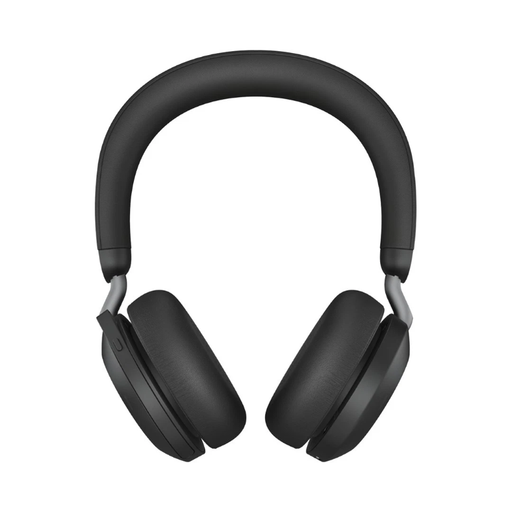
This over-ear headset could suit you if you also want to use Bluetooth while listening.
The product description mentions active noise cancelling, Bluetooth and 36 hours of battery life.
Start with a good fit and a comfortable volume. Noise cancelling can help reduce background noise without you having to turn the volume up to overcome it. The World Health Organization advises keeping the volume on personal audio devices below 60% of the maximum; this is general listening guidance, not a legal limit in the Netherlands.
Pair your headphones in advance, practise pausing and switch to ambient sound. Listen to a section of your course, too. Check the battery level in the ANC mode you plan to use, as features vary by model.
If a product is faulty, the seller must provide a solution under Dutch statutory guarantee rules. A manufacturer’s guarantee or extra cover is separate; what you can expect from the product depends on factors including the product itself and the sales information, as explained by the Dutch government.
No, there are exceptions. The Dutch government says that a 14-day cooling-off period applies in many cases when you buy at a distance, and also describes situations that don’t count as distance selling. Check the terms for your specific purchase.