
Letter archive manager
You want to be able to find your scans and avoid losing your only digital copy if a drive fails or goes missing. The Library of Congress advises keeping copies on different storage media and in separate physical locations.


Choose a portable HDD for occasional storage, a desktop HDD for a larger archive that stays in one place, or an SSD if you want to move your scans regularly. The right option also depends on the USB ports available, the file system and who is allowed to use the shared computer. No external drive is a complete archiving solution on its own: keep a separate copy as well.
You want to be able to find your scans and avoid losing your only digital copy if a drive fails or goes missing. The Library of Congress advises keeping copies on different storage media and in separate physical locations.
You store letters containing personal data on a computer that other people also use, so you need to decide who can access them. According to the Dutch Data Protection Authority, processing solely for personal or household use falls outside the GDPR; organisations are subject to security obligations when they process data.
You want to move scans between computers and check in advance that the connection, file system and any encryption will work on the computers you are allowed to use.
First decide how you will keep a separate copy and who needs access; then compare the connection, file system and storage capacity you need. The percentages give a broad indication of consumers’ main reason for buying in this situation. For archive preservation, the Library of Congress advises keeping copies on different storage media and in separate physical locations.
| Concern | What to look for when buying | Who is this most important to? |
|---|---|---|
| Archive preservation | Decide where the second copy will be stored and check that you can open it. | If I want to avoid losing my only digital copy of my letters because one device fails or goes missing, I’ll plan a separate copy. Around 36% of consumers put archive preservation first when deciding what to buy. |
| Access security | Test your chosen security measures on the work computer and check who manages the recovery key. | When other people use the same computer, I want to decide in advance who can open the scans and how access can be restored. Around 29% of consumers say restricted access is their main reason for buying. |
| Workstation compatibility | Check the USB port, operating system, supplied cable type and file system. | If I want to use scans on different authorised computers, I want to avoid connection or formatting issues disrupting my workflow. Around 21% of consumers put workstation compatibility first. |
| Storage and spend | Check the size of your current folder and allow for future scans as well as the separate copy. | Before choosing a capacity, I want to know how much space my existing scans and their second copy will need. Around 14% of consumers put storage and spend first when deciding what to buy. |
If the drive fails or goes missing, you could lose your only digital copy too.
Plan a separate copy before deleting scans from the work computer, and regularly check that you can open both copies.
A second storage location requires extra storage space and time to keep copies up to date.
On a shared computer, protection also depends on user permissions and how you work. Organisations should choose security measures that are appropriate to the risks.
Test which scans can be opened using the intended user accounts. Also check which encryption feature the computer supports and agree who will manage the recovery details.
Access permissions, unlocking and recovery details all need ongoing management.
Drives can differ in their connections, pre-formatted file systems and power requirements. A manufacturer’s maximum speed is not a measurement of performance on your work computer.
Check the exact model’s USB port, operating system, file system and available power.
Depending on the model, you may need to format the drive, use a suitable connection or plug it into a mains socket.
The Canvio Basics model reviewed is a portable HDD for USB storage; the HDTB520EK3AA version has 2 TB of capacity.
The Portable SSD T7 is a compact SSD range; the reviewed MU-PC1T0T/WW version is grey and has 1 TB of capacity.
Expansion Desktop is a desktop HDD range for storage in a fixed location; the model reviewed is STNP4000400.
The product picks below are portable HDDs and SSDs for keeping an extra copy of your scans, including options you can move between workstations.
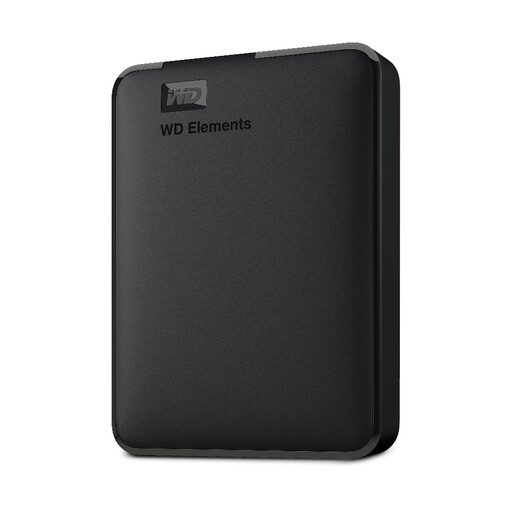 No image available
Portable HDD for an extra copy; the product title says it can be used with PC and Mac.
2 TB; USB 3.0; described in the title as formatted for PC and Mac.
 No image available
Portable HDD for storing and moving scans; the product description mentions password protection.
2 TB; USB-A-to-Micro-B cable; 256-bit AES hardware encryption, according to the product description. It also says a driver is required for use with macOS.
 No image available
Portable HDD for an extra copy; the product description says it connects to a computer via USB.
2 TB; 2.5-inch; Micro-USB B; USB 3.2 Gen 1. The product description says the drive is powered via USB.
 No image available
Portable SSD for storing and moving scans; check that the USB connection is suitable for your computer.
2 TB; USB Type-C 3.2 Gen 2; USB-C-to-C and USB-C-to-A cables; the product description mentions AES 256-bit encryption.
 No image available
Portable SSD for scans; check that USB-C and the stated software are compatible with the computers you use the drive with.
1 TB; USB Type-C 3.2 Gen 2. The product description lists compatibility with PCs, Macs and Android devices, as well as IP65 protection; do not immerse it for extended periods. It also mentions drop resistance from up to 3 metres.
No, not if that drive holds your only digital copy. The Library of Congress advises keeping copies on at least two different storage media and in different physical locations.
First check the file system on the version you have chosen. Toshiba says that the Canvio Basics model reviewed uses NTFS for Windows and needs to be reformatted for macOS. Check other models individually, and back up existing files before formatting.
Decide who needs access, then test unlocking and recovery on the work computer. Microsoft says BitLocker Drive Encryption is available on Windows Pro, Enterprise and Education, but not Windows Home. Make sure someone is also responsible for managing the recovery key.
According to the Dutch Data Protection Authority, processing carried out solely for personal or household use falls outside the GDPR. This exemption does not automatically apply to processing on behalf of an organisation; organisations have security obligations for personal data and must tailor their measures to the risks.
No. The Dutch government says there is no fixed statutory guarantee period in the Netherlands; you are entitled to expect a product to meet reasonable expectations. A manufacturer’s guarantee is an extra benefit. If a product is faulty, contact the seller.