
People building a video archive
You’re keeping more and more home videos in one permanent place at your workstation, and want to choose enough capacity without overlooking the need for a separate copy.


For a growing video archive kept in one place, an external HDD is an obvious choice if capacity matters more than portability. If you regularly transfer or edit files, an SSD may suit the way you use it better. Check the connection and formatting requirements of every computer that will use the drive, and keep important footage on a separate, recoverable copy too: extra storage alone isn’t a backup.
You’re keeping more and more home videos in one permanent place at your workstation, and want to choose enough capacity without overlooking the need for a separate copy.
You often move or edit large recordings and want to know whether an SSD and your workstation’s USB connection are suited to the job.
You want to open and save files from different computers. In that case, the drive’s connections and formatting matter.
A good fit if: your video archive will mainly stay in one place next to your workstation.
Bear in mind: according to Seagate, the Seagate Expansion Desktop STKP8000400 has 8 TB and comes with a separate power adapter, so you’ll need a permanent spot near a power socket.
A good fit if: you want to take the drive between workstations and mainly store files.
Bear in mind: according to Toshiba, the Toshiba Canvio Basics we reviewed comes formatted as an NTFS drive for Windows. Check the formatting if you need to write to it from a Mac.
A good fit if: you often transfer or edit large video files and your workstation’s connection can make the most of the drive.
Bear in mind: Samsung quotes maximum speeds of 1.050 MB/s for reading and 1.000 MB/s for writing for the Portable SSD T7. These are manufacturer figures, not a guarantee of the speed you’ll get from your workstation.
| What to consider | What should you check? | Who is this important for? |
|---|---|---|
| Space for your video archive | Check the size of your current folder, allow for new recordings and confirm the capacity of the exact model. | I want to keep my growing video folder in one place and leave room for new recordings. Around 36% of consumers prioritise archive space. |
| A recoverable copy | Decide where to keep the originals and a separate, up-to-date copy, then test that you can restore a file. | If I can’t recreate my recordings, I want to know that there’s a separate copy I can restore. Around 29% of consumers prioritise keeping their recordings safe. |
| Fast transfers and editing | Check your workstation’s USB port and cable, and compare them with the drive’s connection. | If I often move or edit large video files, speed matters more to me than archiving alone. Around 21% of consumers prioritise processing speed. |
| Access from different computers | Check the operating systems, connections and formatting. Make a copy before reformatting a drive. | I want to be able to open and save files from every computer I use. Around 14% of consumers prioritise access from different systems. |
Apple Support says a Mac may be able to read an NTFS drive but not write to it. Apple describes exFAT as a format compatible with Windows; before choosing, also check the requirements of every computer and how you plan to use the drive.
If you move your only copies to the external drive, losing or damaging that drive could mean losing the footage too.
Before deleting your originals, make a separate copy and try restoring a file.
The Toshiba Canvio Basics we reviewed comes formatted as an NTFS drive. Apple Support warns that a Mac may be able to read an NTFS drive but not write to it.
Check which computers you’ll use, and make a copy before changing the formatting.
The quoted maximum speeds for the Samsung T7 apply to a specific model and a USB 3.2 Gen 2 interface. Your connection and the task also make a difference.
Check the port and cable, and don’t choose based only on the highest figure in MB/s.
The Expansion Desktop is a range of desktop HDDs for an archive kept in one place. The STKP8000400 model we reviewed has 8 TB.
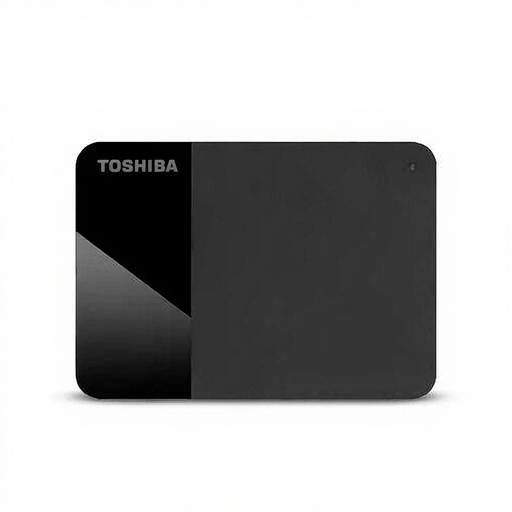
The portable Canvio Basics is a range of HDDs; the HDTB520EK3AA model we reviewed has 2 TB.
The Portable SSD T7 is a range of SSDs for people who regularly transfer video files; the grey MU-PC2T0T/WW model we reviewed has 2 TB.
Elements Portable is a range of portable HDDs for anyone looking for a compact archive drive.
These Joybuy products are portable external SSDs and HDDs for storing and taking your home videos with you.
 No image available
A portable SSD option if you want to take your home videos with you on an external drive.
Capacity: 1 TB.
 No image available
A portable SSD option for storing and transferring video files.
Capacity: 1 TB.
 No image available
A portable external HDD option for anyone who wants to keep videos on an external drive.
Capacity: 2 TB.
 No image available
A portable HDD option for storing and taking films and videos with you.
Capacity: 1 TB. Connection according to the product name: USB 3.2.
 No image available
A portable HDD option for keeping home videos and other files in a separate location.
Capacity: 1 TB. Connection according to the product name: Micro-USB B, USB 3.2 Gen 1 (3.1 Gen 1).
Only do that once you’ve made and checked a separate copy. VeiligInternetten describes a backup as a copy of files, so one external drive holding the only copies isn’t a separate backup.
Check the requirements of every computer you’ll use before choosing a format. Apple Support lists exFAT as compatible with Windows and says a Mac may be able to read an NTFS drive but not write to it. Make a copy before erasing or reformatting a drive.
Don’t assume it can. Apple Support recommends APFS or APFS Encrypted as a Time Machine destination. Check that the format and intended use are suitable before repartitioning the drive.
Contact the seller. ACM ConsuWijzer says that, under Dutch statutory guarantee rules, the seller must resolve the issue free of charge if a product breaks too soon despite normal use.
Limit who can access the footage from the workstation. According to the Dutch Data Protection Authority, the exemption for personal or household use applies when you keep footage private or share it with only a very limited group. For other uses, you’ll need to assess the situation separately.